
Honouring the pioneers
Four decades of exceptional women at the IPI General Assembly
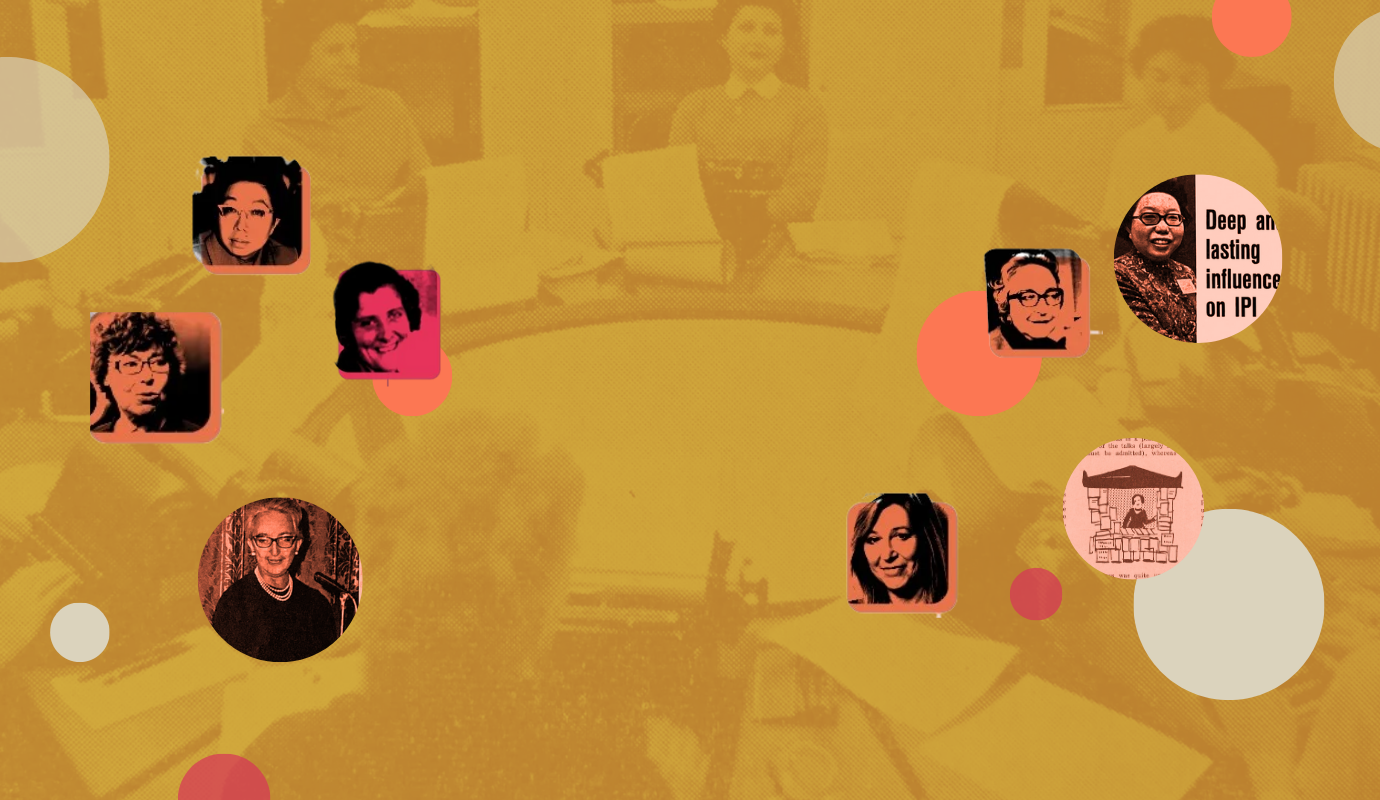

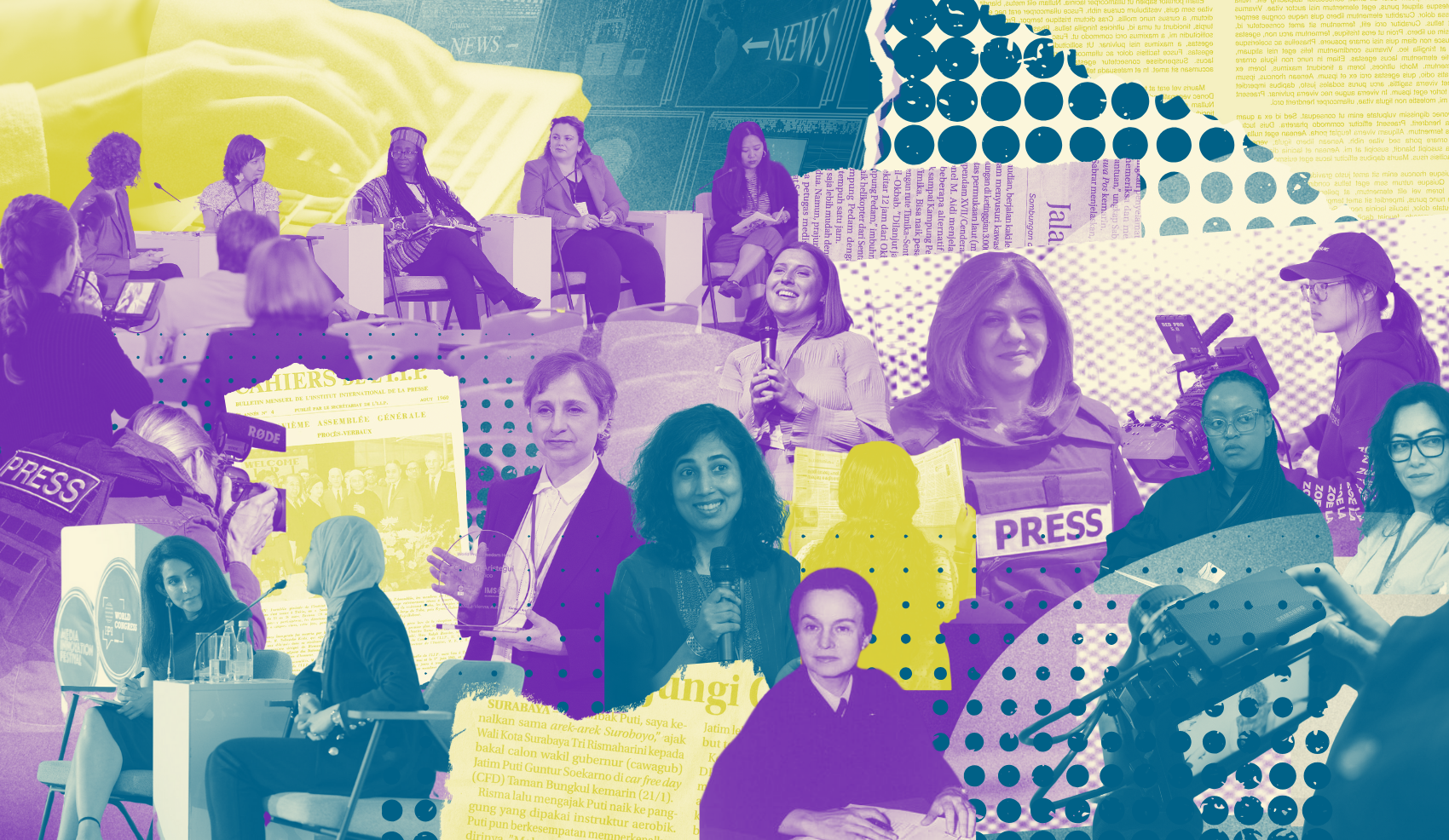
Throughout history, women have often been underrepresented in the newsroom and in conversations shaping journalism and the media - which itself reflects missing women's voices in public debate more broadly.
While significant progress toward equality and inclusion in the media has been made, in too many sectors and in too many places, women’s voices remain absent.
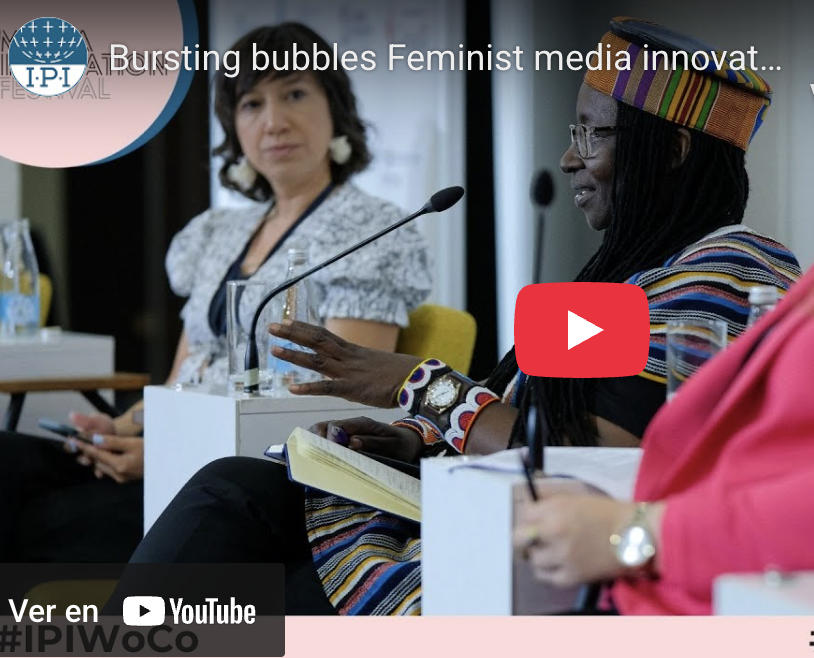
At this year’s IPI World Congress and Media Innovation Festival, three in five speakers were women. It’s a striking figure — and a stark contrast to much of IPI’s early history.
Using materials from IPI’s analogue archive, we revisited 41 years of General Assembly programming, from 1952 to 1992, to trace women’s presence on stage and revealed a snapshot of female visibility, and absence, in media discourse over time.
General Assemblies are the annual decision-making meetings of IPI, traditionally held during the IPI World Congress, where members from around the world elect the organisation’s leadership, vote on key policies, and review IPI’s work. They serve as the institute’s highest governing forum and a historic gathering of global editors and journalists shaping the future of press freedom.
Looking back at four decades of these meetings is not just an exercise in institutional history. It offers a window onto the wider world in which they took place. What we see on IPI’s stages mirror, in miniature, the broader struggles for women’s representation in public life.
And progress is fragile. Around the world, leaders who openly disparage women are again finding their way into power. Some politicians and influencers would rather see women in the kitchen than on stage sharing their thoughts.
This online exhibition pays homage to the remarkable women who paved the way, and is also a reminder that progress should not be taken for granted.
Exceptions to the rule
In the early years of the IPI General Assemblies, female speakers were notable in their absence. While delegates’ wives were catered for with annual “Ladies’ Programmes” (until 1979), and women certainly typed up the programmes and reports, very few women spoke on stage in a professional capacity. Those who did were exceptions to the rule.


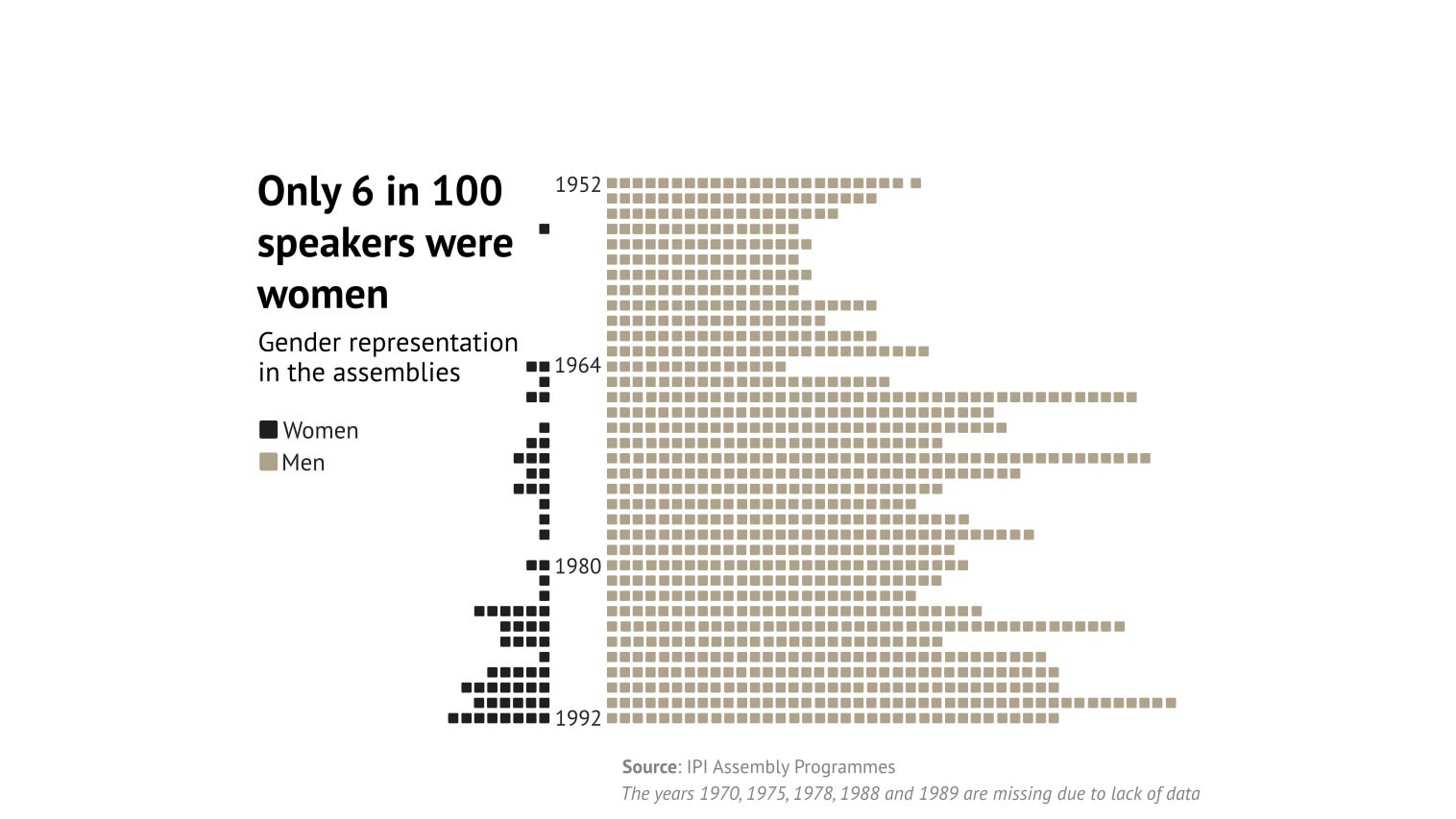
This was not unusual for the time, when media and all other social and political authorities were almost exclusively male-dominated.
Early female speakers included well-known international figures, such as the first — and so far only — female prime ministers of two countries: Indira Gandhi of India (who spoke in 1966) and Golda Meir of Israel (1973).
The very first female speaker appeared in 1955: Austrian born French reporter Dominique Auclères, who spoke on the panel ‘Foreign News and the Reader’ (13 May 1955, Copenhagen). Auclères was a novelist and journalist, a reporter at Le Figaro from 1945 to 1975, and also translated German literature into French.

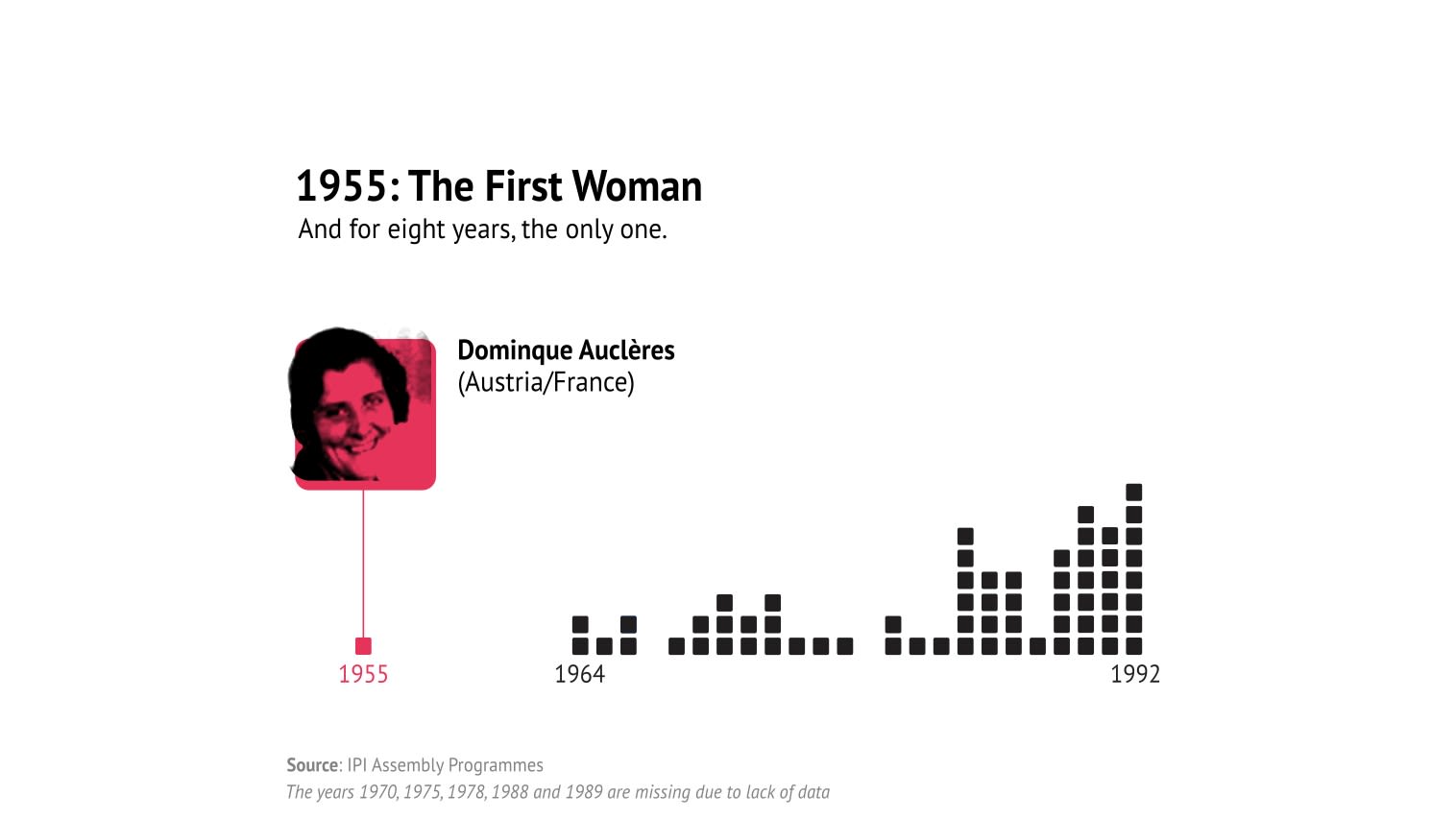
Pioneering politicians also made an appearance, such as French feminist lawyer Simone Veil, who addressed the first IPI General Assembly in Latin America (1987), and Hong Kong democratic leader and former journalist Emily Lau (1992).
Perhaps less well known outside their own countries were the journalists and publishers whose professional and regional impact is indisputable.
It was Greek journalist and publisher Eleni Vlachou (Helen Vlachos) who spoke most often: eight times from 1968 to 1985. Vlachou closed down her paper Kathimerini in 1967 in protest against the military dictatorship, and published an open letter to the international media in IPI Report, IPI’s flagship publication for many decades. Posthumously named IPI World Press Hero in 2000, Vlachou addressed the Congress as an authority on resisting authoritarianism.

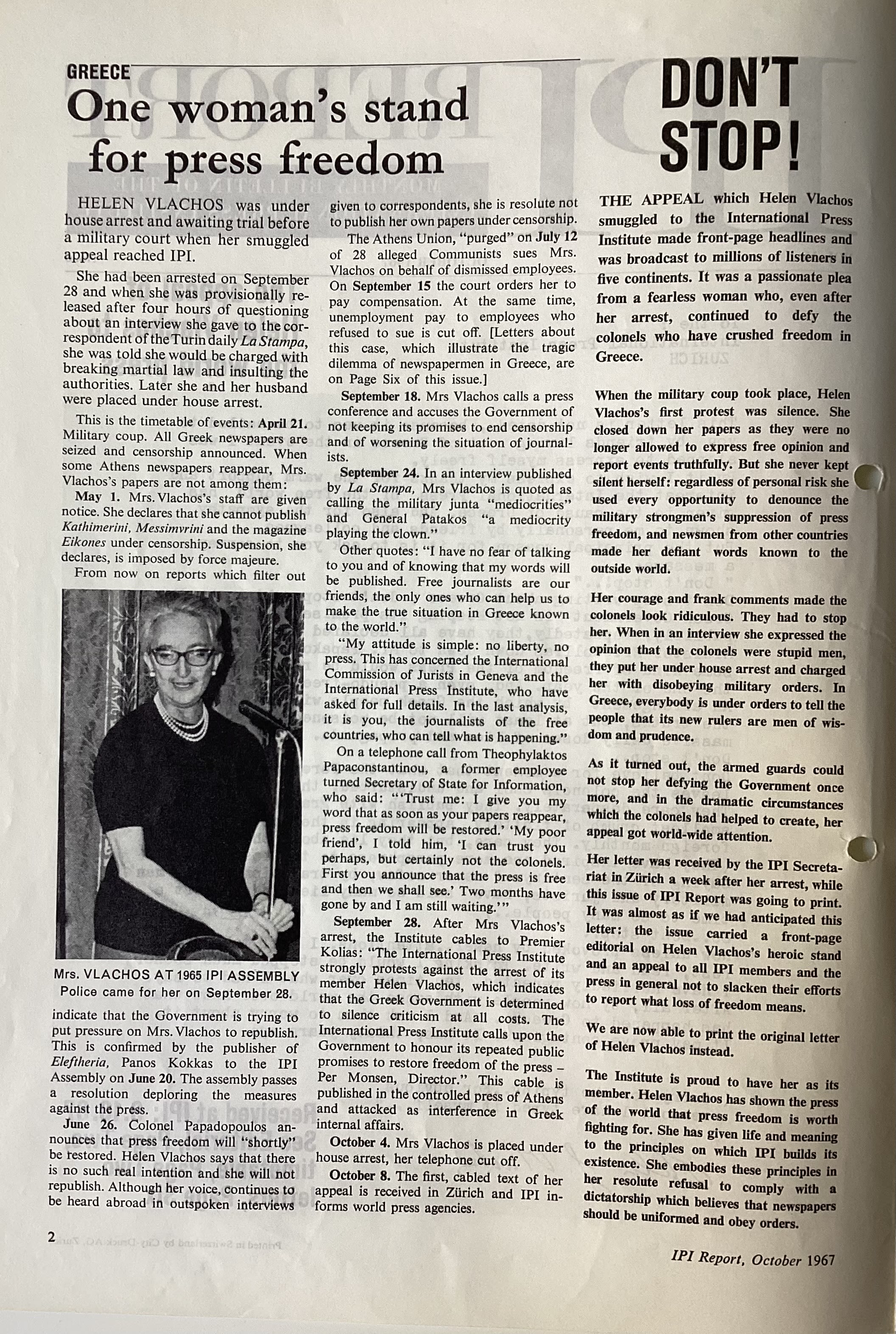
One woman's stand to press freedom. IPI Report, October 1967.
One woman's stand to press freedom. IPI Report, October 1967.
"The institute is proud to have her as its member. Helen Vlachos has shown the press of the world that press freedom is worth fighting for. She has given life and meaning to the principles on which IPI builds its existence. She embodies these principles in her absolute refusal to comply with a dictatorship which believes that newspapers should be uniformed and obey orders."

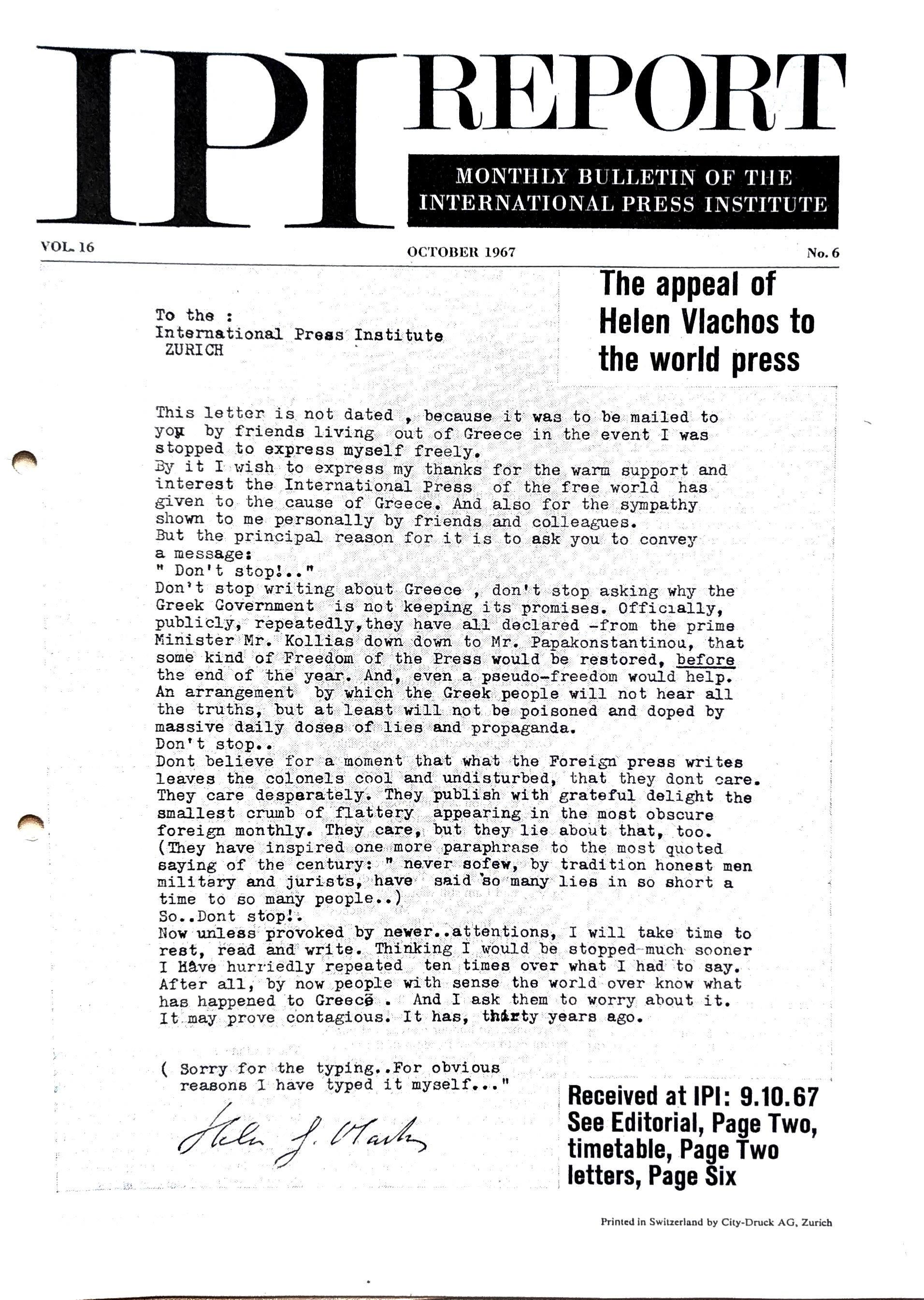
Eleni Vlachou (Helen Vlachos) open letter in protest at the Greek military dictatorship, 1967, IPI Report, October 1967
Eleni Vlachou (Helen Vlachos) open letter in protest at the Greek military dictatorship, 1967, IPI Report, October 1967
Other regular faces on the IPI stage included Hong Kong businesswoman and newspaper proprietor Aw Sian, chair of the Executive Board from 1971 to 1972 and first IPI female board member and first female chairperson; Christina Jutterström, editor-in-chief of Sweden’s Dagens Nyheter; and British journalist Rosemary Righter, a fierce critic of the United Nations.

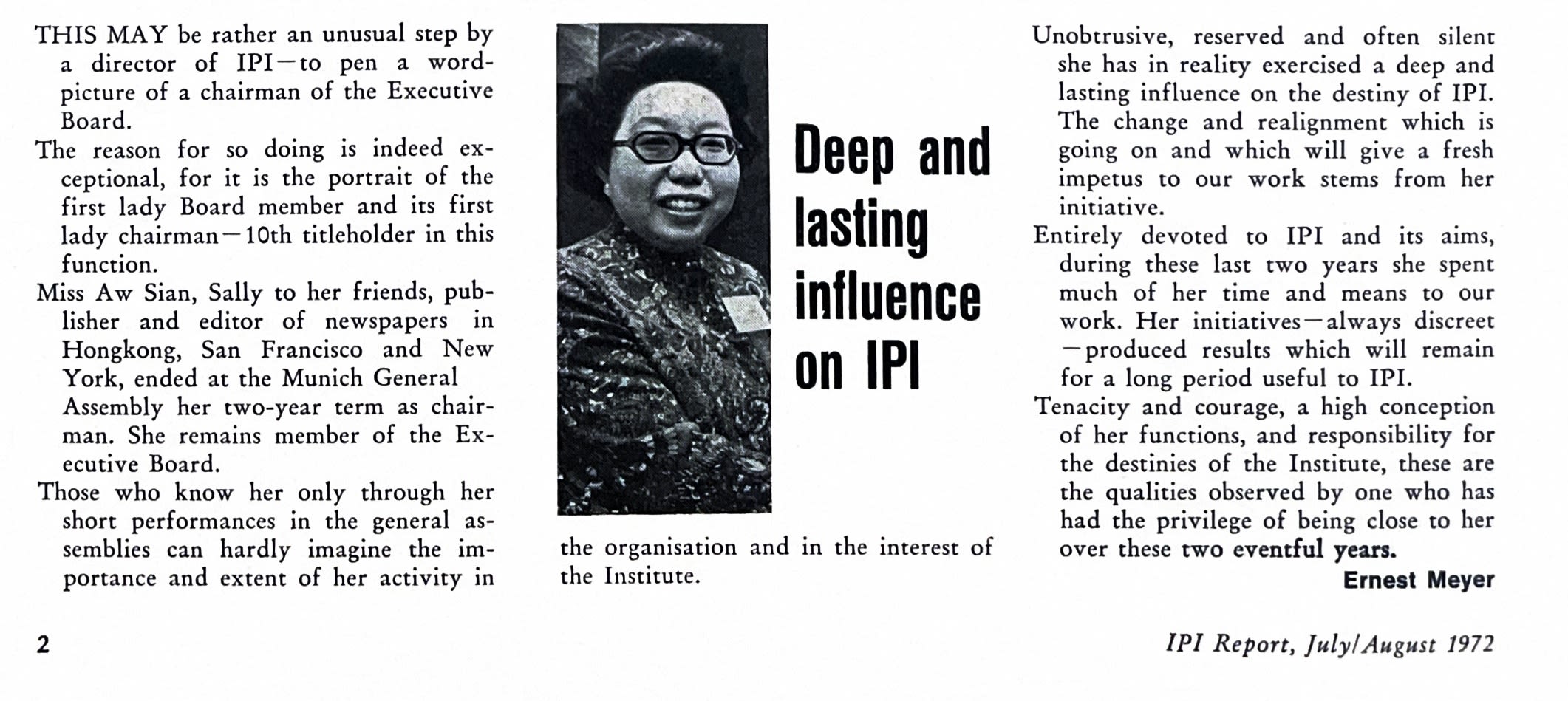
Aw Sian, first IPI female board member and first IPI female chairperson. IPI Report, July/August 1972.
Aw Sian, first IPI female board member and first IPI female chairperson. IPI Report, July/August 1972.

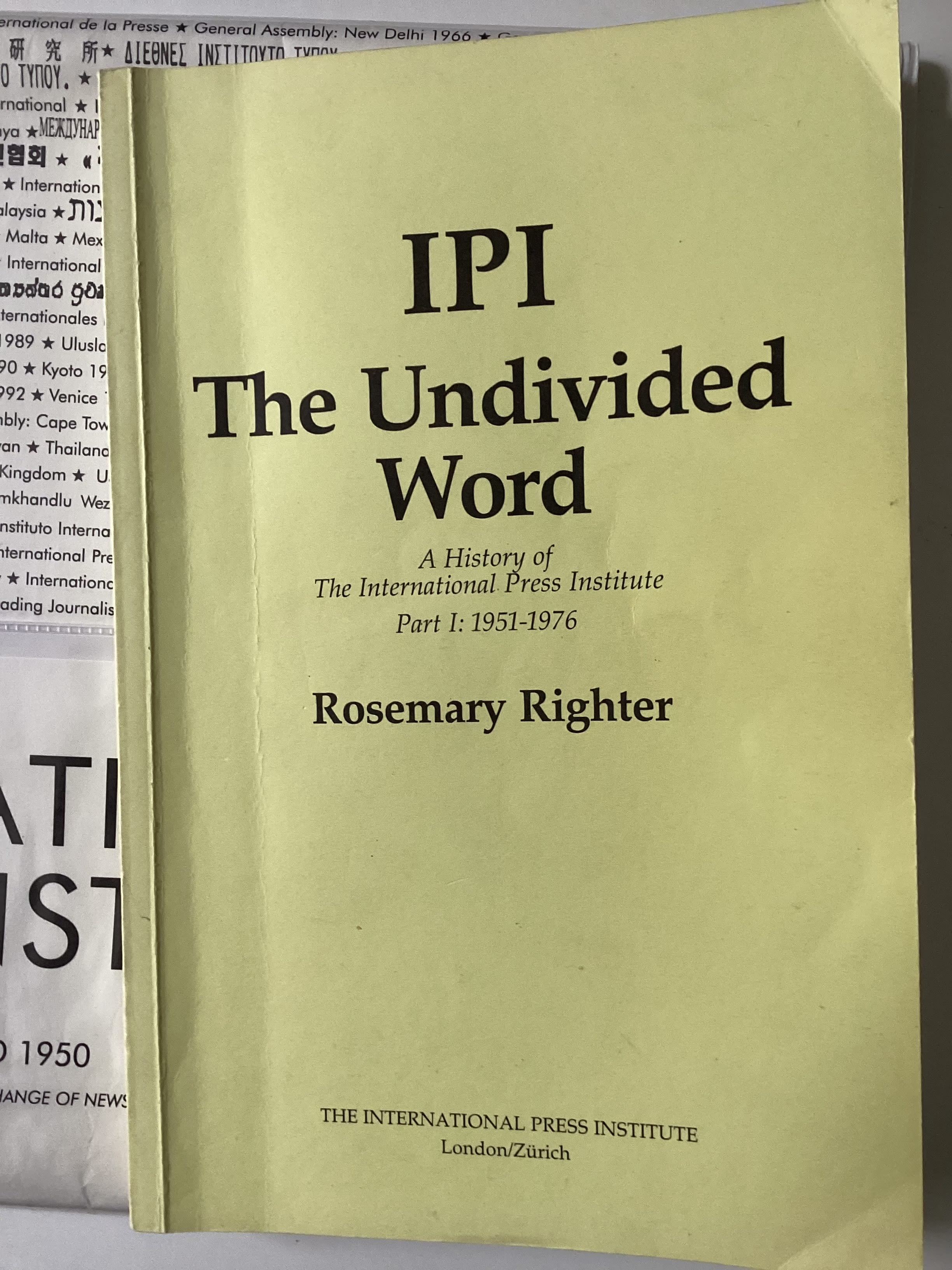
IPI: The Undivided World, Part 1, by Rosemary Righter (1976)
IPI: The Undivided World, Part 1, by Rosemary Righter (1976)
The first female academic was Nermin Abadan in 1964, a Turkish academic, lawyer, sociologist of immigration and women's rights who, at the time of writing (November 2025), is still well known in her home country and 104 years old.
Abadan was followed by Hélène Ahrweiler, the first female director of the Sorbonne, and Thérèse Paquet-Sévigny, under-secretary-general at the United Nations Public Information Department
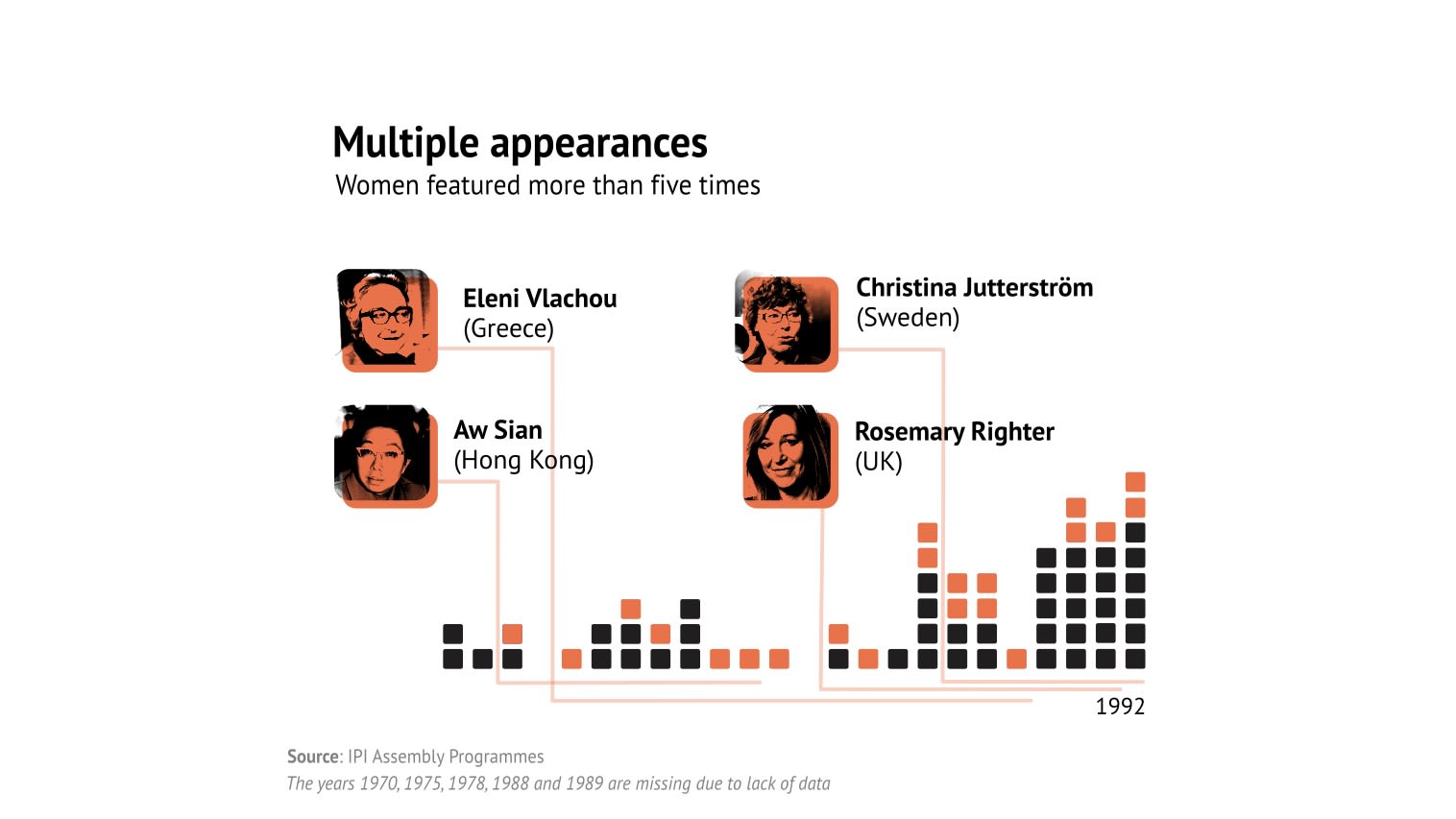
From margins to main stage
The 1980s are often remembered for pop culture, power dressing, and persistent sexism.
Yet it was also a decade when women began claiming far more visible roles in politics, media, and global debate, including at IPI General Assemblies and World Congresses, where discussions increasingly tackled issues such as global inequalities in access to information and technological change.
During the final decade of the Cold War, new satellite and cable technologies promised liberation from both censorship and editorial control. Two women, in particular, helped shape the debates.
Brenda Maddox, the US-born British columnist and biographer, was ahead of her time. Speaking at four Congress panels between 1983 and 1992, she argued that distance was no longer a barrier to the exchange of ideas and that communication would increasingly take place through technology rather than face-to-face contact. For Maddox, technology promised instant access to information and the possibility of overcoming misunderstanding.
A counterpoint came from Mehra Masani, deputy director of All India Radio and a pioneering broadcaster, who warned that mass communication technologies were often imposed from the top down — centralised, hierarchical systems that left no space for community feedback. Her work for UNESCO, including Broadcasting and the People, explored these tensions long before “digital divide” became common vocabulary.
By the end of the 1980s, women at IPI General Assemblies and World Congresses were no longer confined to “women’s issues”. They were engaging with — and reshaping — the key questions of their time.
As IPI turns 75, we can look back and recognise echoes of those earlier hopes and fears in today’s debates.
The difference is that now, women are not only part of the conversation — they are leading it.

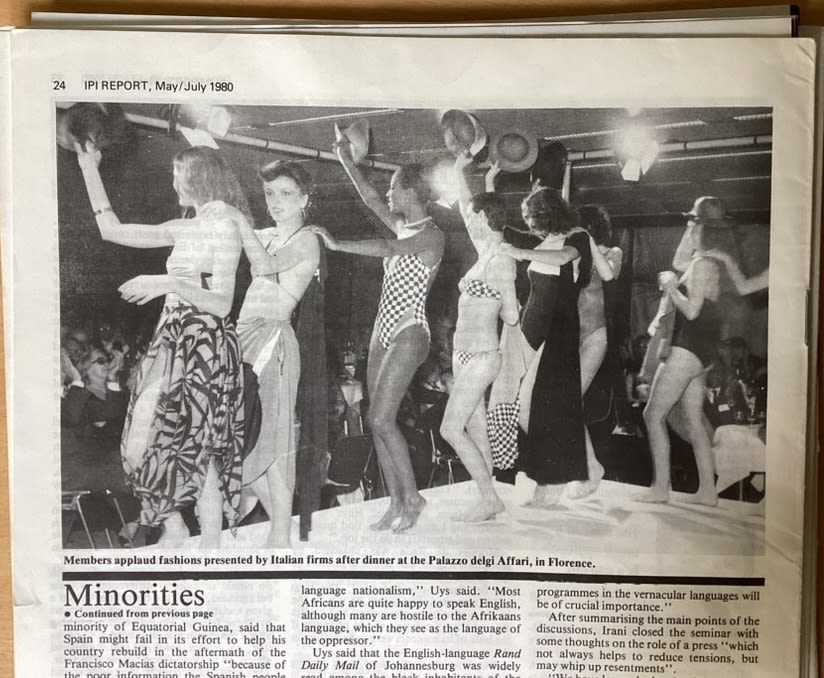
"Members applaud fashions presented by Italian firms after dinner at the Palazzo delgi Affari, in Florence. IPI Report, May/July 1980.
"Members applaud fashions presented by Italian firms after dinner at the Palazzo delgi Affari, in Florence. IPI Report, May/July 1980.

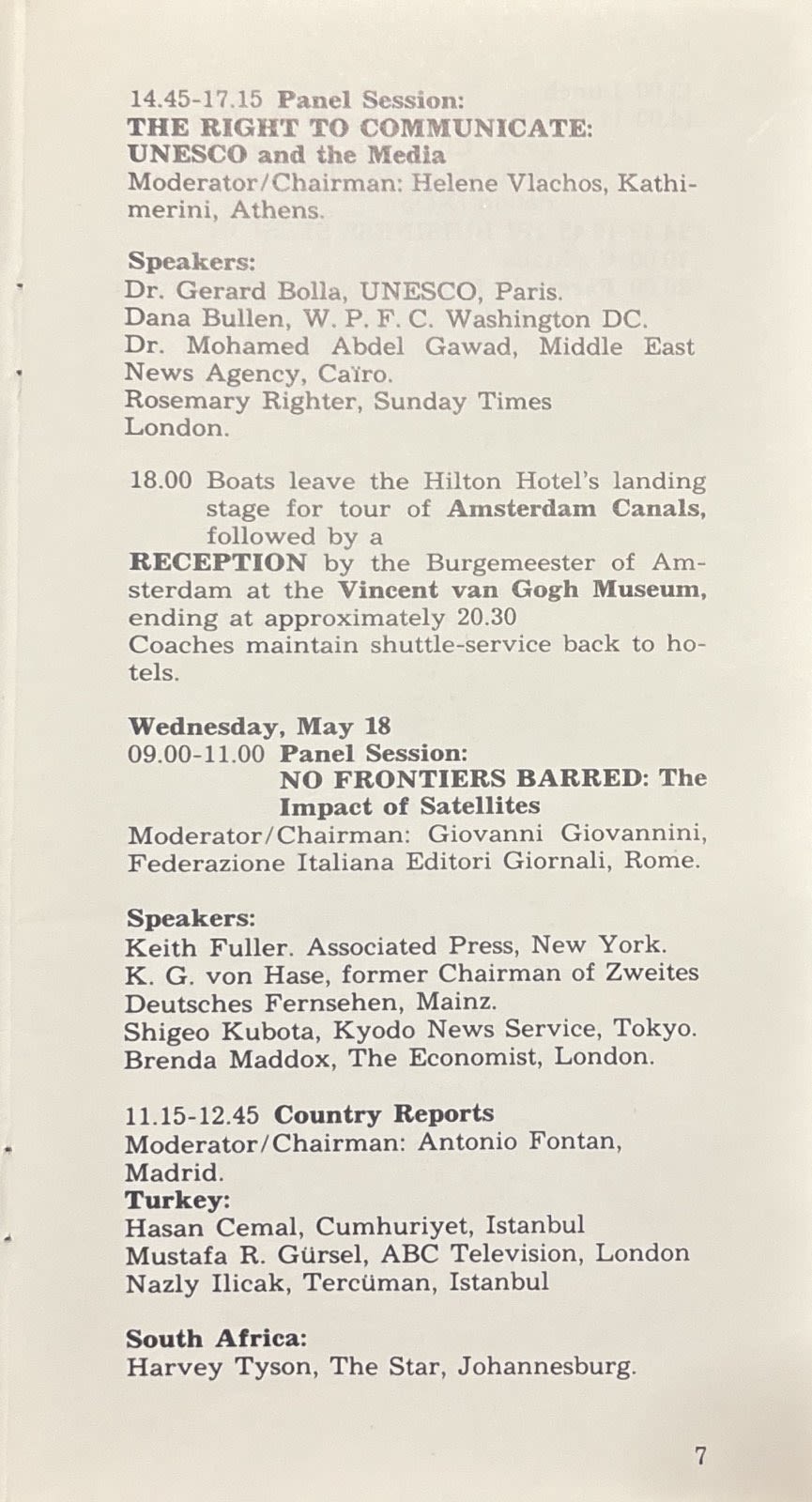
Brenda Maddox speaking on a satellite panel at the 1983 General Assembly in Amsterdam: No frontiers barred: the impact of satellites.
Brenda Maddox speaking on a satellite panel at the 1983 General Assembly in Amsterdam: No frontiers barred: the impact of satellites.
Women in journalism and technology:
A review in images from our archive

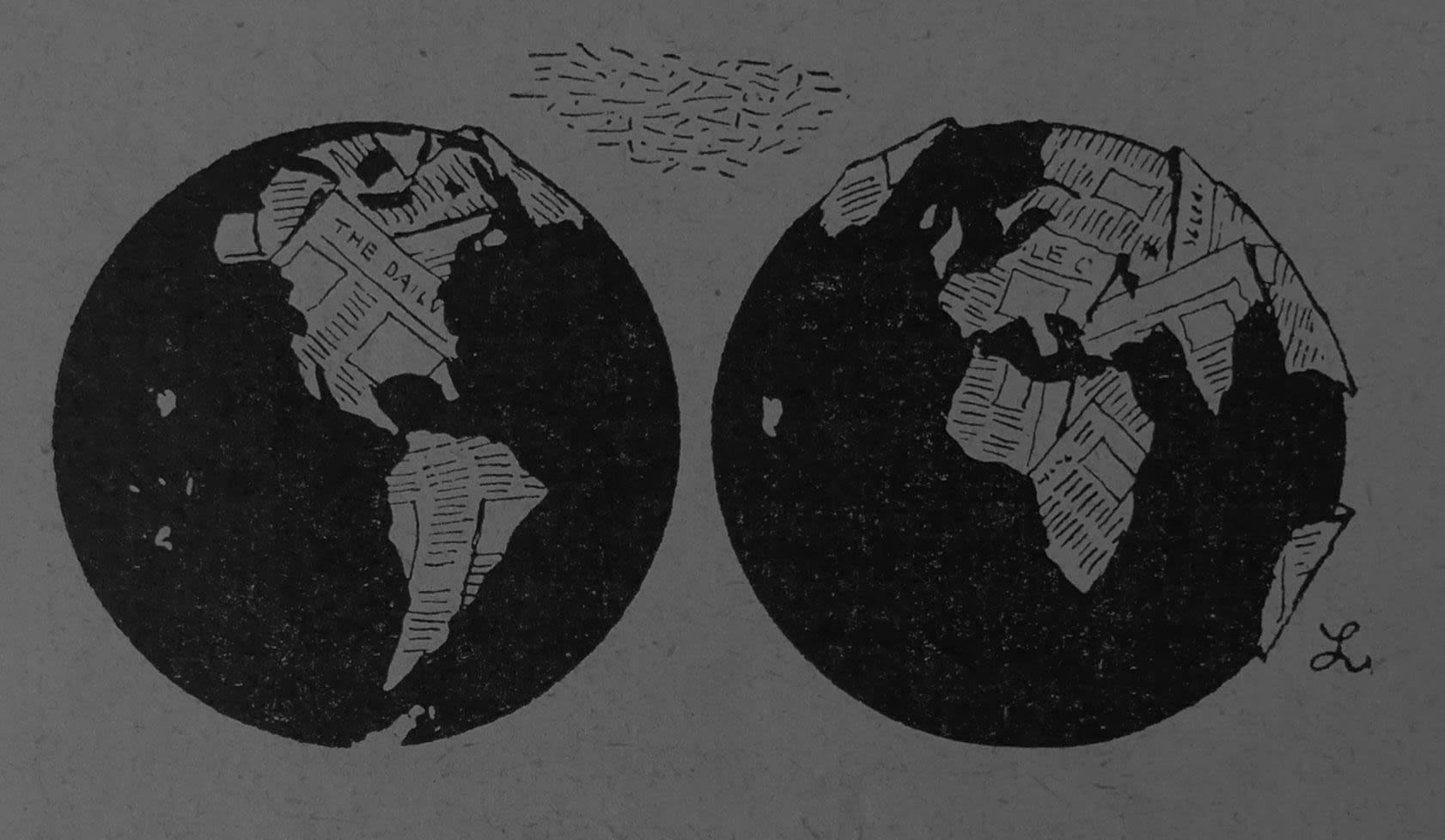

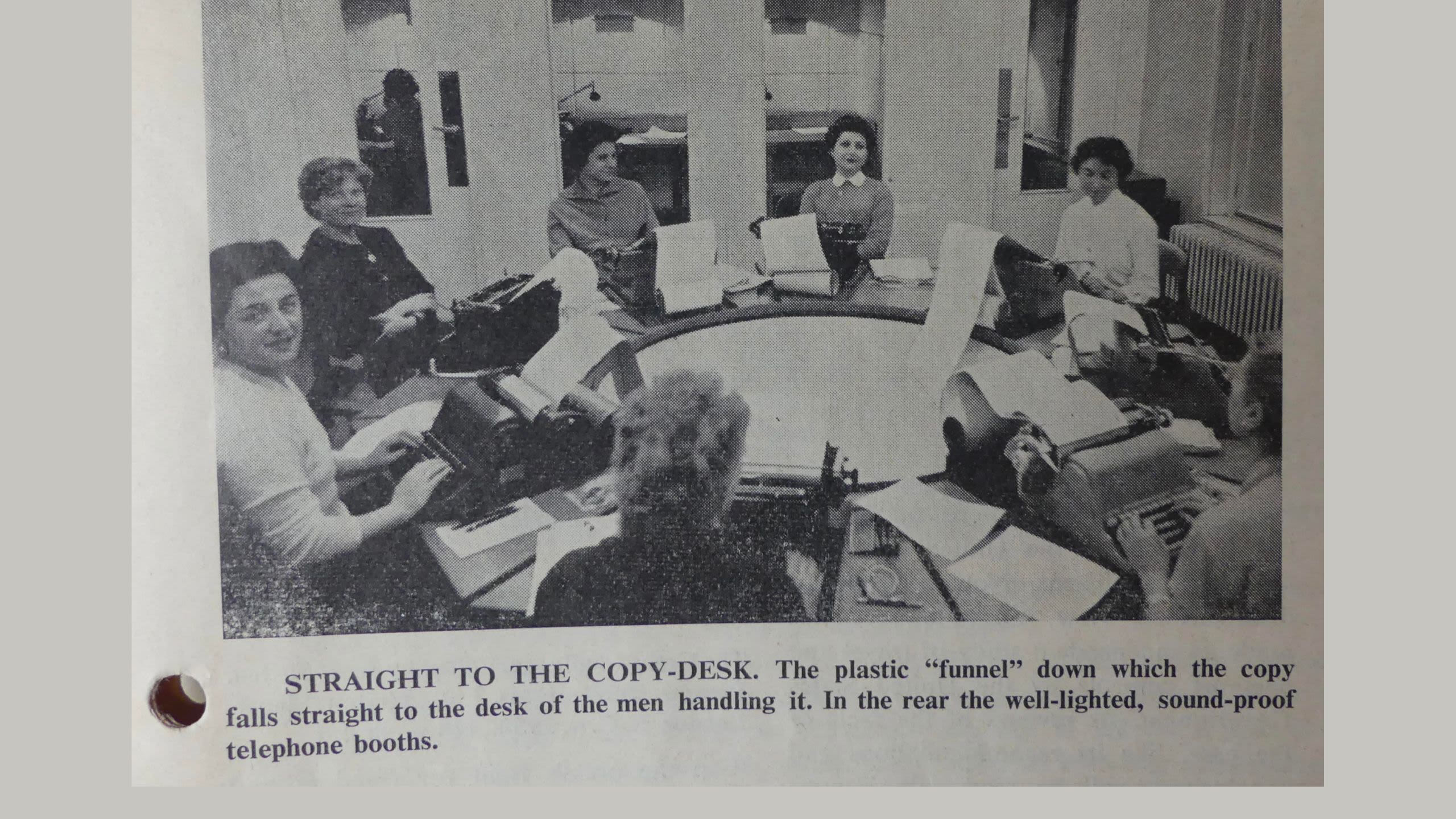
Since the early 1950s, the profession of journalism has been transformed. We've come a long way since the early days of television, when women worked as secretaries and assistants. Over the following decades, women broke new ground to take leading roles at the same time as a series of technological changes transformed journalism.
You can read more about these technological changes in our IPI Archive online exhibition.
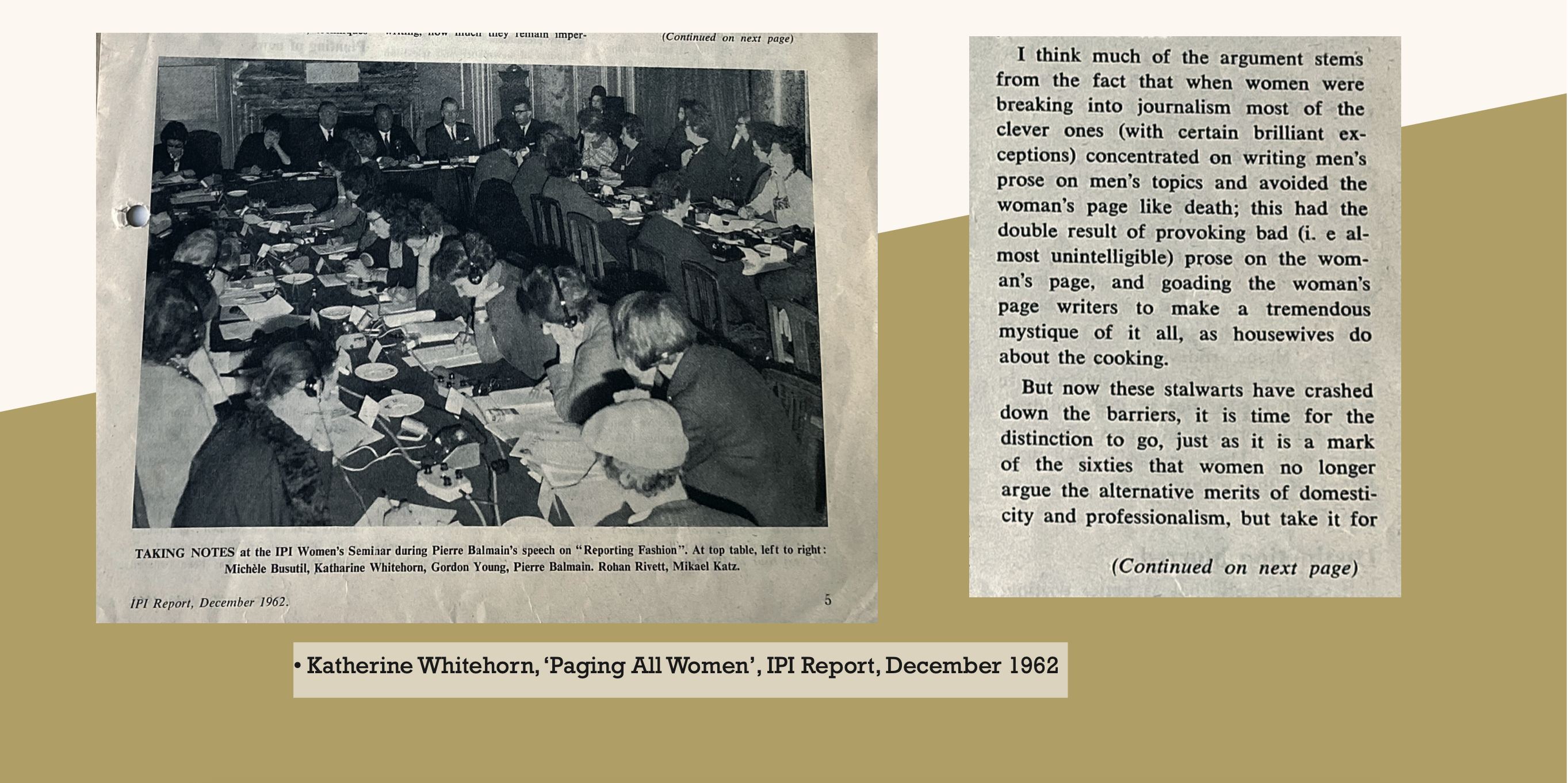
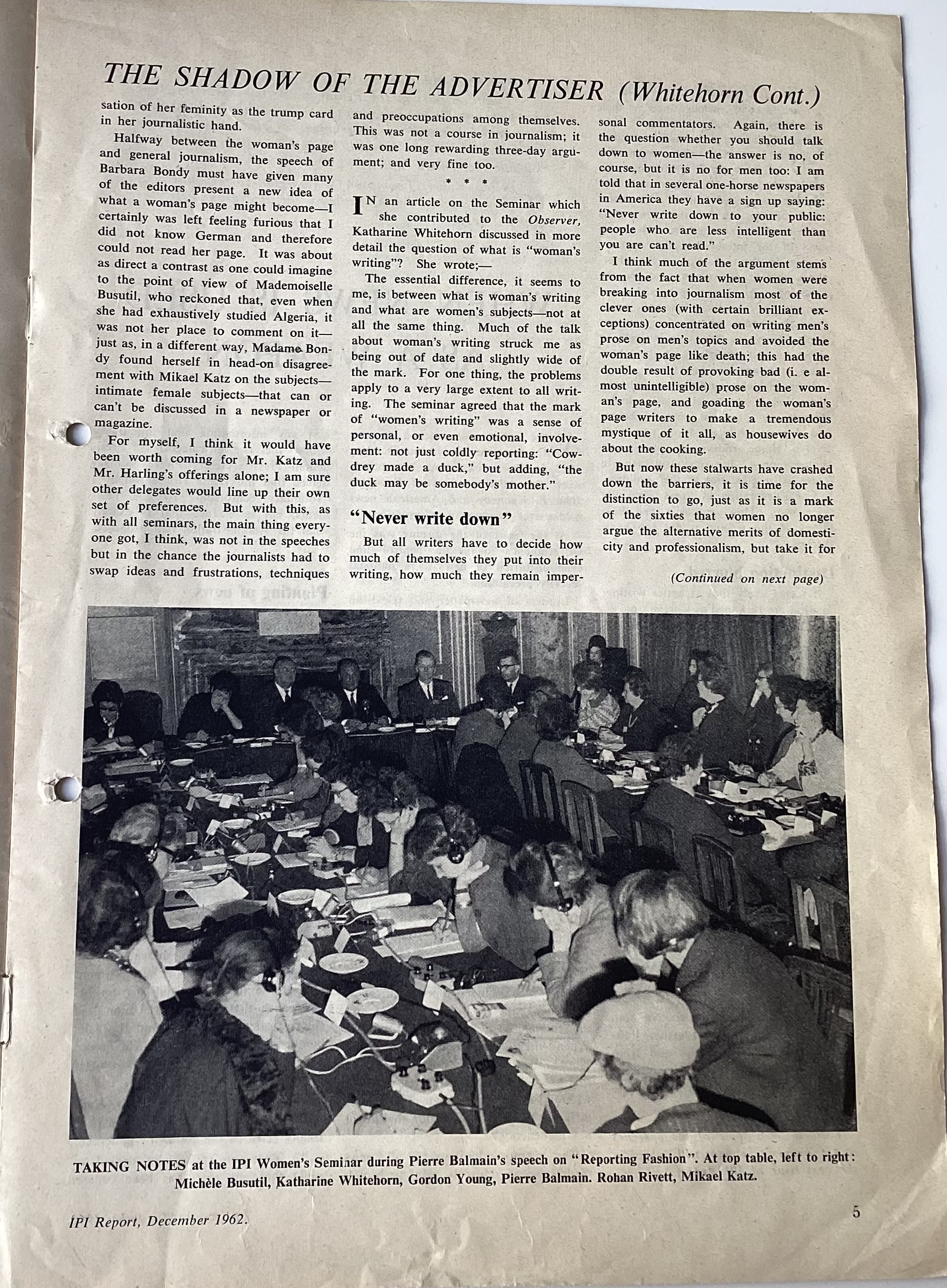
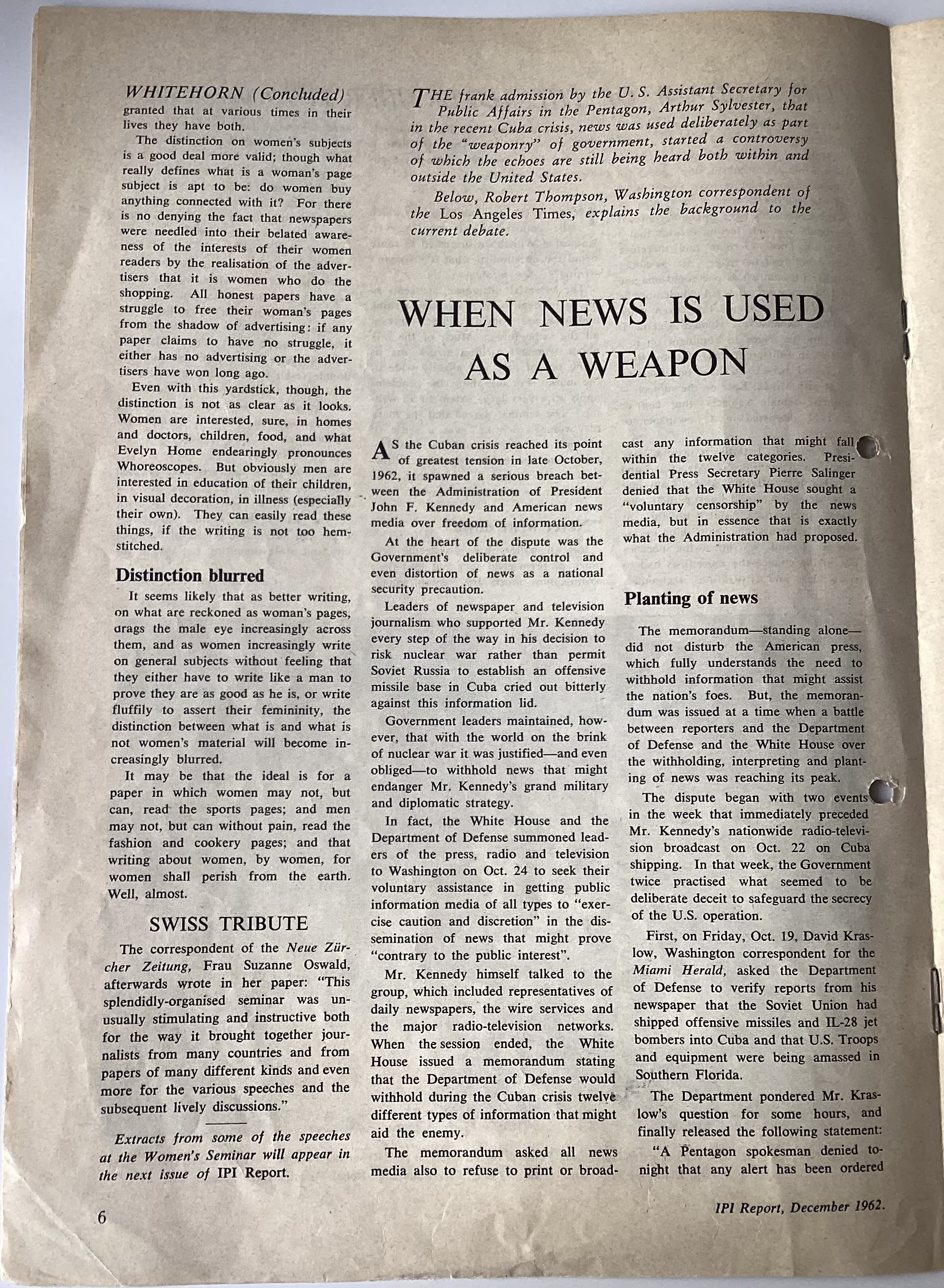
When women were breaking into journalism most of the clever ones concentrated on writing men’s prose on men’s topics and avoided the woman’s page like death… But now these stalwarts have crashed down the barriers, it is time for the distinction to go.
— Katharine Whitehorn, ‘Paging All Women’, IPI Report, December 1962
IPI World 1962: "Woman's Page"
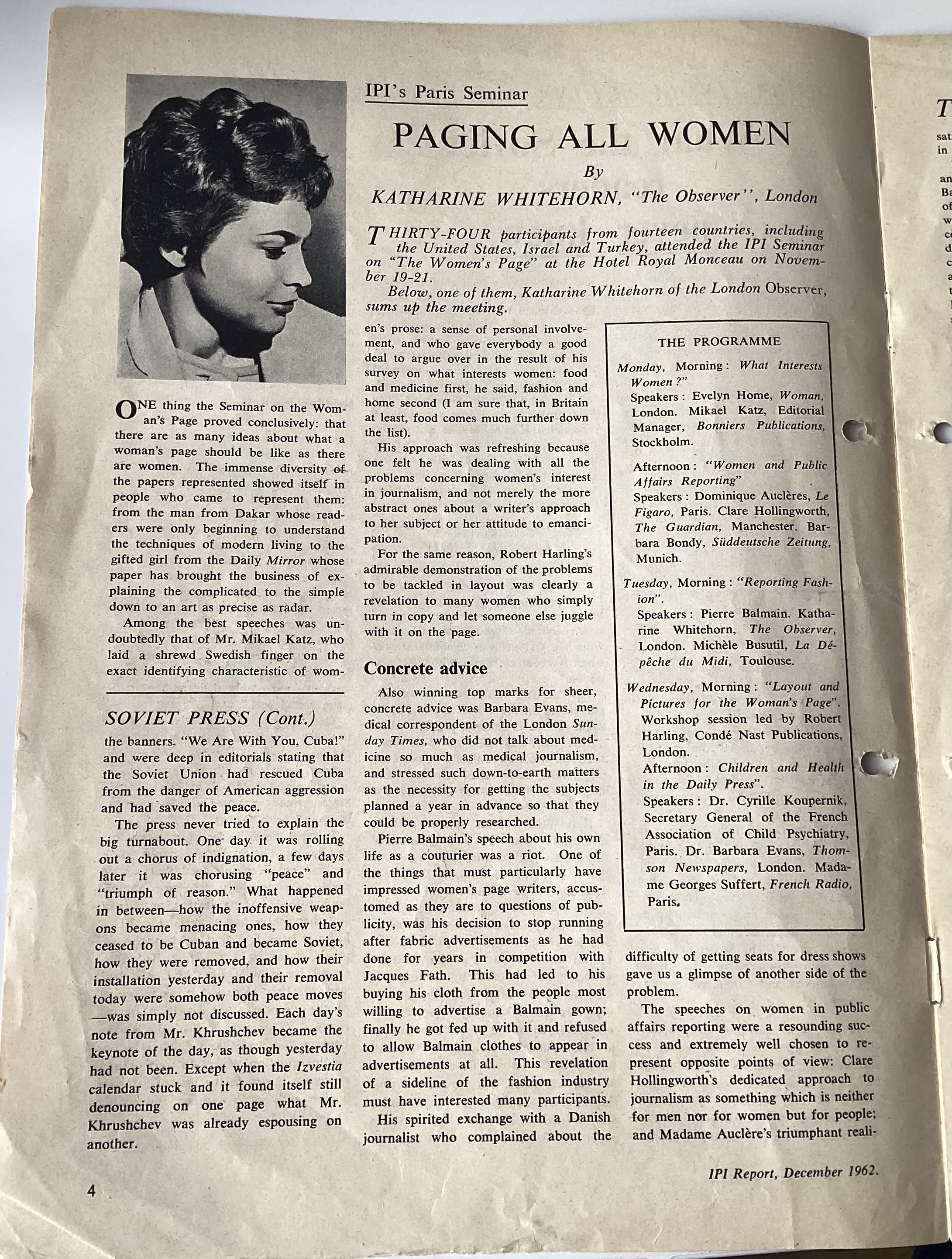
In 1962 IPI convened a seminar in Paris on the ‘Woman’s Page’, where participants agreed that ‘women’s issues’ are not (yet) regarded as serious news, and that talented women who want to get ahead in journalism needed to write about ‘male subjects’, such as politics and economics, not health or education. In the 60s, mostly women were mostly targeted by editors as consumers in the home, not readers interested in current affairs.



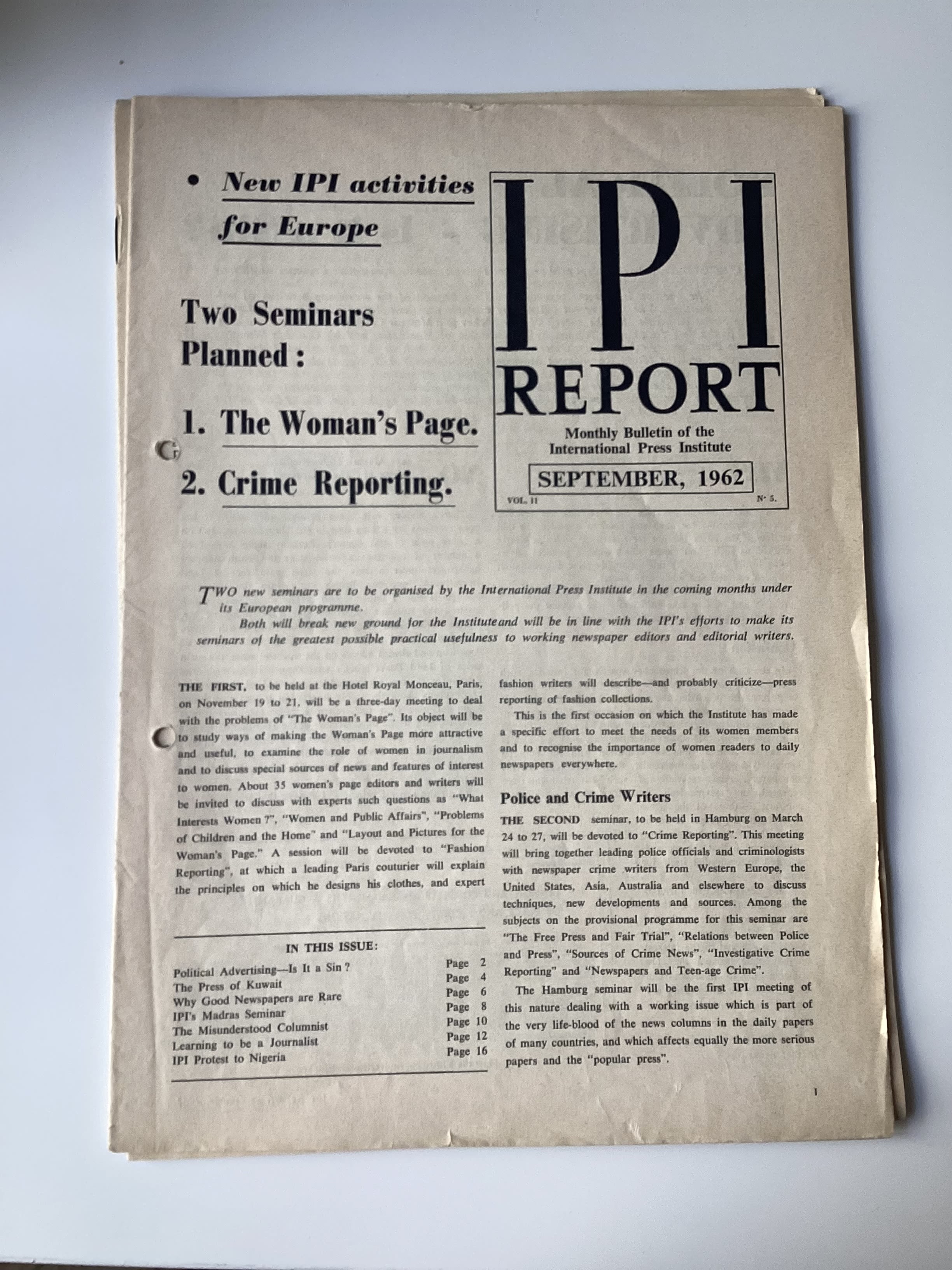
The Woman's Page. IPI Report, September 1962.
The Woman's Page. IPI Report, September 1962.





Ladies' Programmes
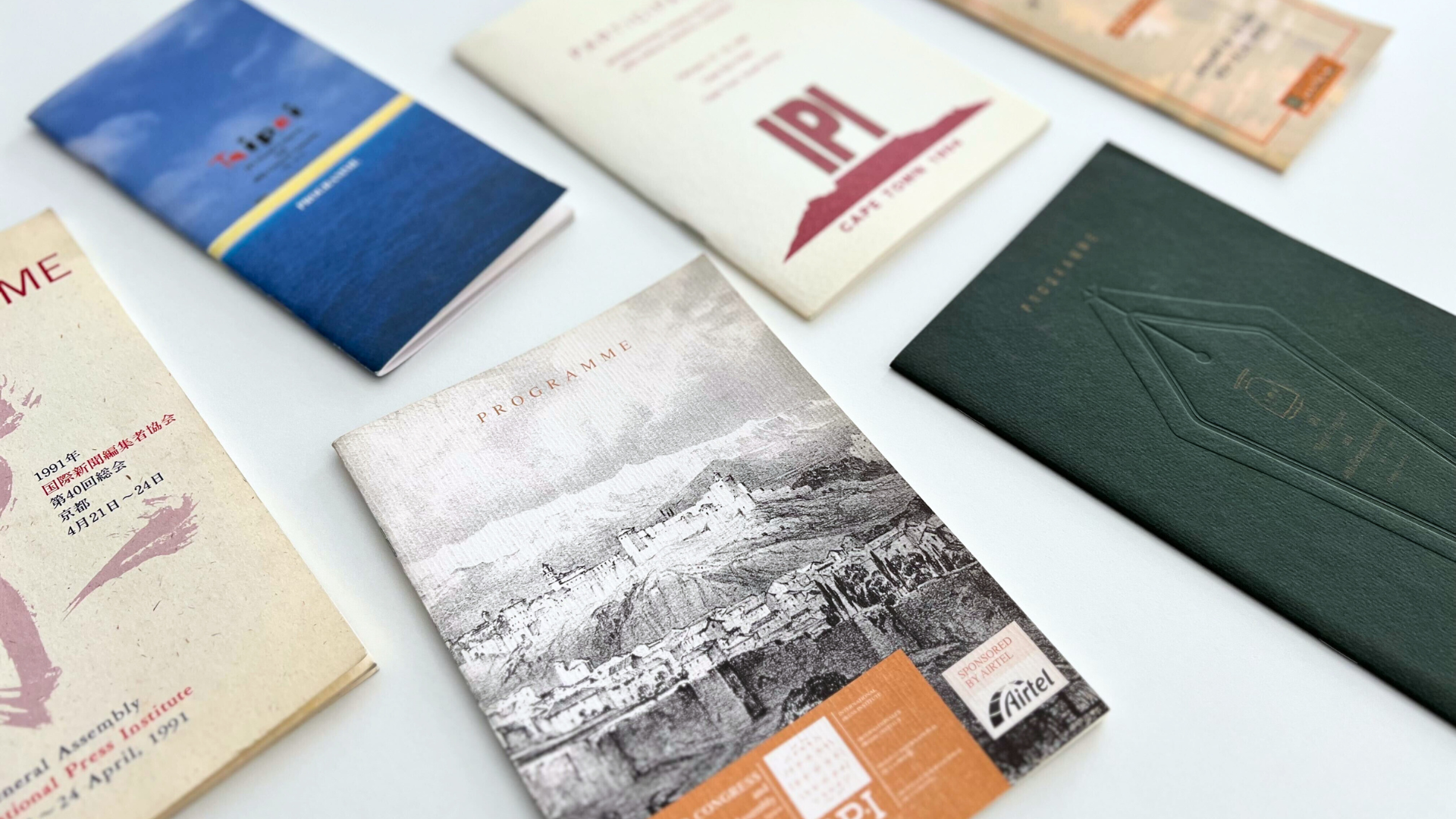
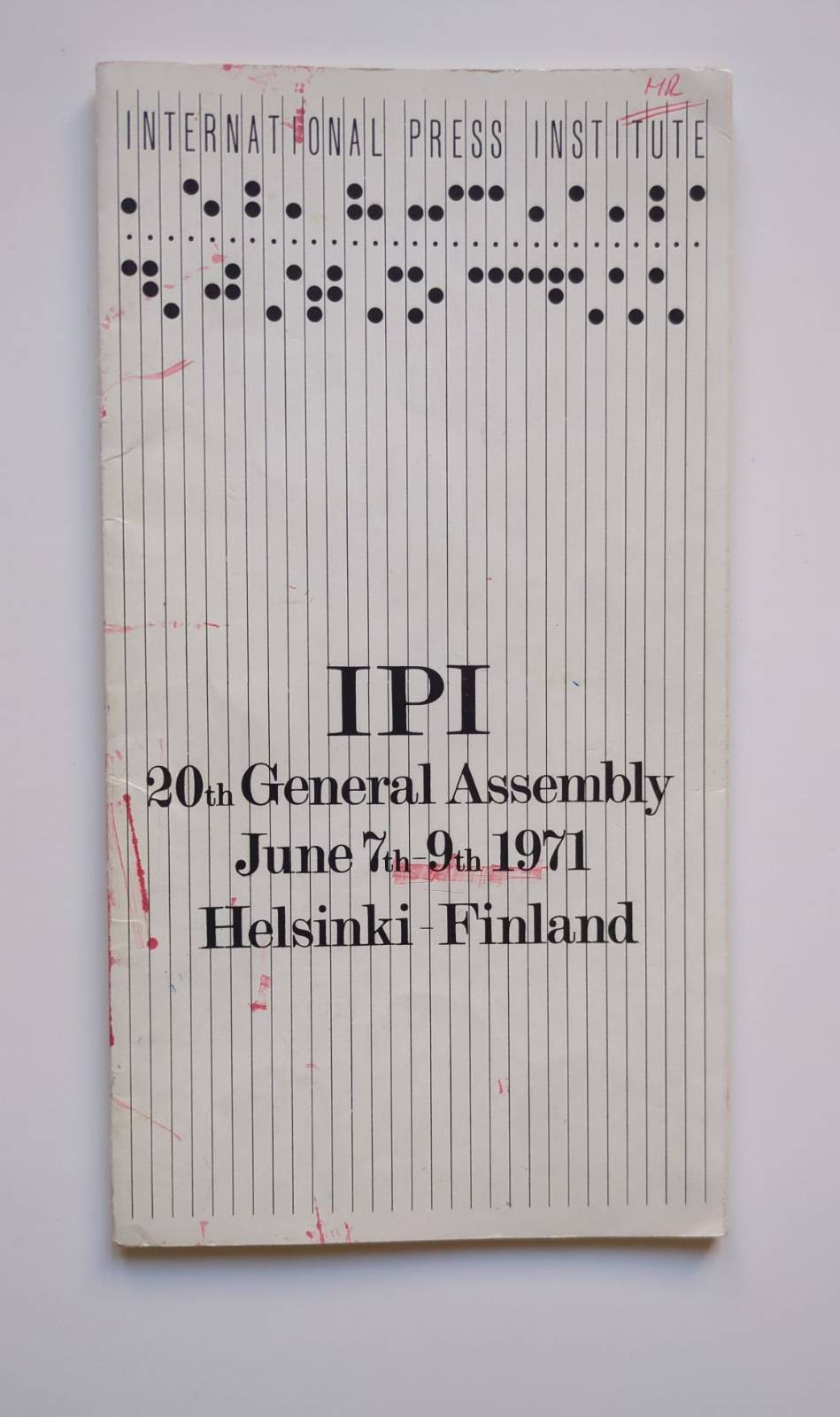
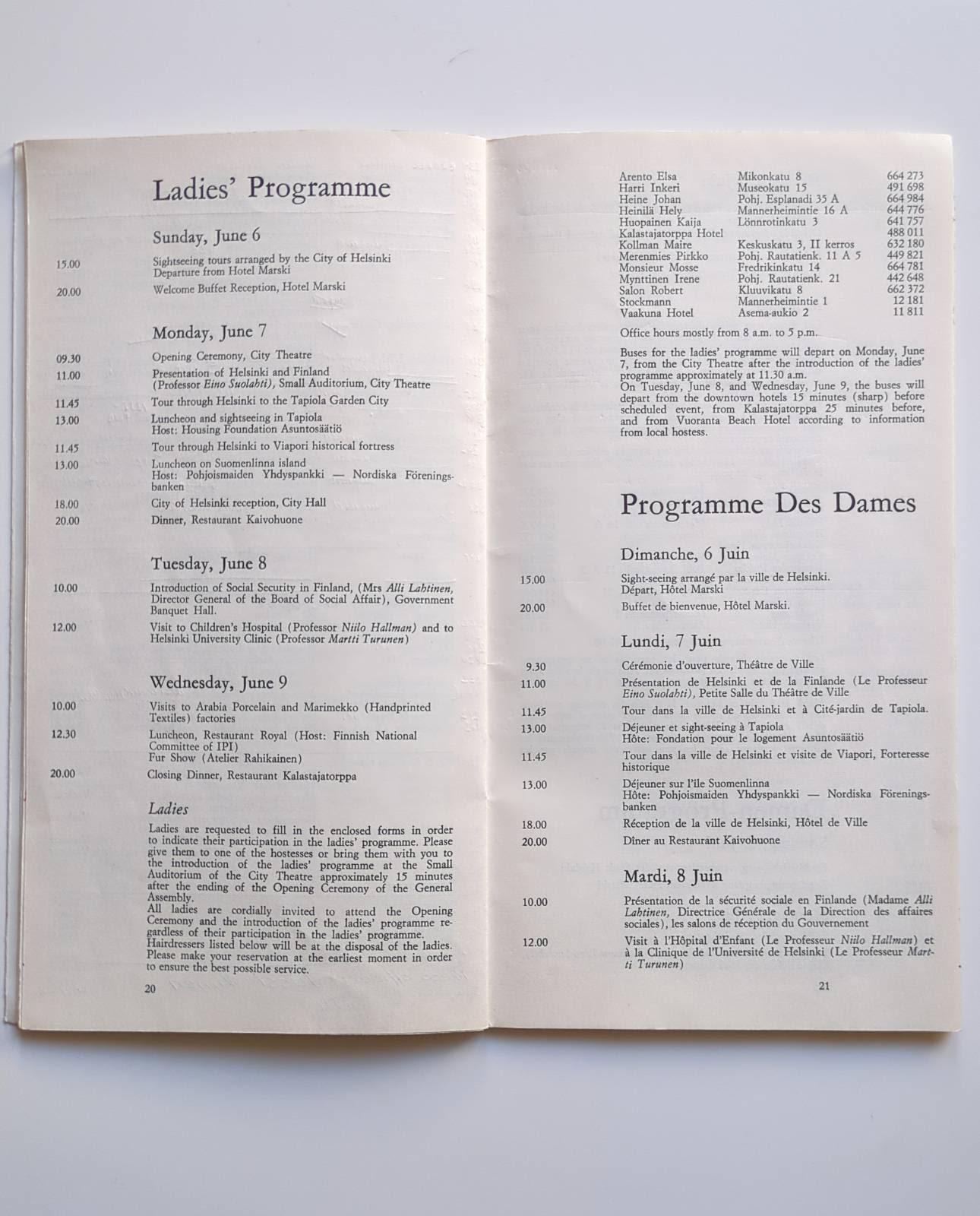
During the 70s, delegates’ wives were catered for with annual “Ladies’ Programmes”, which included tea ceremonies, fashion shows, visits to museums, children hospitals, childcare centers and arts and crafts shows, practice of flower arrangements, dinners and lunches, and sightseeing. In some cases, such as in 1971, they were hairdressers listed and available "at the disposal of the ladies". Later on, from the 80s, there were renamed to "Programme for accompanying persons".
Photos: Jerusalem 1973, Kyoto 1974, Helsinki 1971, Oslo 1977.



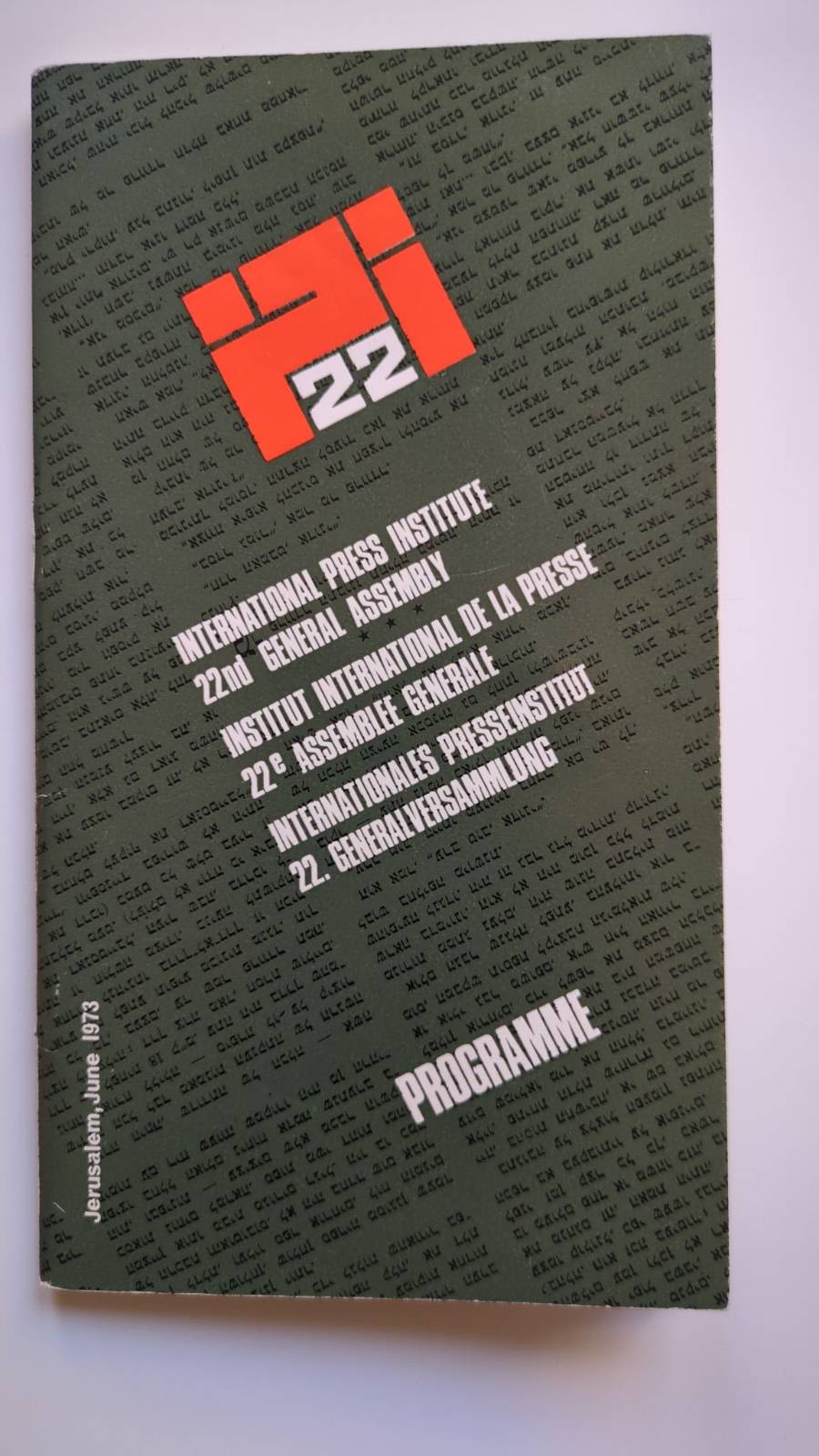
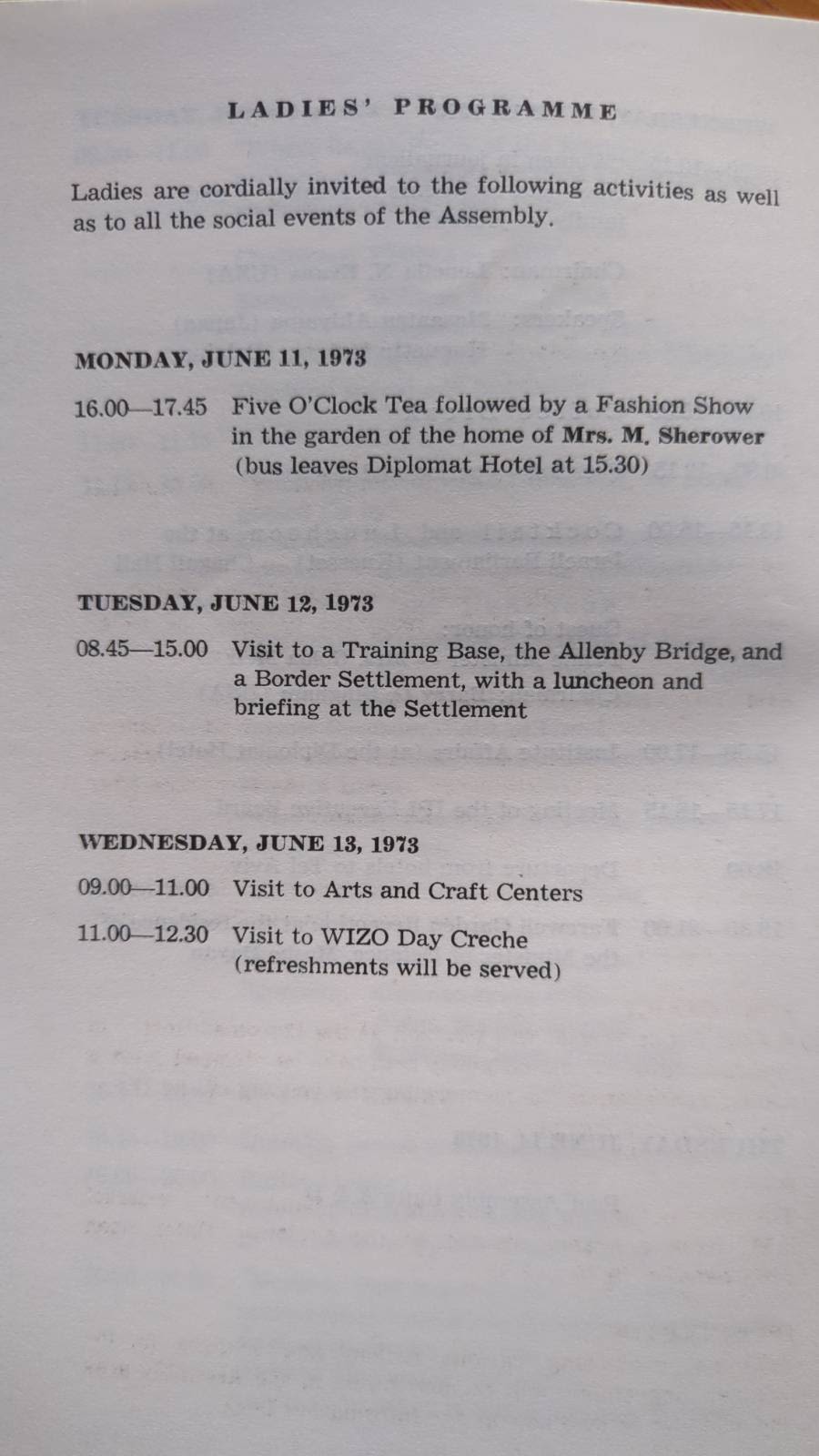
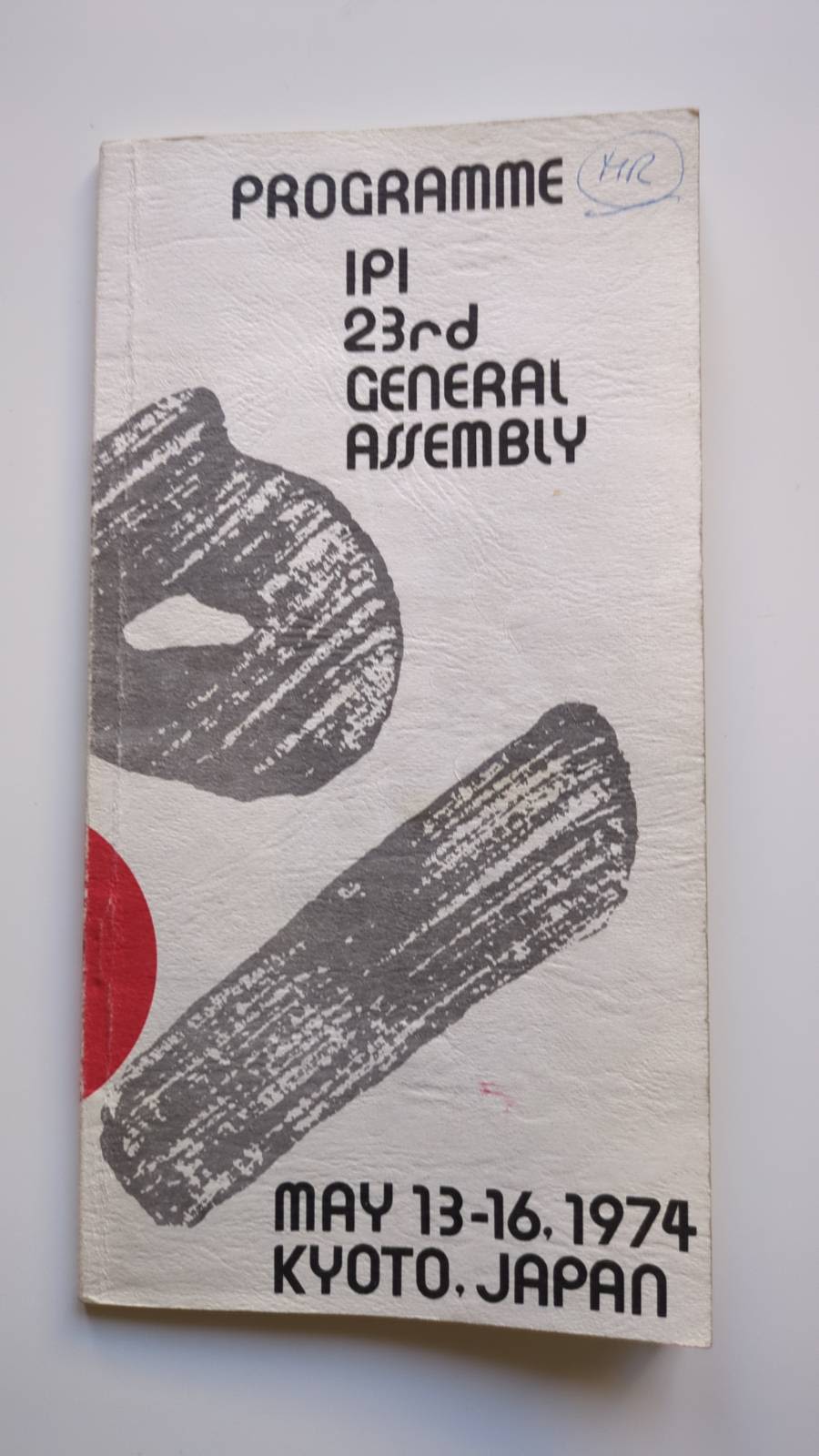
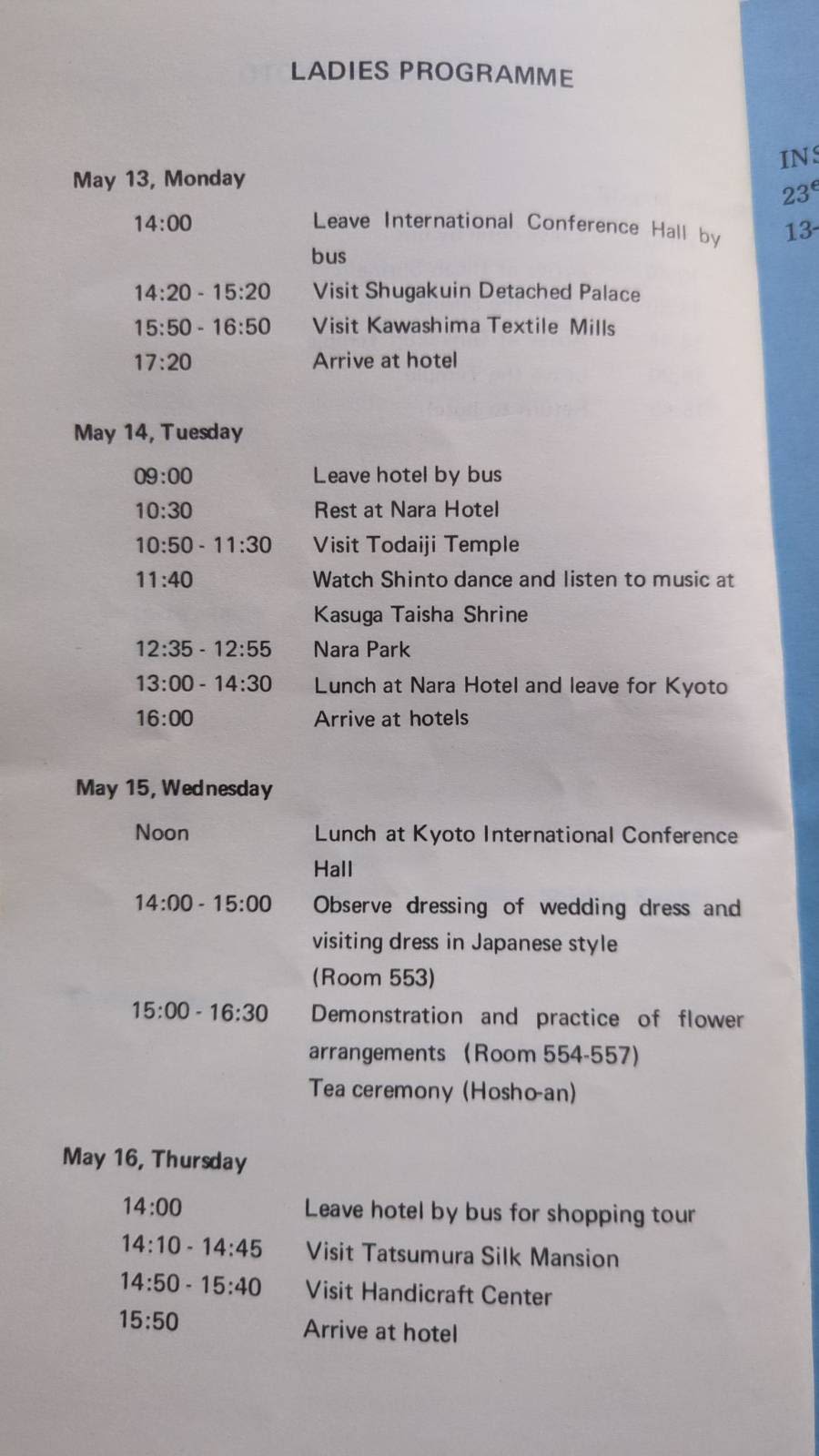
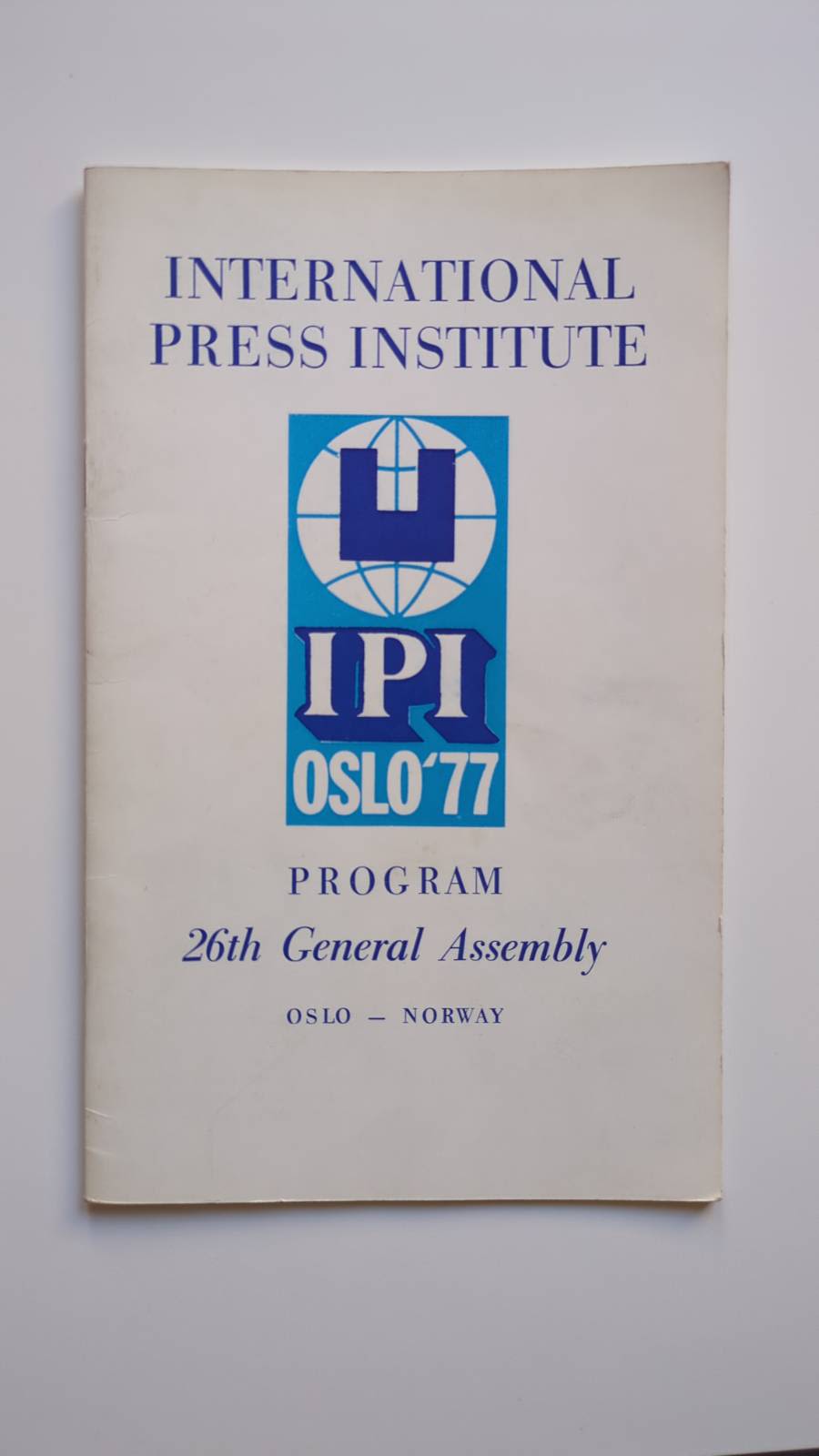
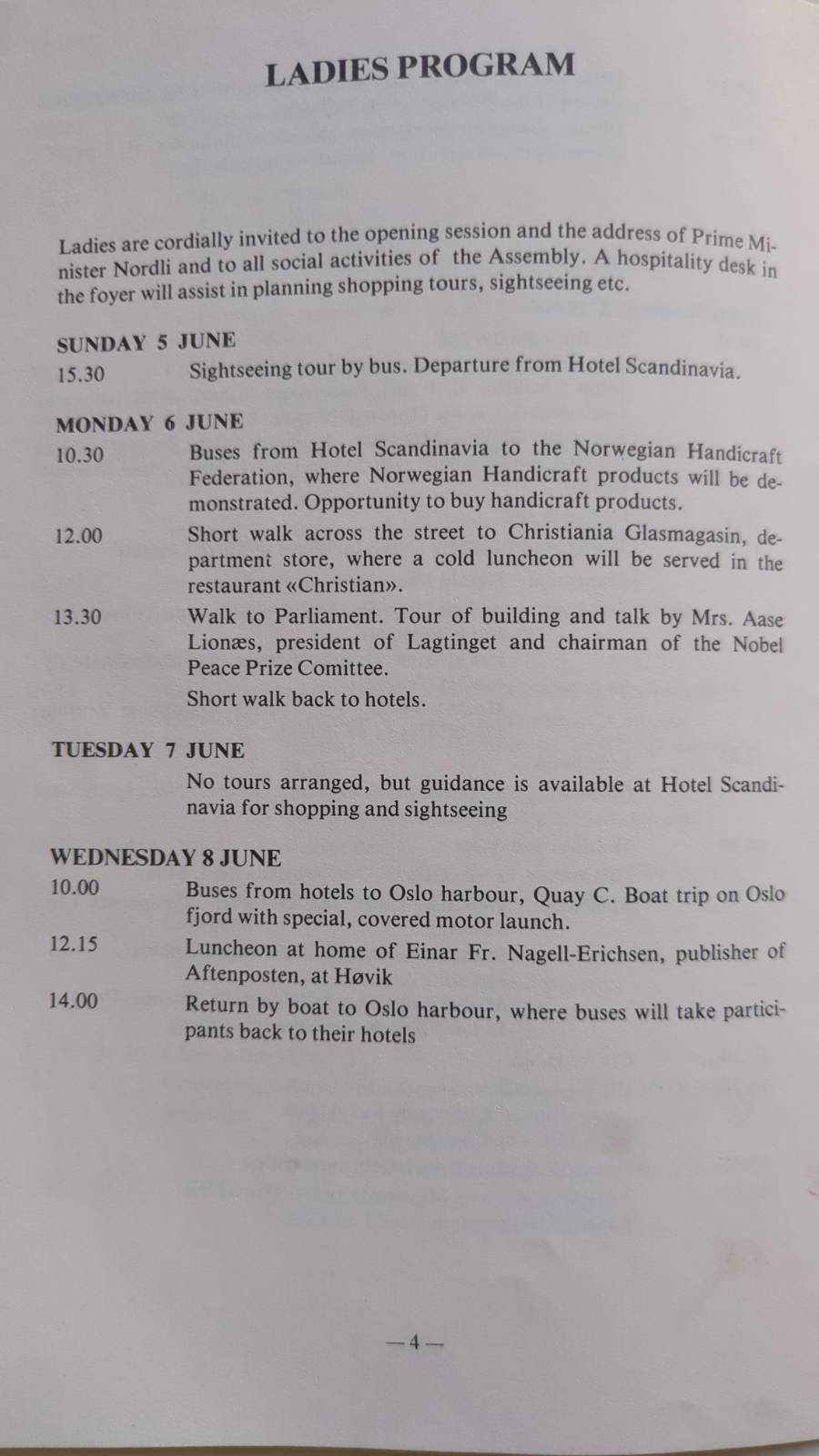
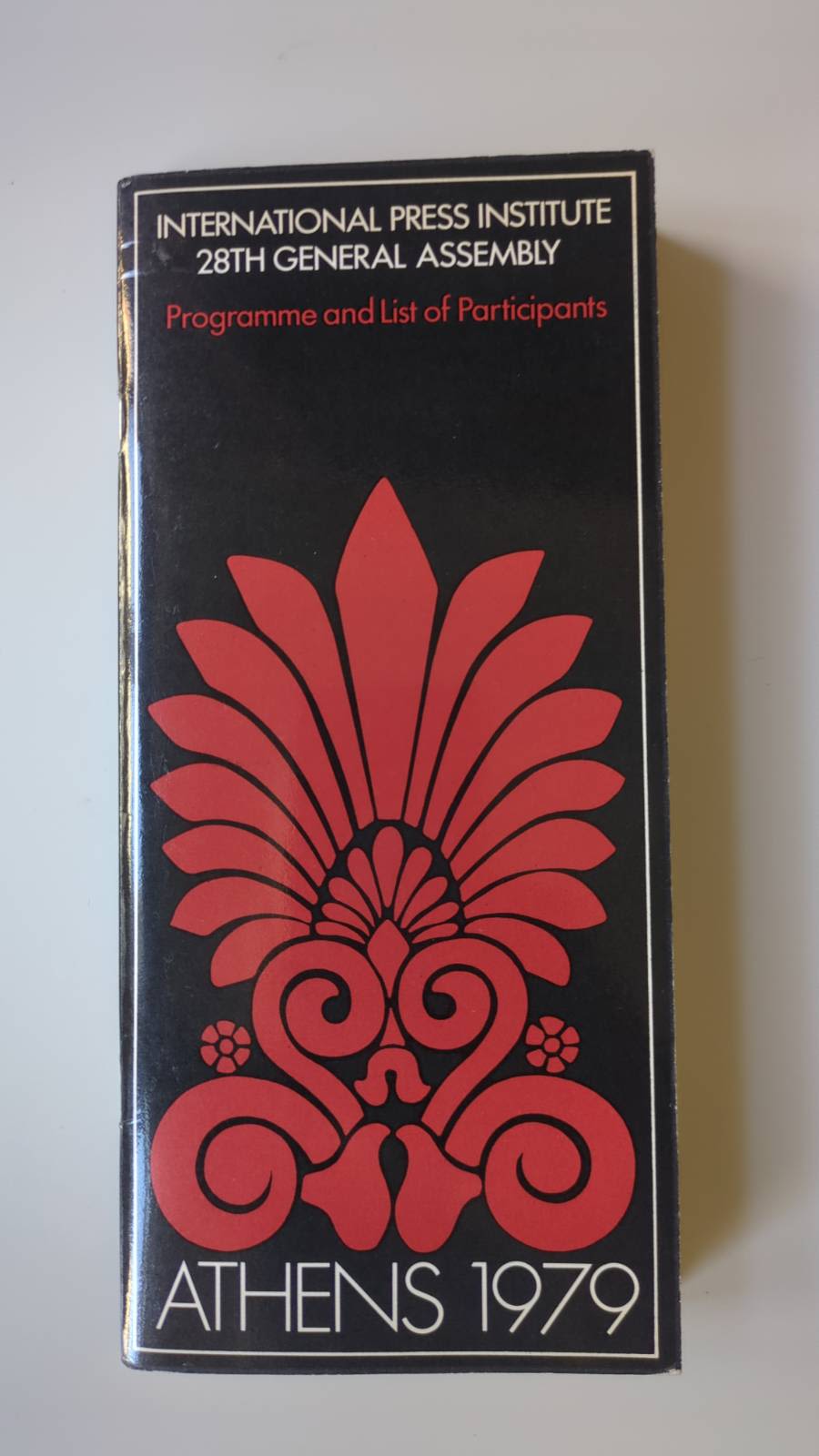
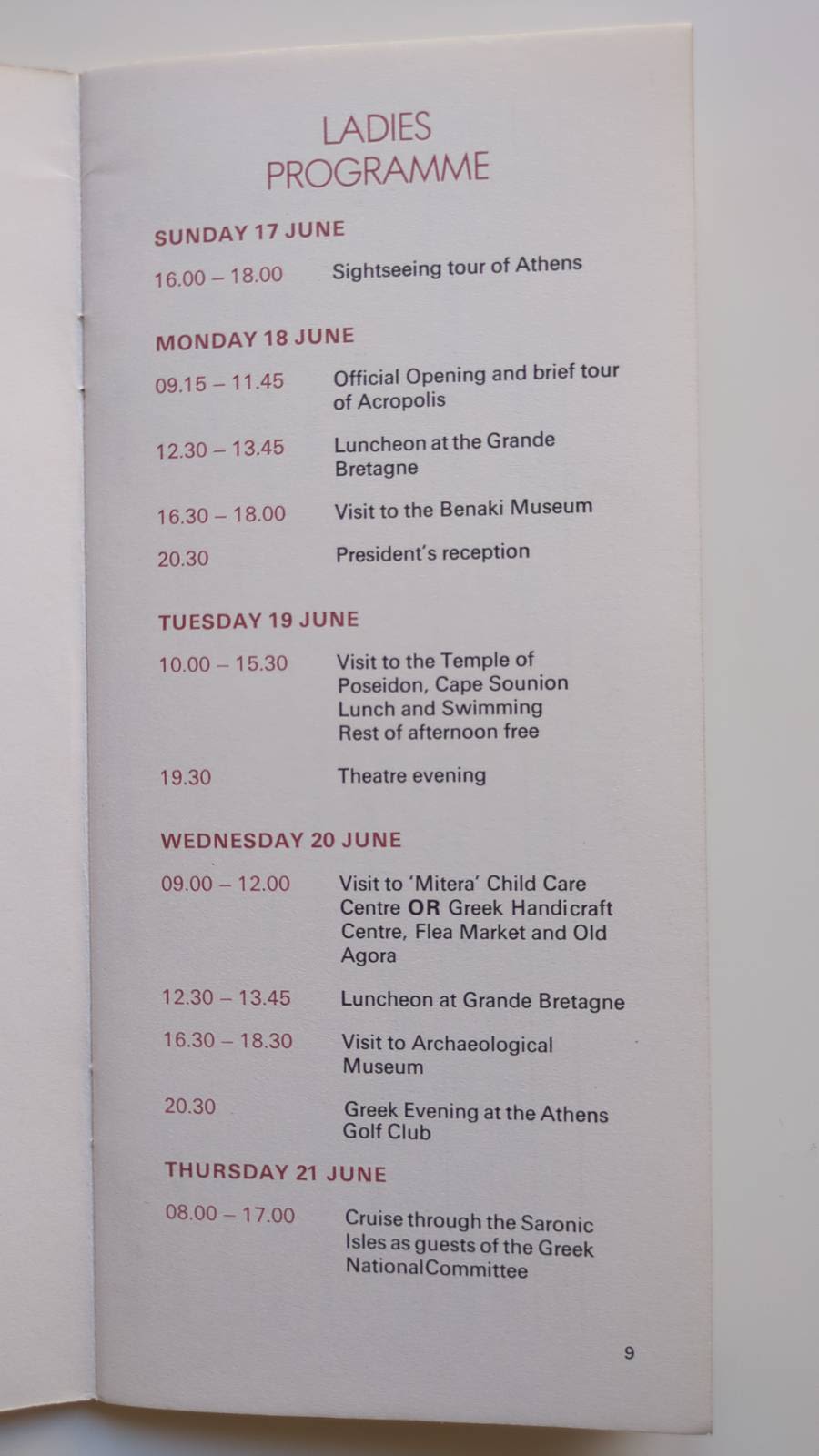


1973: First General Assembly panel on women in journalism
News and comments in women's and family journals
"On the one hand there is a women's press which is completely stereotyped and where the word 'woman' has the same extremely restricted and limited sense as in earliest times, but in a more modern form; on the other hand there is the press of current affairs in the broadest and total sense of the word, which creams off those women who want to be treated as complete individuals."
— IPI Report, July/August 1973.

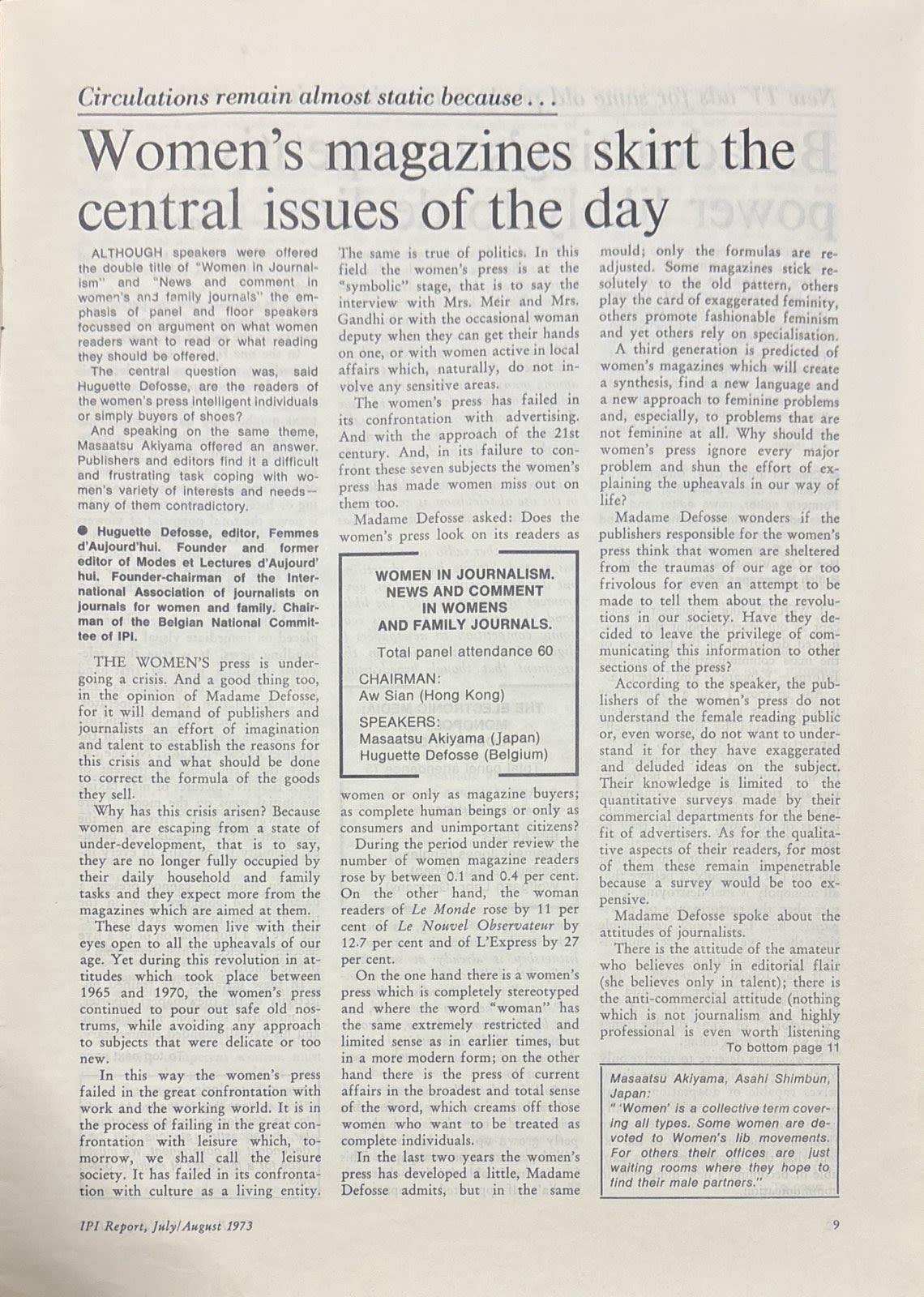
IPI Report, July/August 1973
IPI Report, July/August 1973

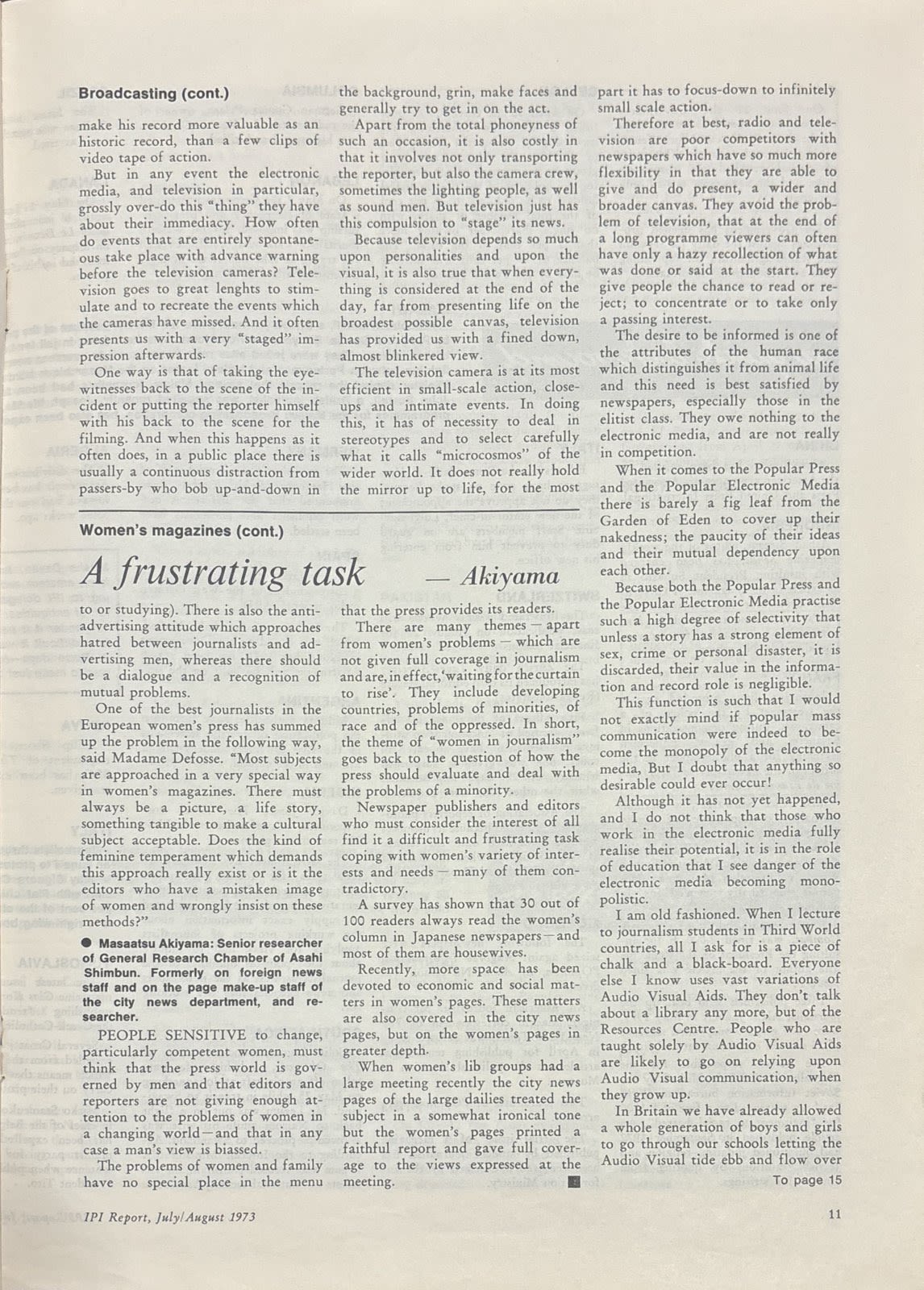
IPI Report, July/August 1973
IPI Report, July/August 1973

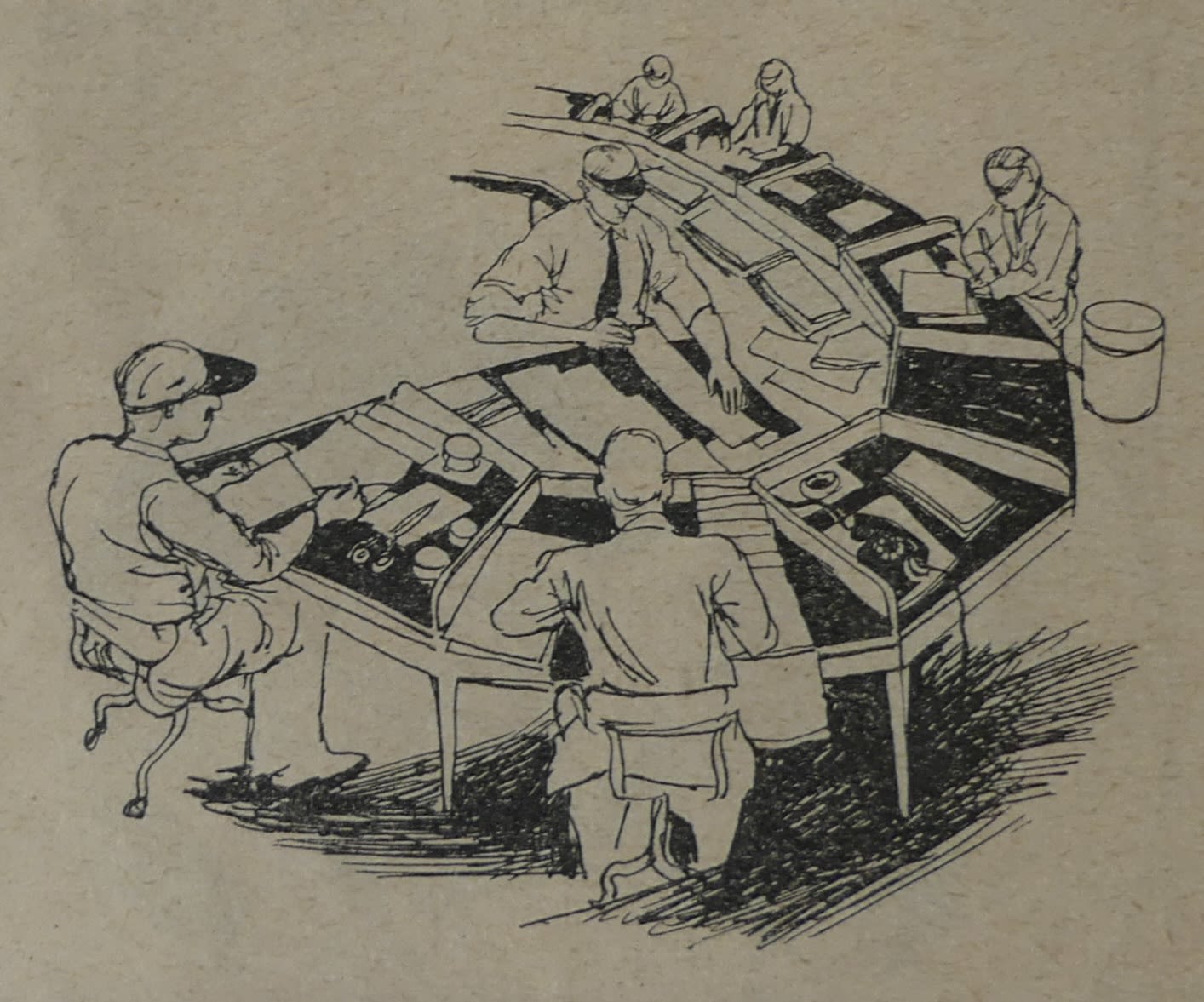

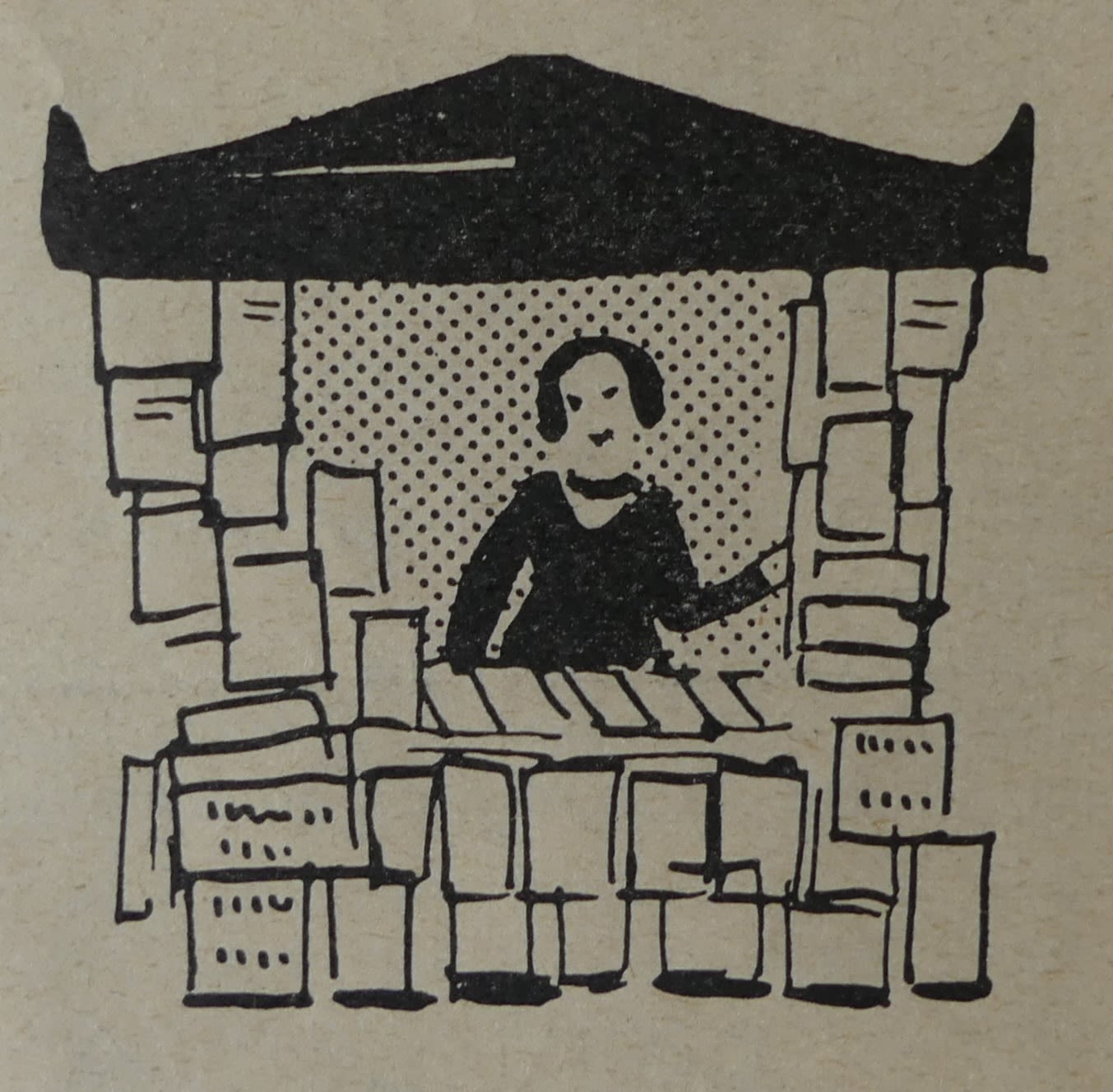

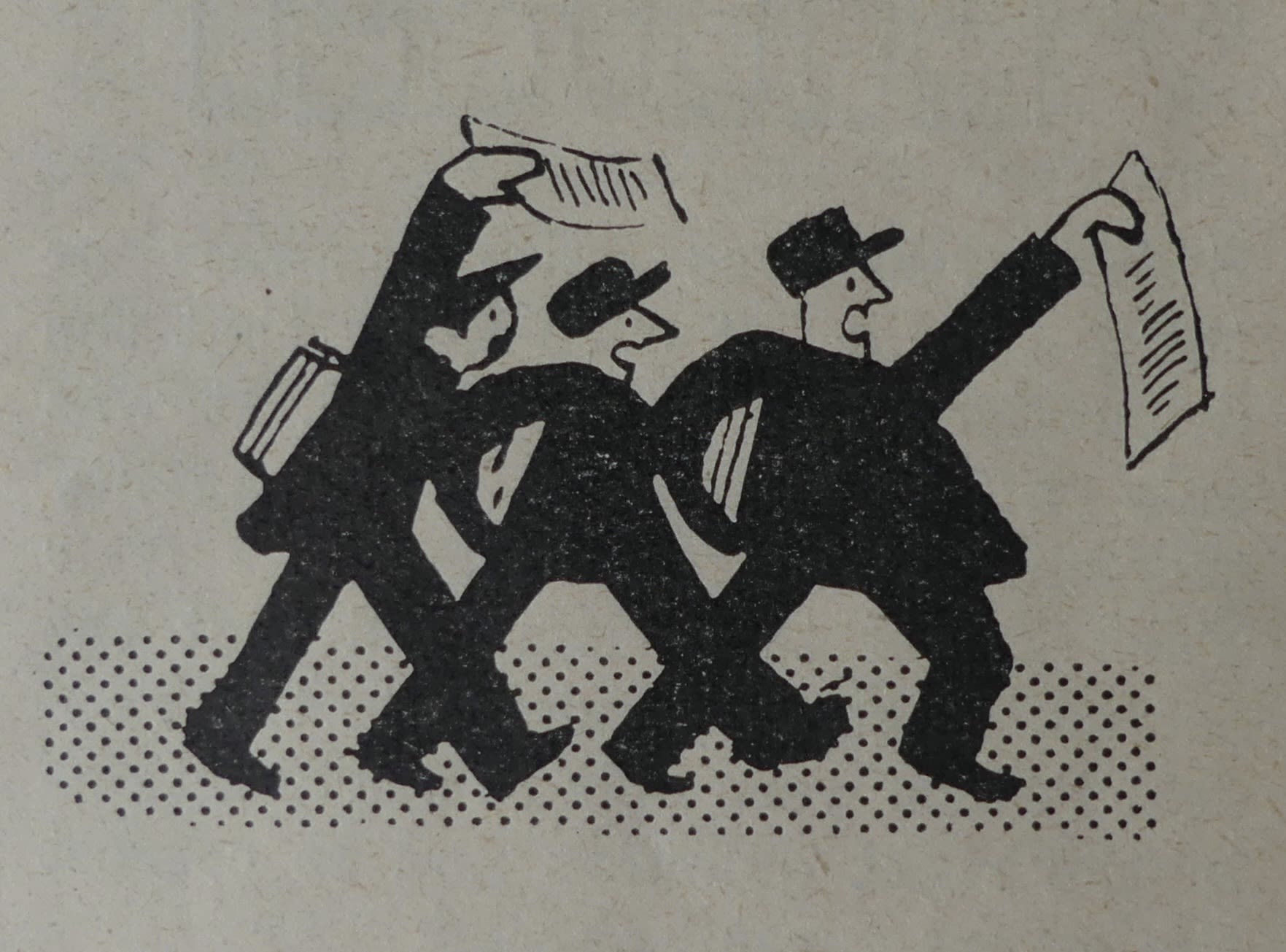

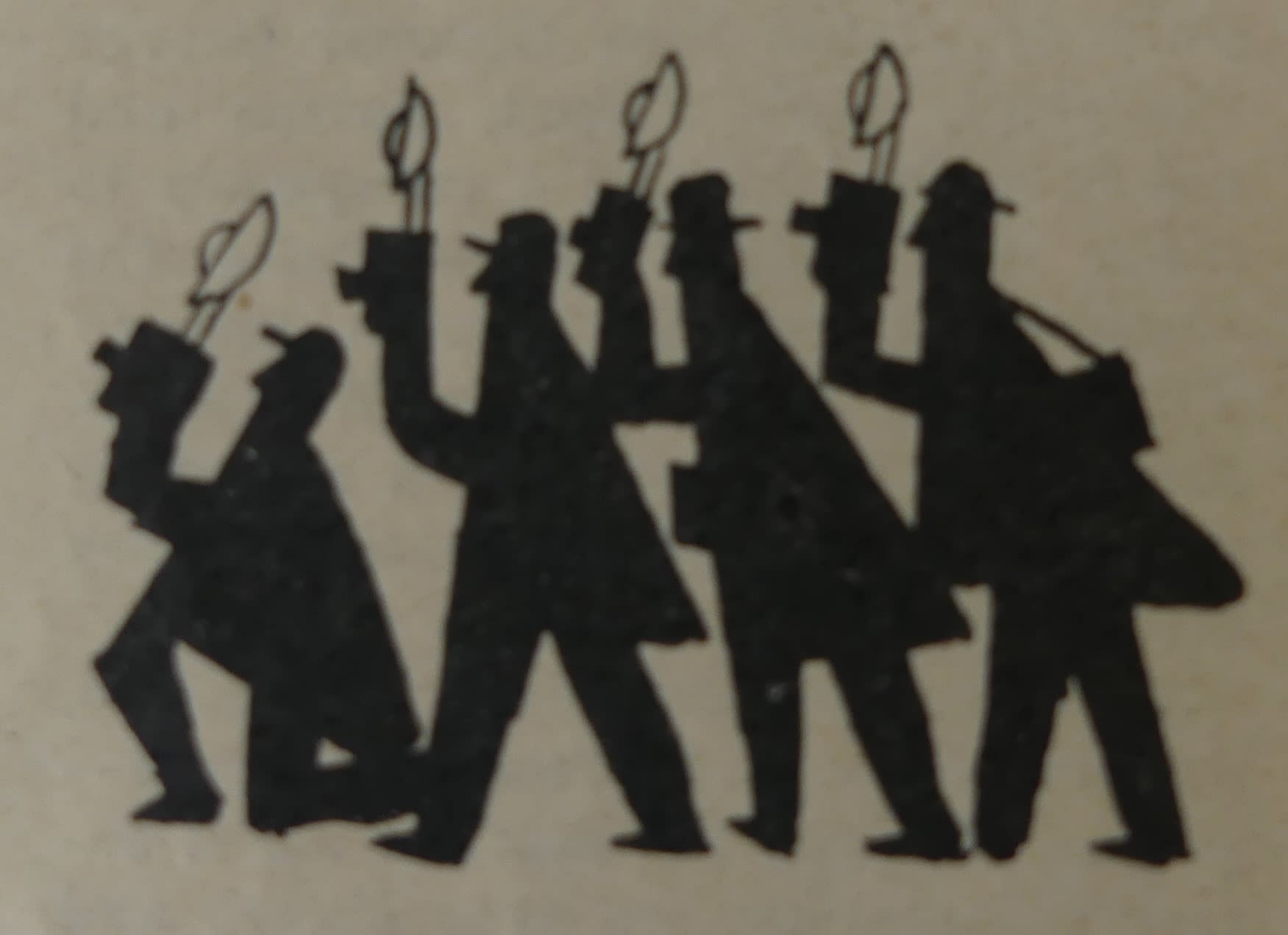

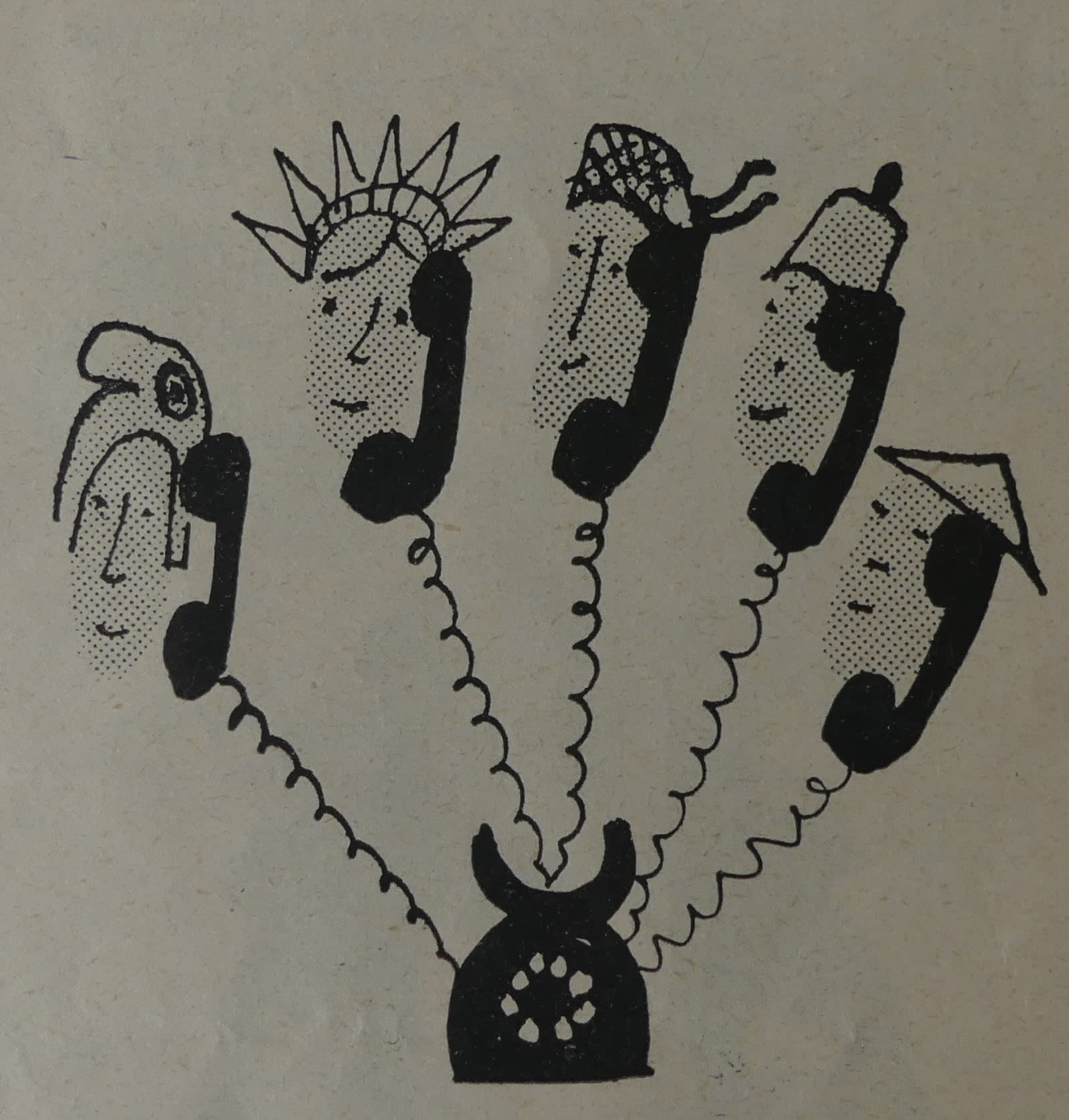

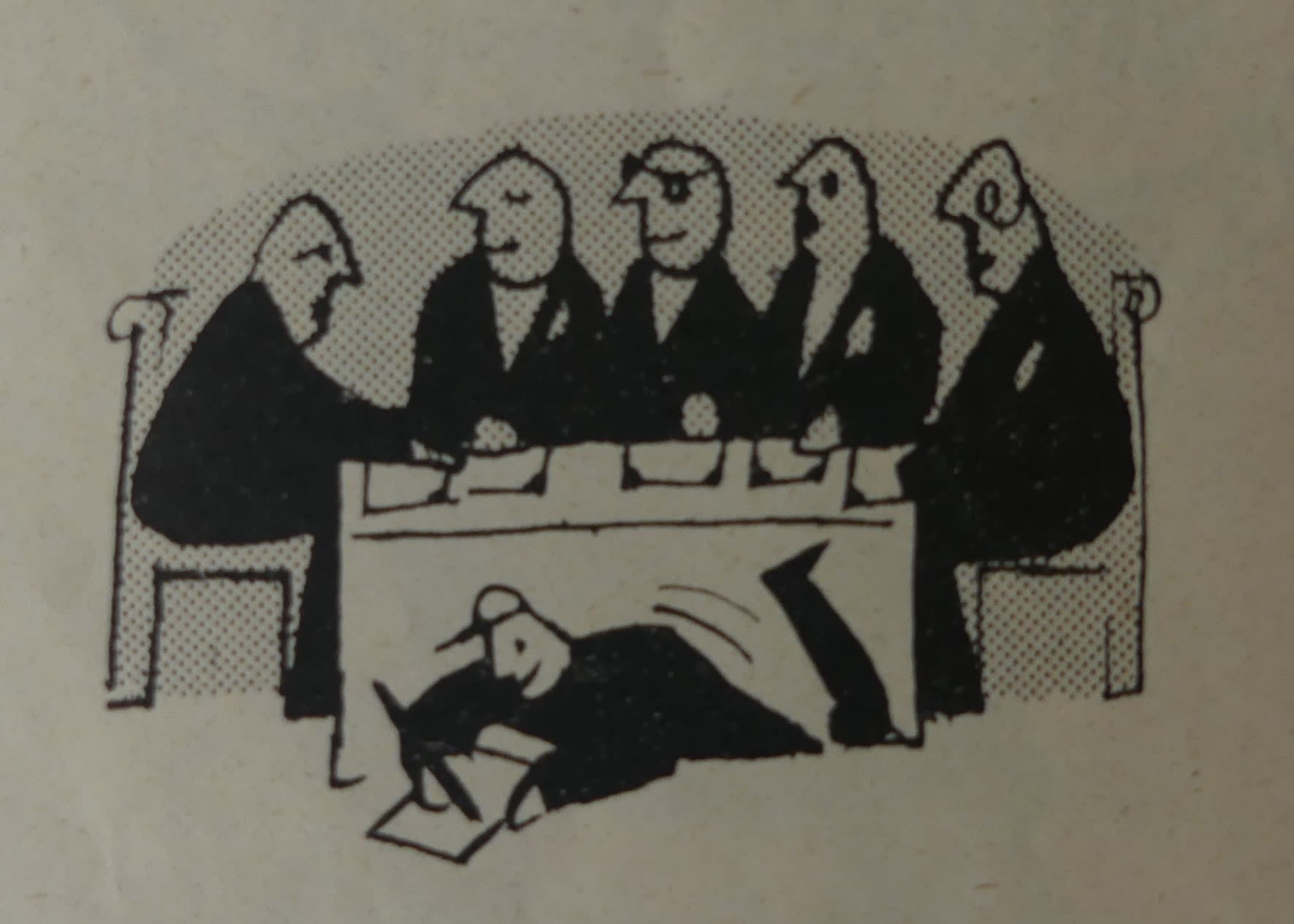

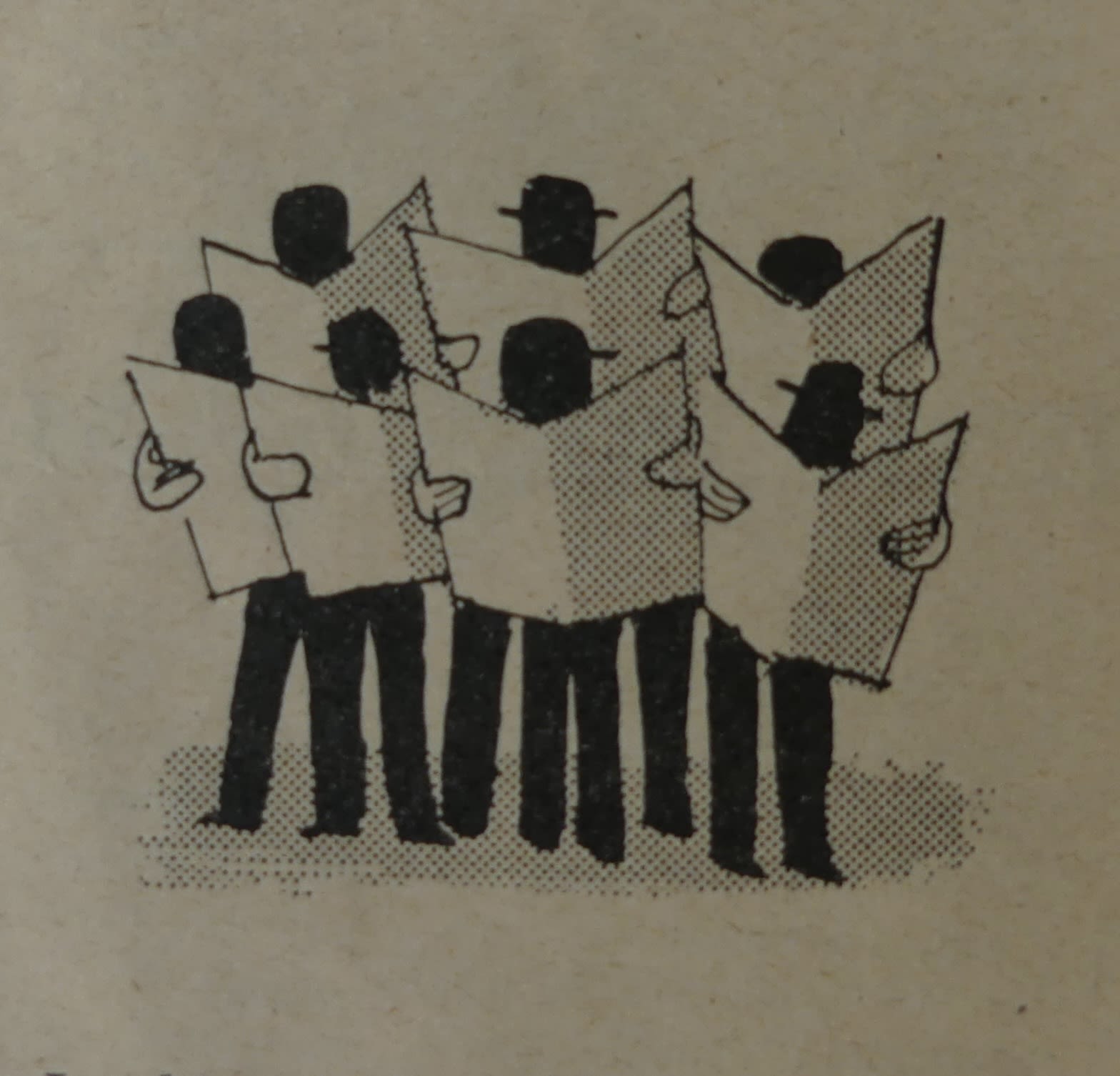

Men at work, IPI Report 1952
Men at work, IPI Report 1952

Woman at newstand, IPI Report, 1952
Woman at newstand, IPI Report, 1952

Newspaper Salesmen, IPI Report 1952
Newspaper Salesmen, IPI Report 1952

Photographers, IPI Report 1952
Photographers, IPI Report 1952

Telephones, IPI Report 1953
Telephones, IPI Report 1953

Board meeting, IPI Report 1954
Board meeting, IPI Report 1954

IPI Report, 1952
IPI Report, 1952
Credits
Text: Gwen Jones, Ada Homolova, and Gabriela Manuli
• Gwen Jones is an archival researcher, and curator, and works as a consultant for the IPI Archive Project.
• Ada Homolova is a freelance data and investigative journalist. She also runs a mentorship program to teach journalists how to work with data.
• Gabriela Manuli is IPI Director of Special Projects, and leads key initiatives to strengthen IPI’s global network.
IPI Archive Project managers: Grace Linczer, Gabriela Manuli
Archival researcher, curator: Gwen Jones
Infographics: Ada Homolova
Logistics: Christiane Klint, Milica Miletić
Archival assistants: Mark Hatfaludi, Veronica Linczer
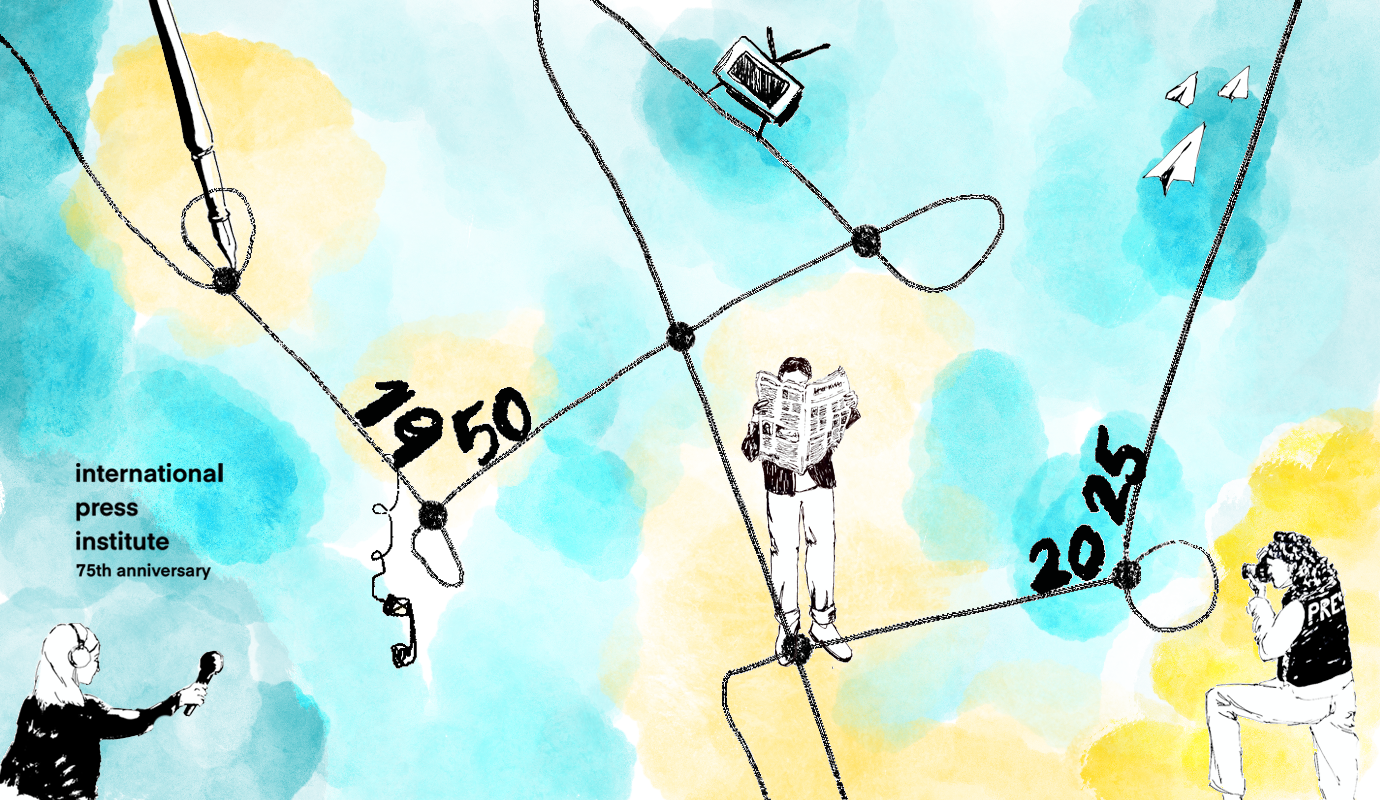
Cover Illustration: Dinara Satbayeva
Editor: Timothy Large
About the Project
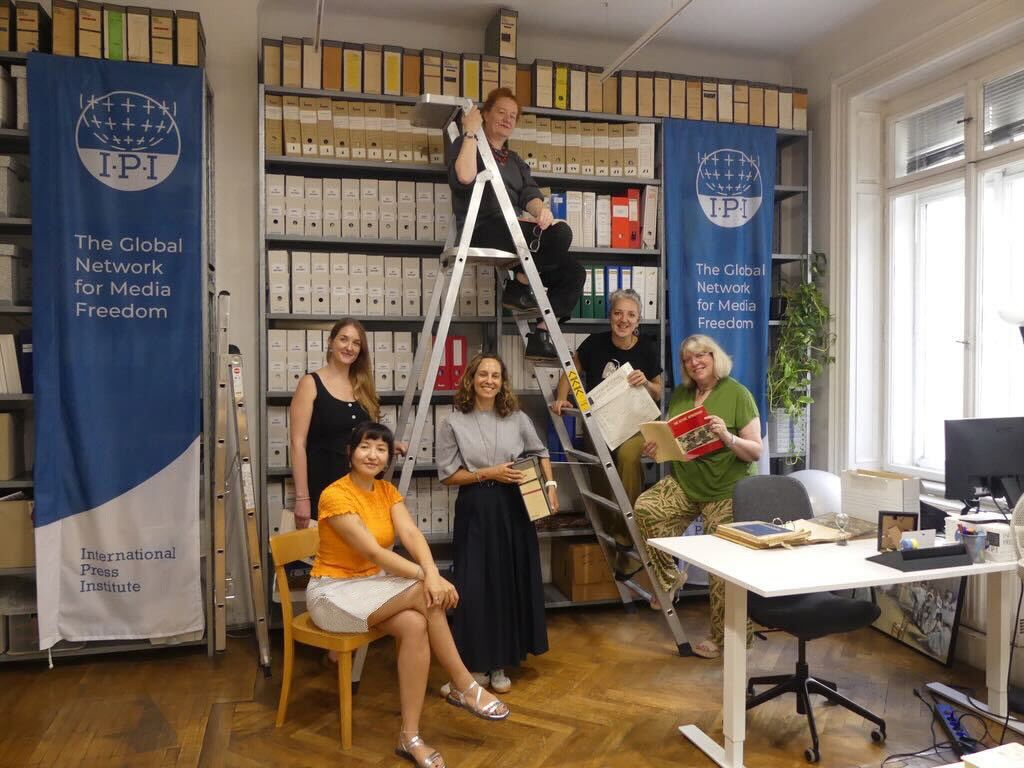
Housed in rows of boxes lining the shelves of the Press Freedom Room at IPI’s headquarters in downtown Vienna, the archive holds 75 years of history: thousands of pages of publications, research, correspondence, World Congress records, and the flagship IPI Report (1952-2005). Together, these materials form a unique documentary record of the global struggle for press freedom — the consistent and creative work that IPI members have carried out across seven decades and around the world. Our goal is to digitize and modernize the archive so it can serve as a premier digital resource for media historians and researchers.
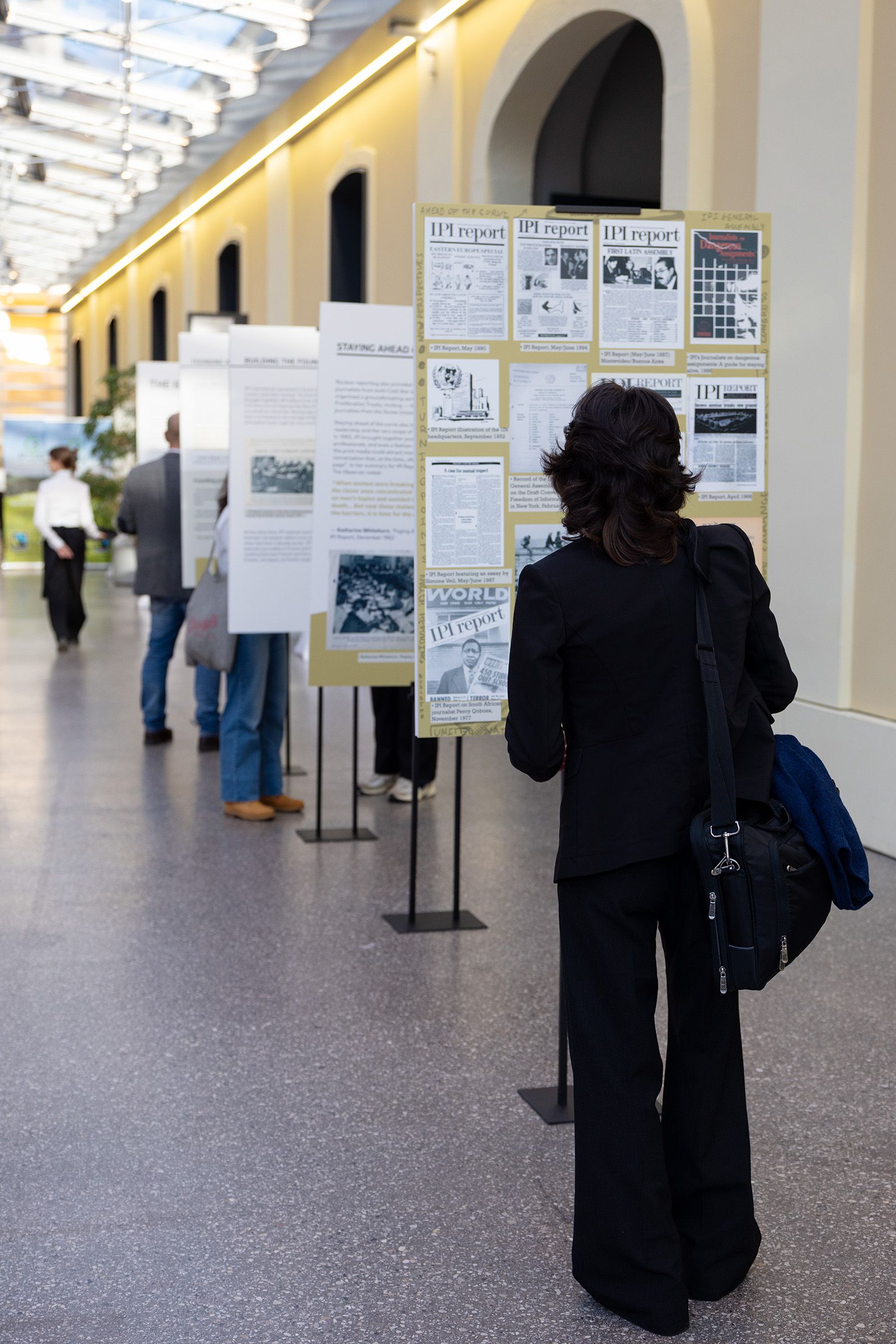
Interested in learning more about the IPI Archive? Visit here our online exhibition, featuring three thematic sections: turning points, resisting censorship and attempts to undermine the flow of news, and the dynamics of technological change. An in-person version of this exhibition was presented at the 75th IPI Anniversary World Congress and Media Innovation Festival in Vienna (October 23-25, 2025).
We're grateful to the 4D Award, which allowed us to expand this exhibition, featuring a gender section showing how women journalists broke new ground over the decades to take leading roles at the same time as a series of technological changes transformed journalism.

Photo: Ronja Koskinen (IPI)
Photo: Ronja Koskinen (IPI)
To learn more about the archive, host our exhibition or learn more about our broader digitization initiative, get in touch with our team at archive@ipi.media




 Built with Shorthand