JAILED FOR DOING THEIR JOBS
the stories of women journalists imprisoned around the world



For years, the imprisonment of journalists around the globe has been on the rise, as governments worldwide weaponize the law to jail those who dare to hold the powerful to account for reporting independent news and information.
In recent years, a growing share of these imprisoned journalists are women. According to data from the Committee to Protect Journalists, 50 women journalists were behind bars around the world in 2025.
The rising number of women journalists behind bars coincides with a broader trend of increased incarceration of women who have been disproportionately impacted by discriminatory laws. Over the past 25 years, the rate of women incarcerated globally has grown by nearly 60% — around three times the rate of men.
Journalists are often the first targets of autocrats seeking to consolidate power. As authoritarianism gains ground worldwide, women journalists are increasingly bearing the brunt of an acceleration of global crackdowns on press freedom.
On March 8, International Women’s Day, we call attention to key cases of women journalists imprisoned around the world for doing their jobs from Georgia, Turkey, Azerbaijan, the Philippines, Iran, Ethiopia, Ukraine, and China.
When those who hold power to account are put behind bars, society loses. Strong, resilient societies depend on diverse, independent information and news on matters of the public interest.
The International Press Institute stands with these brave journalists unjustly punished for their dedication to free and independent news and information.
We will continue to fight for their release, and the release of all journalists unjustly held behind bars for doing their jobs.
Journalism is not a crime.


GEORGIA
In recent years, the state of independent media in Georgia has become increasingly precarious, as the ruling Georgian Dream party accelerates efforts to restrict the space for critical voices through targeted violence, the introduction of repressive laws, deliberate economic pressure, and impunity for crimes against journalists.
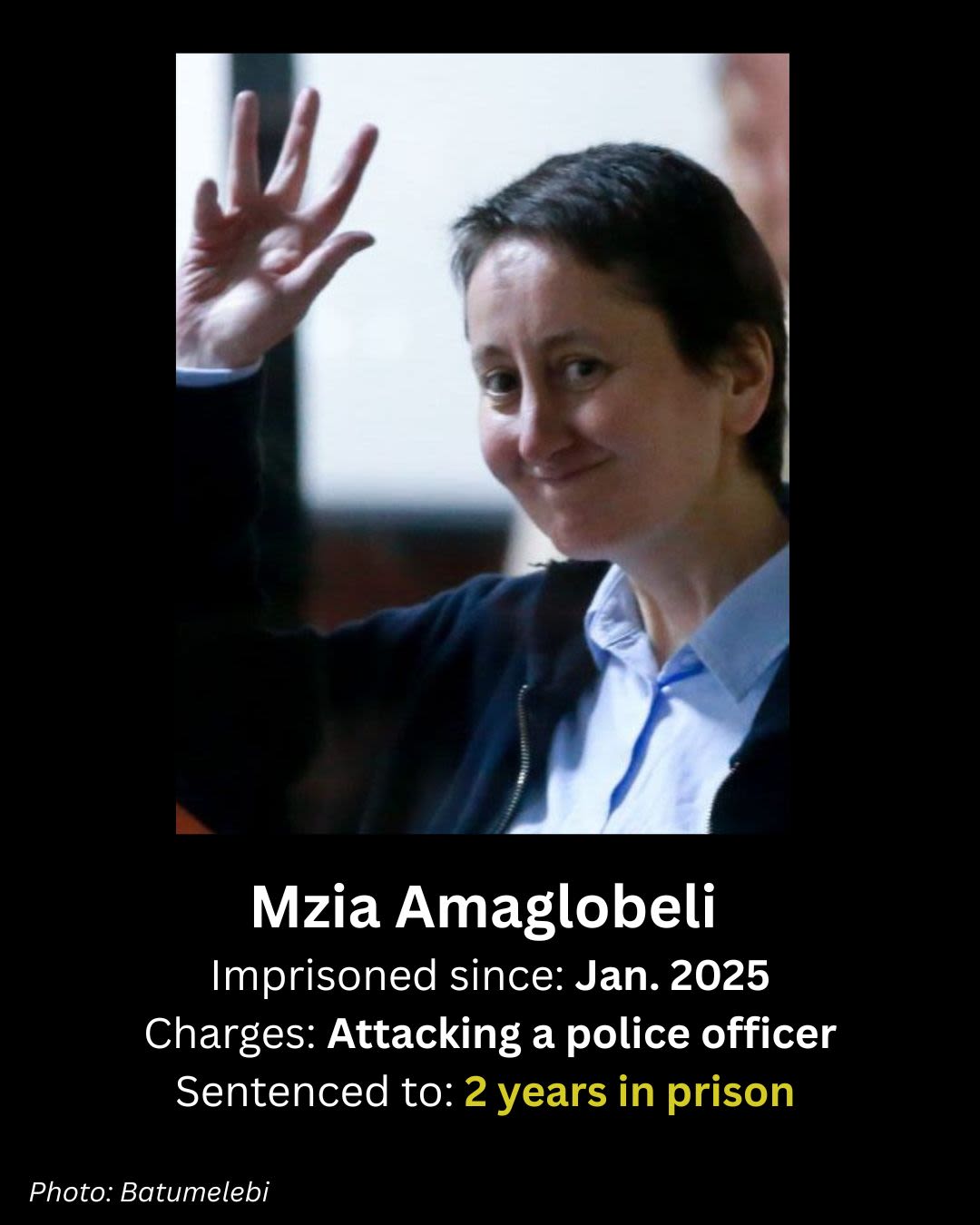
In January 2025, Mzia Amaglobeli, the co-founder and CEO of two of Georgia’s most prominent independent media outlets, Batumelebi and Netgazeti, became the first woman journalist to be imprisoned in Georgia’s 34 years of independence.
She was arrested following a minor altercation with a police chief during a crackdown on democratic protests and charged with “attacking a police officer” – a charge widely condemned as grossly disproportionate and a politically motivated punishment for her decades-long work and dedication to independent reporting.
Since her arrest, Mzia and her media organisations have faced discrediting campaigns and defamation from Georgian Dream leaders, degrading treatment, and economic retaliation.
In August 2025, Mzia was sentenced to two years in prison after authorities downgraded the charge against her. On March 3, 2026, Georgia's Supreme Court refused to consider Mzia's appeal. IPI has advocated for Mzia’s immediate release since her arrest. With all domestic remedies now exhausted, IPI will support taking the case to the European Court of Human Rights.
In October 2025, IPI named Mzia a World Press Freedom Hero, in recognition of her resilience in the face of rising authoritarianism.
While in prison, Mzia's eyesight has rapidly deteriorated due to an existing degenerative eye disease that has resulted in near total blindness in both eyes. She has also experienced harassment and mistreatment at the hands of authorities, including verbal abuse, physical intimidation, and denial of basic necessities.
TURKEY
In Turkey, judicial harassment of journalists has created a chilling effect on press freedom, as authorities frequently use the country’s anti-terror laws to restrict freedom of expression and effectively criminalize the practice of journalism.
Four women journalists are currently imprisoned in Turkey.
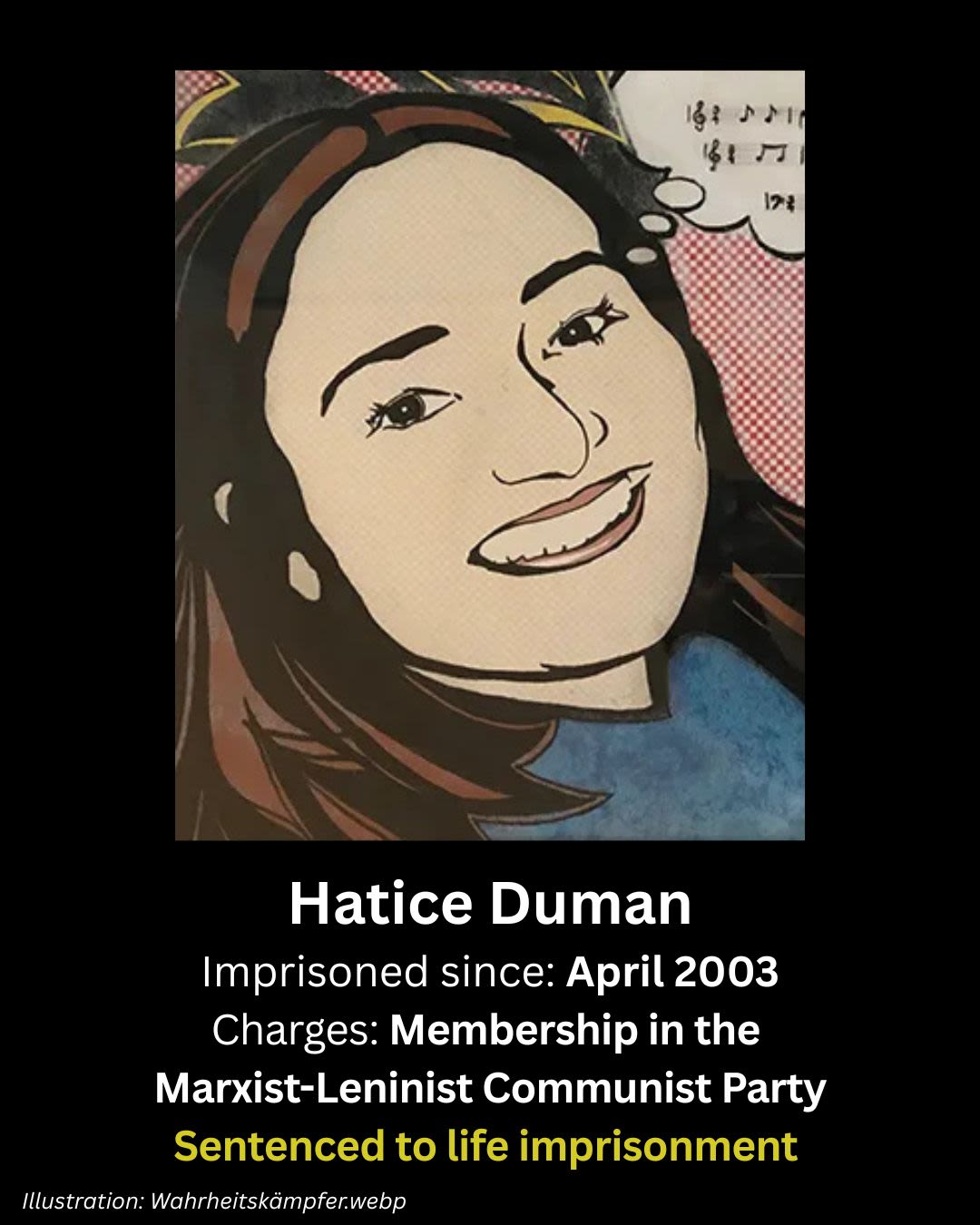
Journalist Hatice Duman has been behind bars for nearly 23 years, after being handed a life sentence in 2012, following a nine-year-long trial.
Despite Turkey’s Constitutional Court twice ordering her retrial, Hatice remains imprisoned on the baseless charge of “being a member of the Marxist-Leninist Communist Party” (MLKP), under Turkey’s anti-terror law.
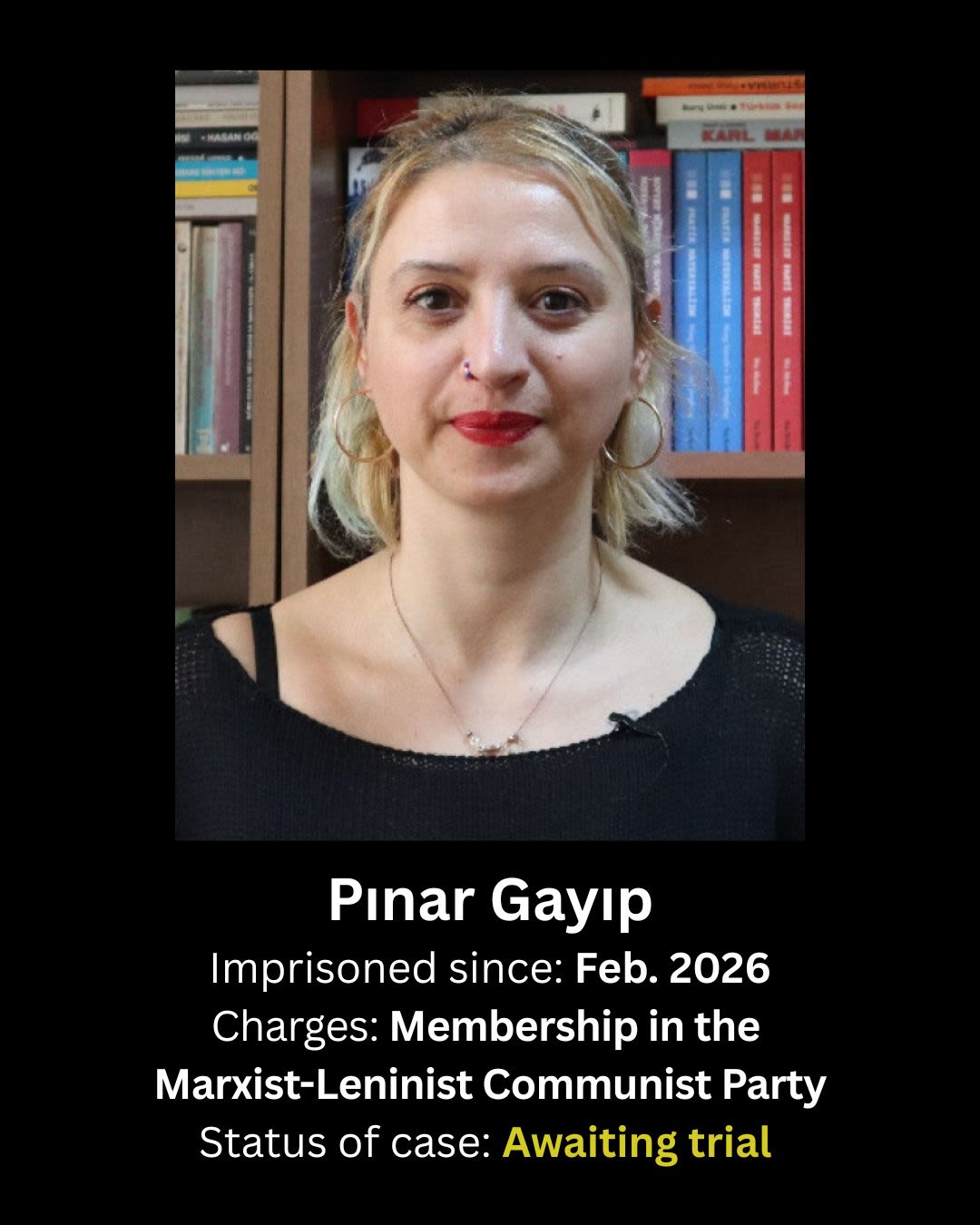
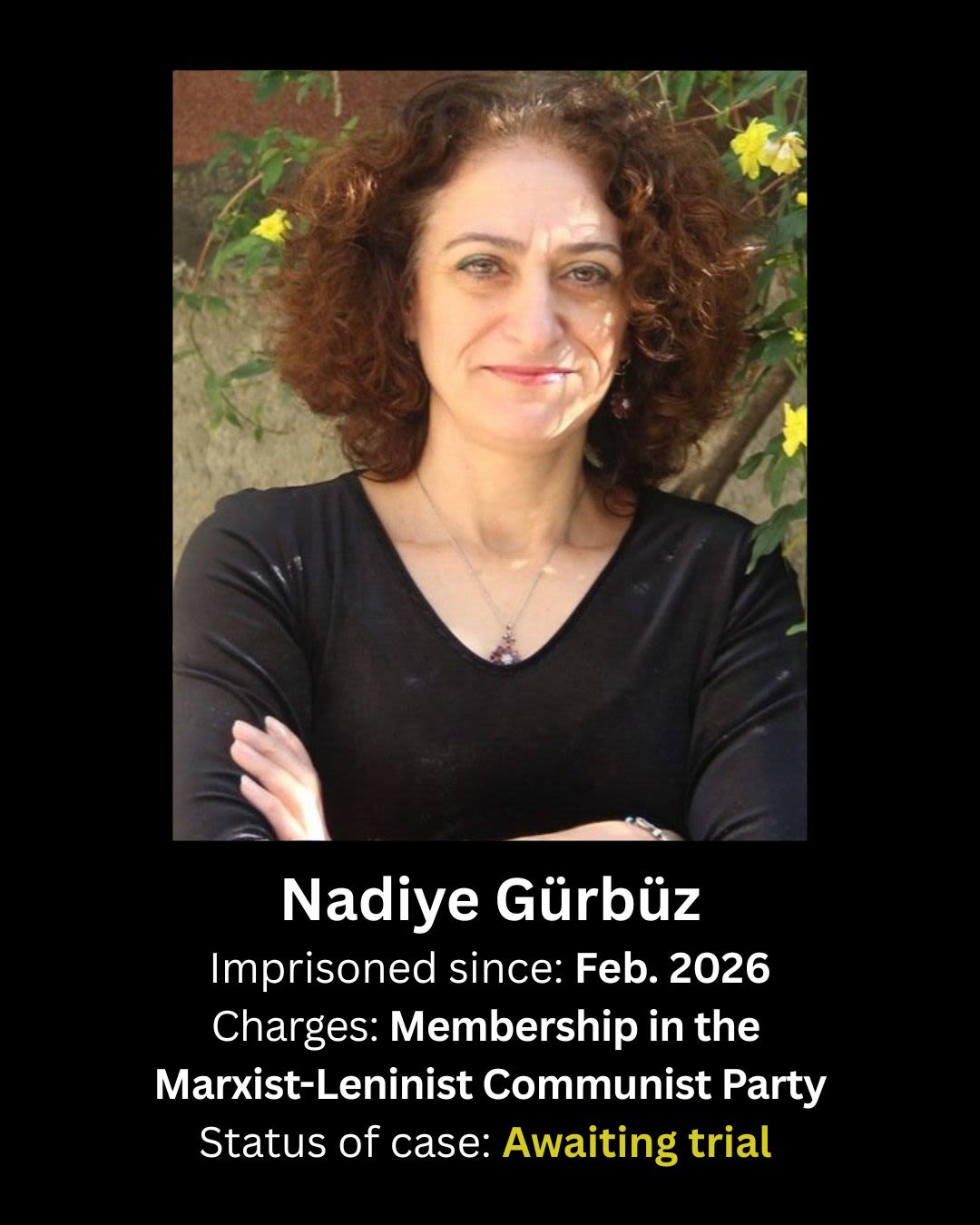
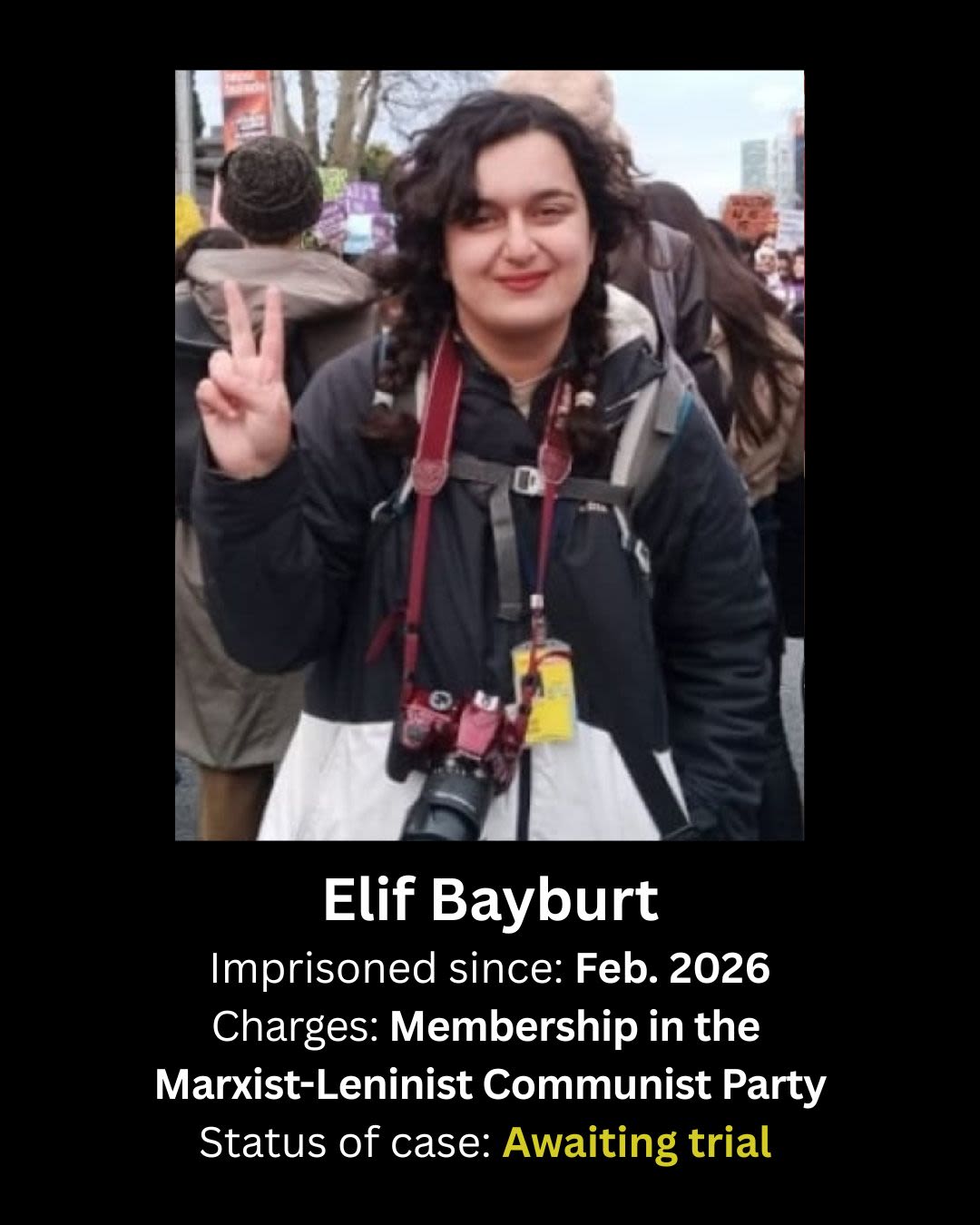
In February 2026, Etkin News Agency (ETHA) journalists Pınar Gayıp, Nadiye Gürbüz and Elif Bayburt were arrested and accused of “membership in a terrorist organisation,” by authorities.
The ward all four women journalists are held in is severely overcrowded – some are forced to sleep on portable beds due to lack of space. Prison guards have reportedly used physical force against prisoners, and in one case attempted to break Pınar’s arm.
The doctor assigned to the women’s ward reportedly avoids direct interaction with the prisoners and delays the provision of necessary medication – Nadiye, who suffers from allergic rhinitis, has reportedly been unable to obtain her prescribed medication.
AZERBAIJAN
Azerbaijani President Ilham Aliyev has presided over a sweeping crackdown on civil society in Azerbaijan that has accelerated in recent years. Despite joining the Council of Europe in 2001, Azerbaijan has become a leading jailer of political prisoners, including many journalists who report on corruption and abuse of power by the Aliyev regime.
A series of arrests of Azerbaijani journalists beginning in November 2023 marked the rise of a new wave of repression against critical voices. Nine women journalists are currently behind bars in Azerbaijan as part of cases brought against independent media outlets Meydan TV and Abzas Media by the Azeri government.
ABZAS MEDIA JOURNALISTS
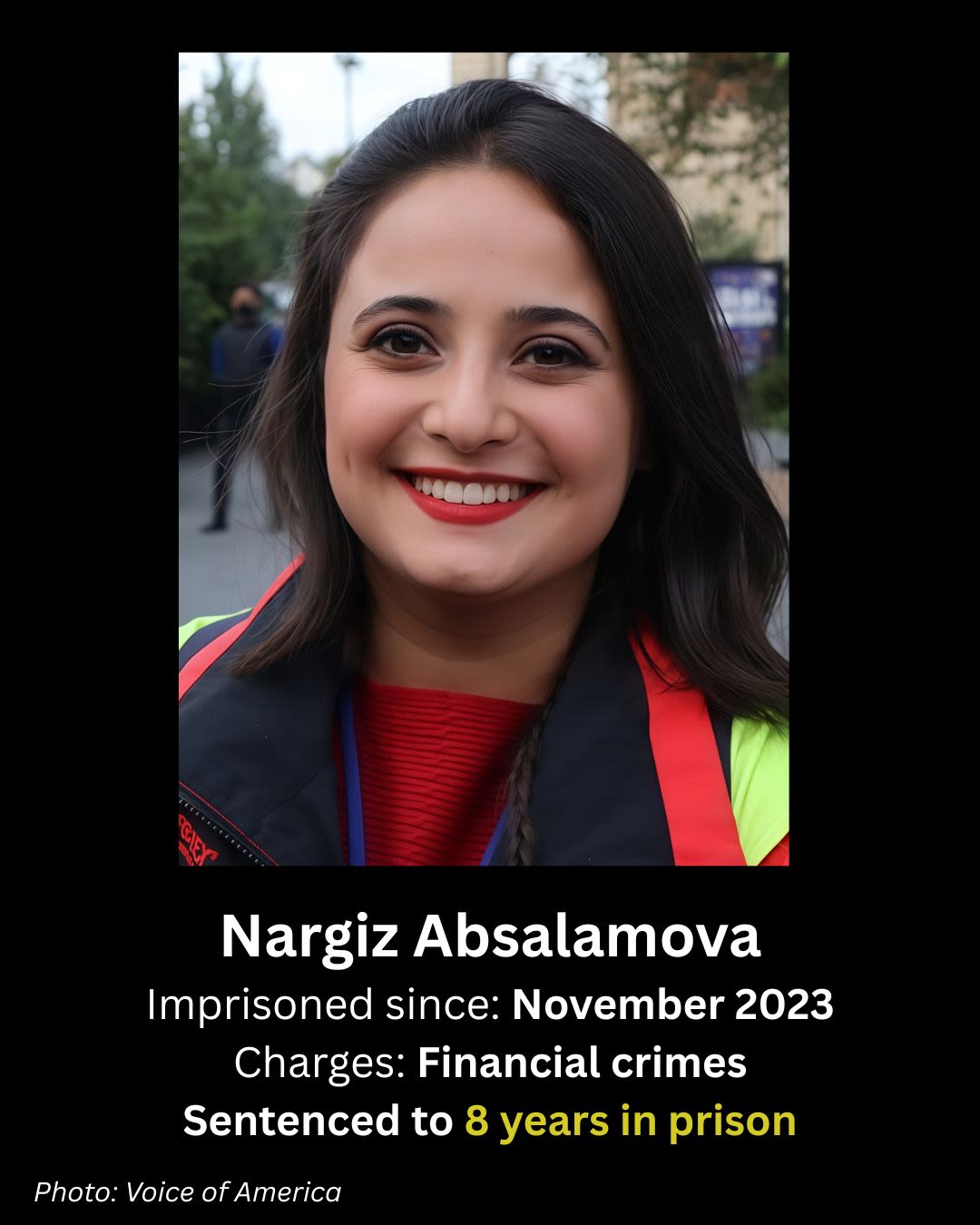
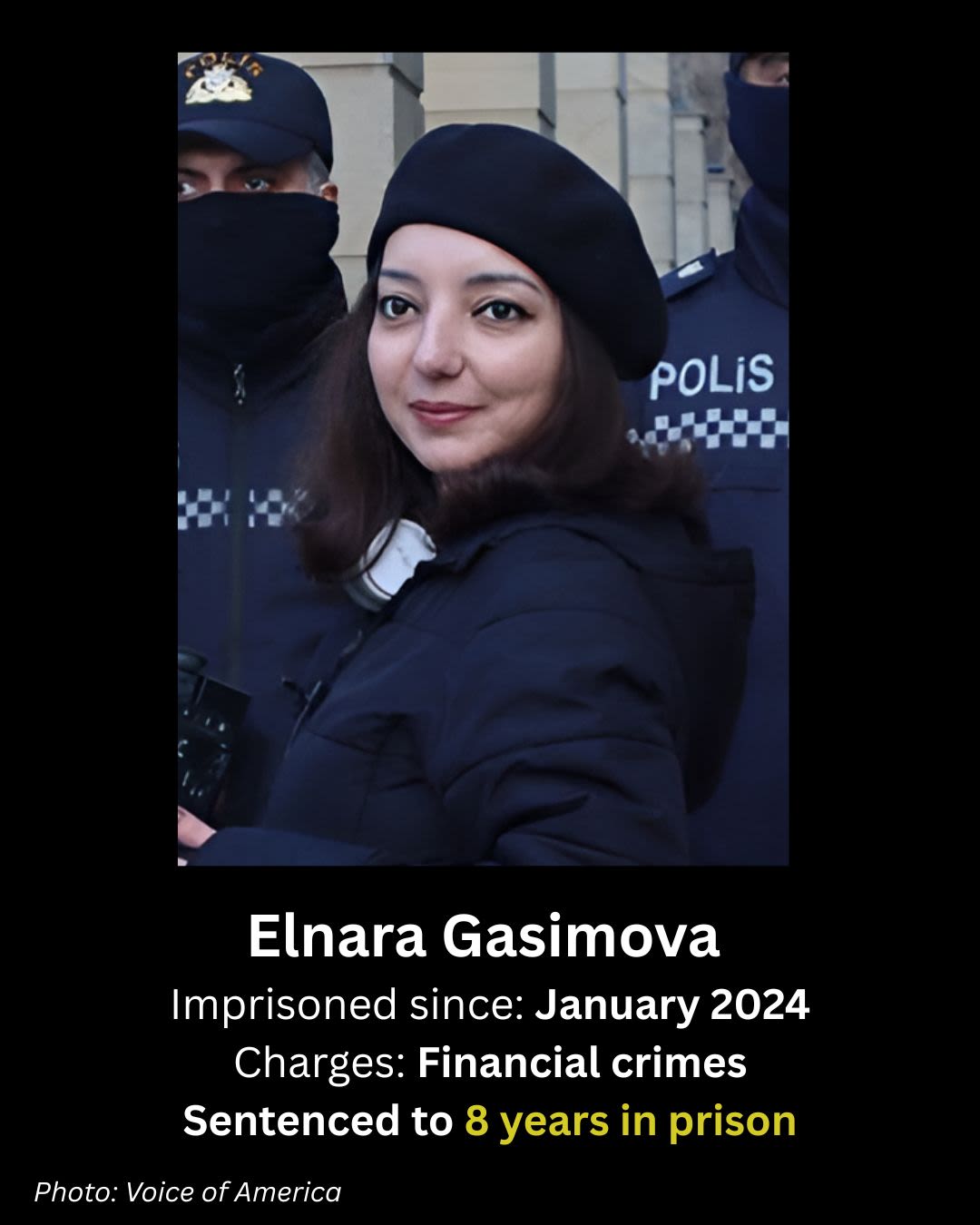
In June 2025, Abzas Media editor-in-chief Sevinc Vaqifqizi was sentenced to nine years in prison, and Abzas journalists Nargiz Absalamova and Elnara Gasimova were sentenced to eight years by the Baku Court of Serious Crimes on politically motivated charges of “foreign currency smuggling” alongside their colleagues.
While in prison, all three journalists have faced retaliation and punishment at the hands of prison guards. After they went on a hunger strike in solidarity with one of their colleagues, guards placed them in isolated rooms without showers, ventilation, or open windows. Nargiz was subjected to physical pressure by a senior prison official, resulting in visible injuries on her arms.
MEYDAN TV JOURNALISTS
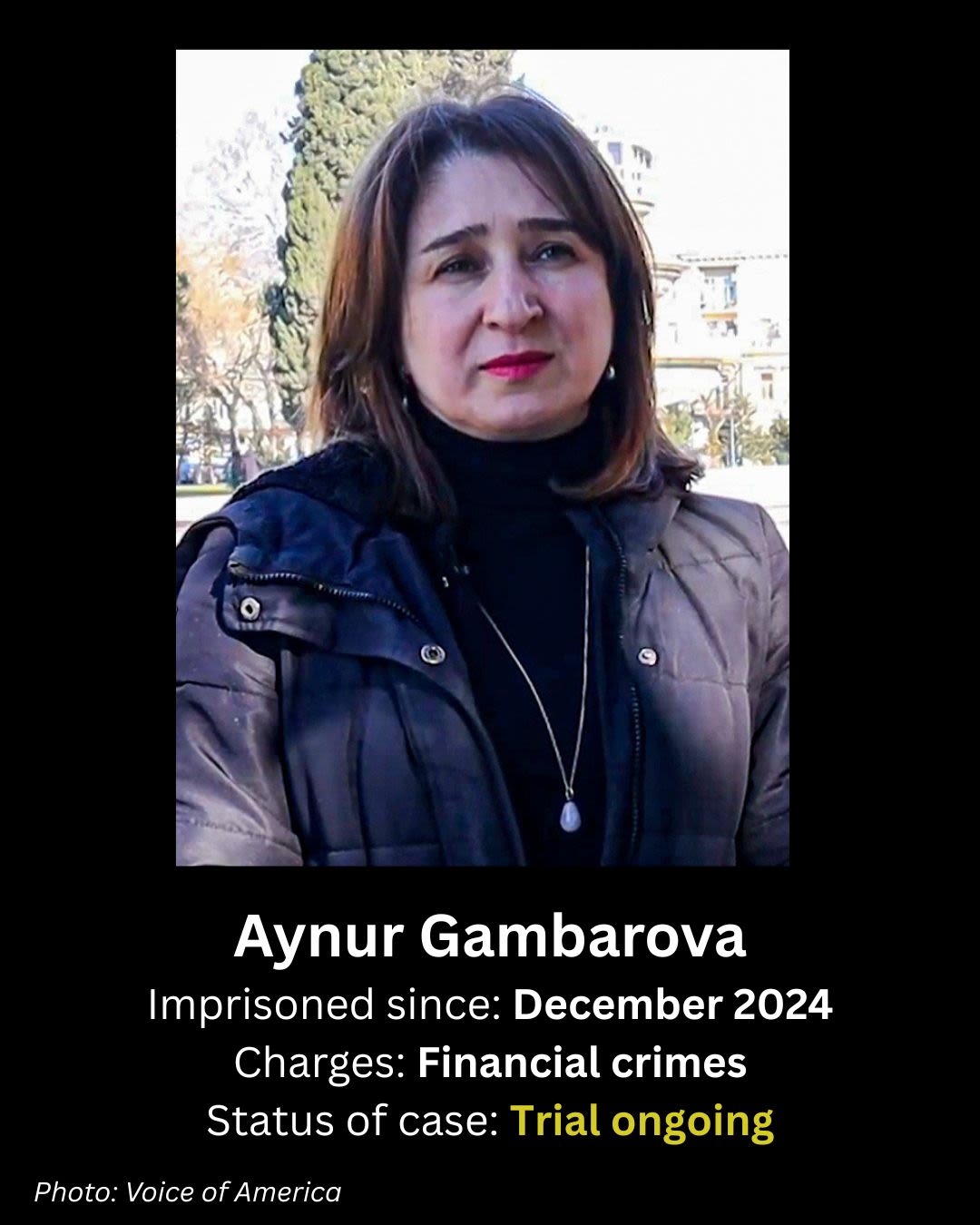
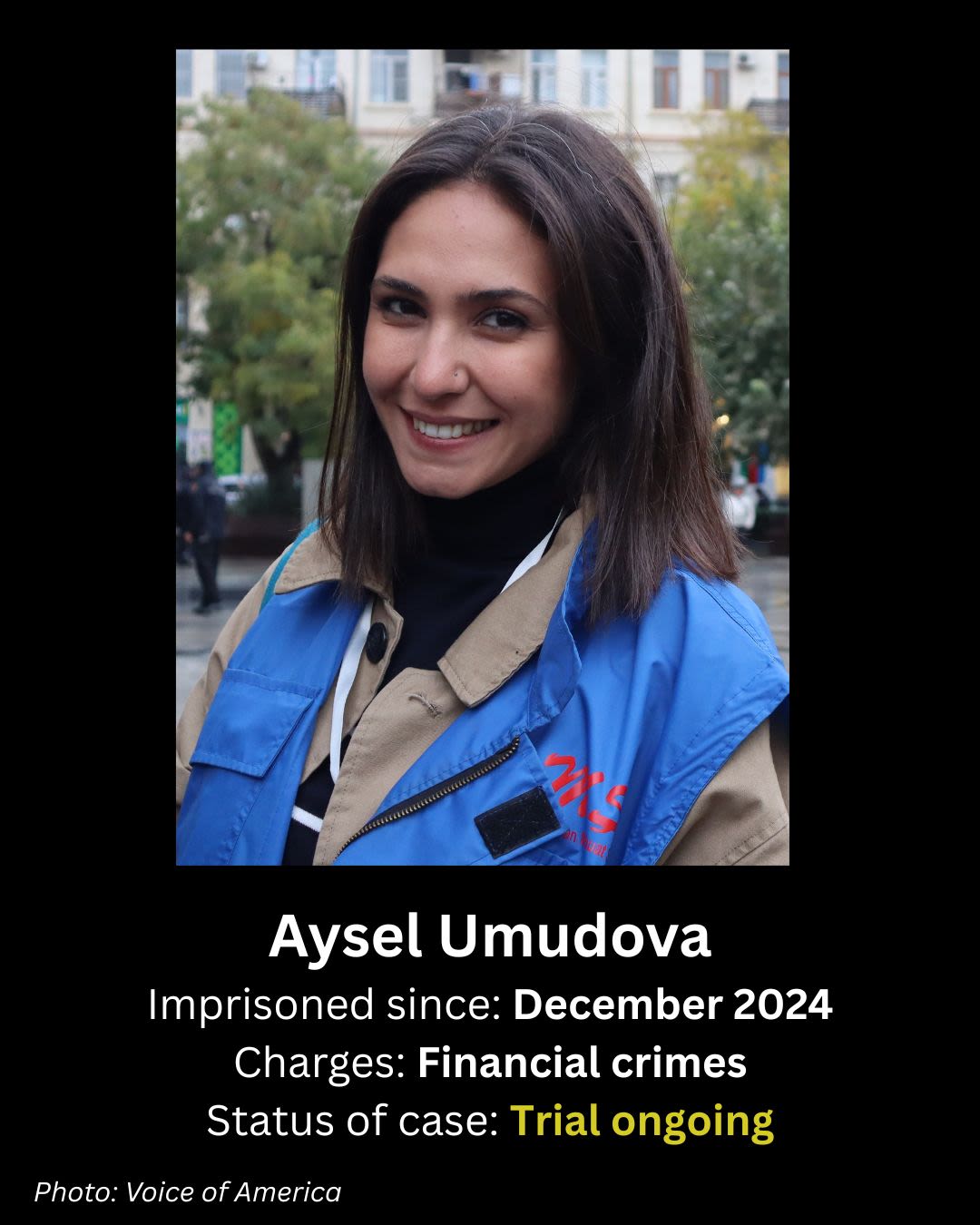
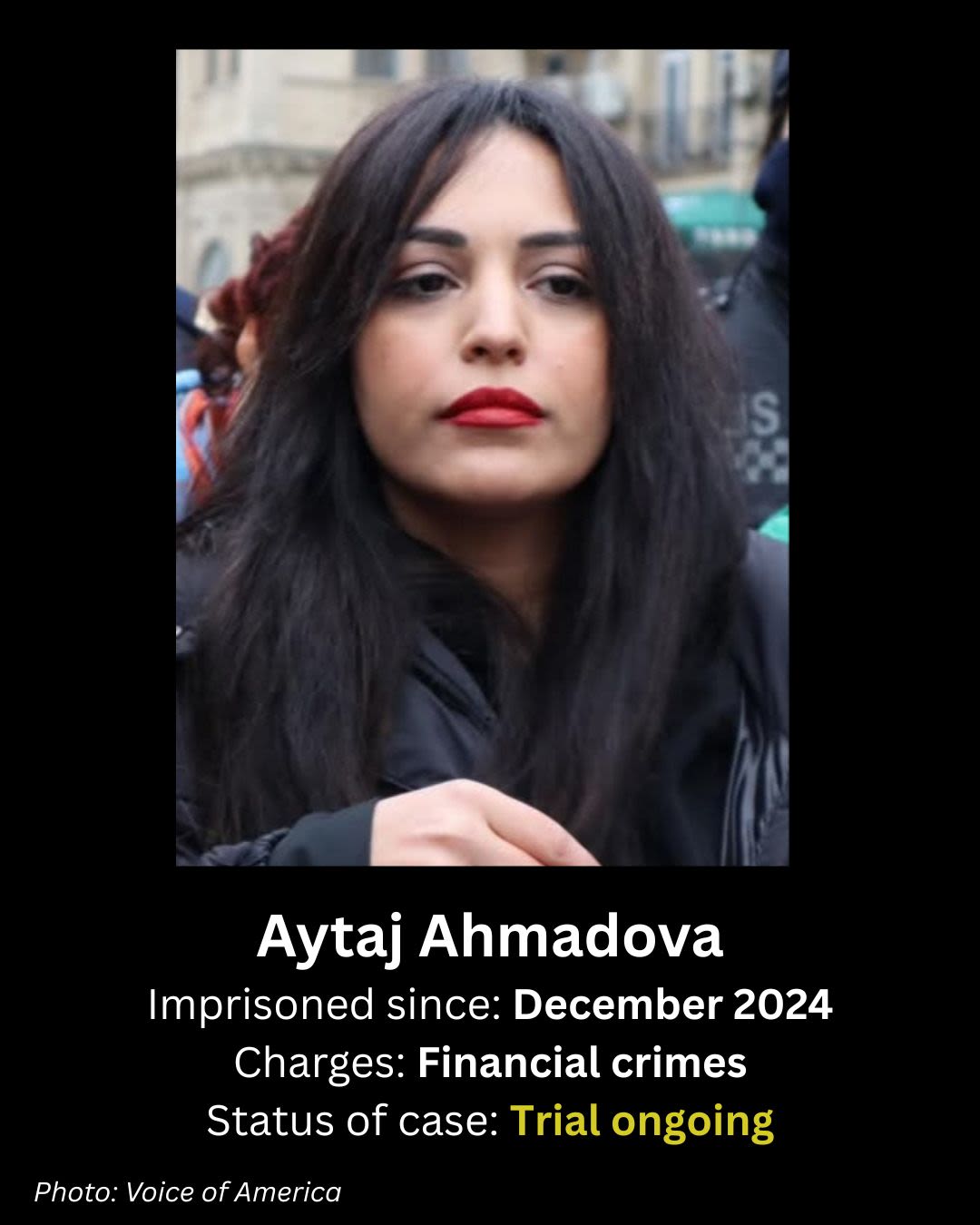
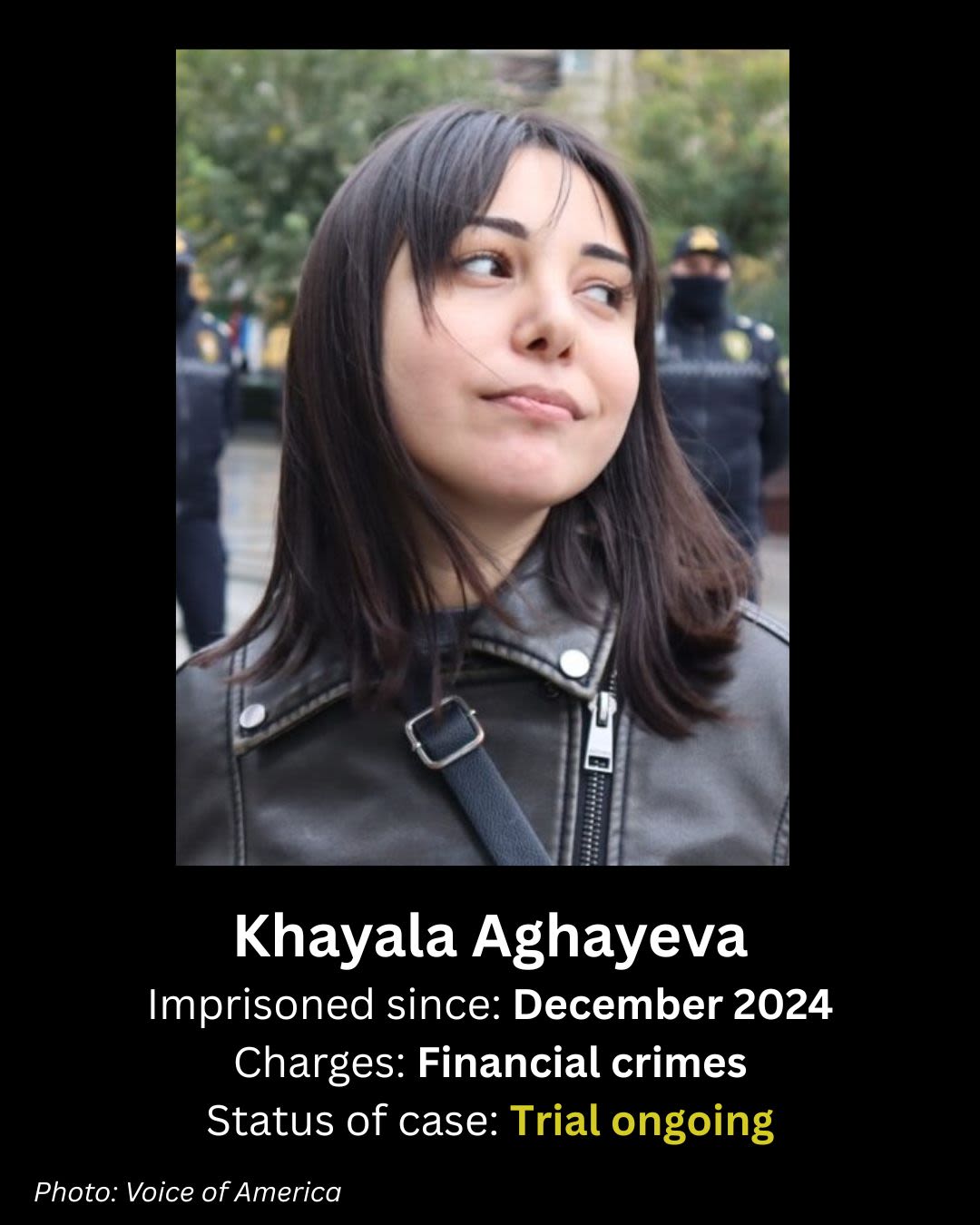
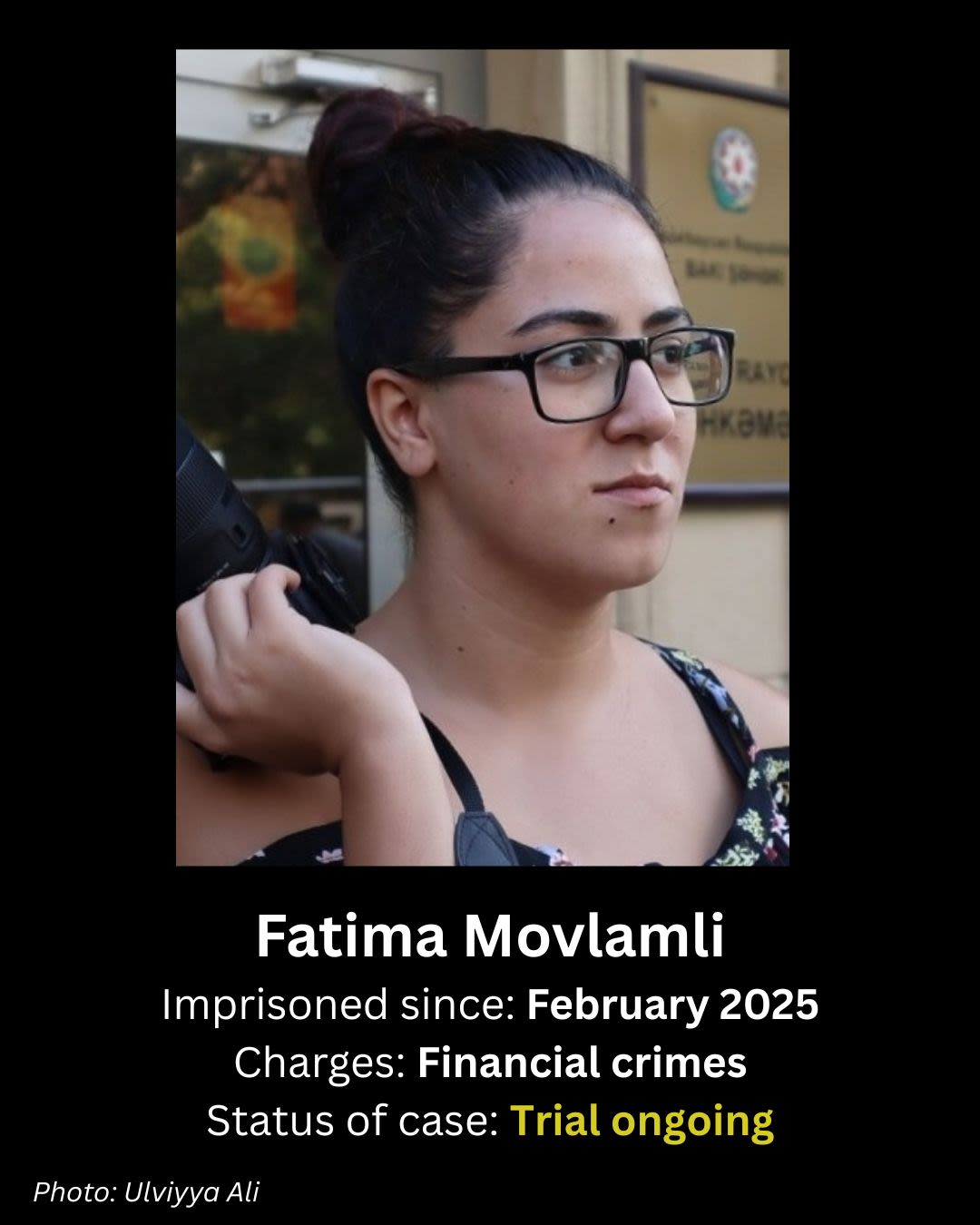
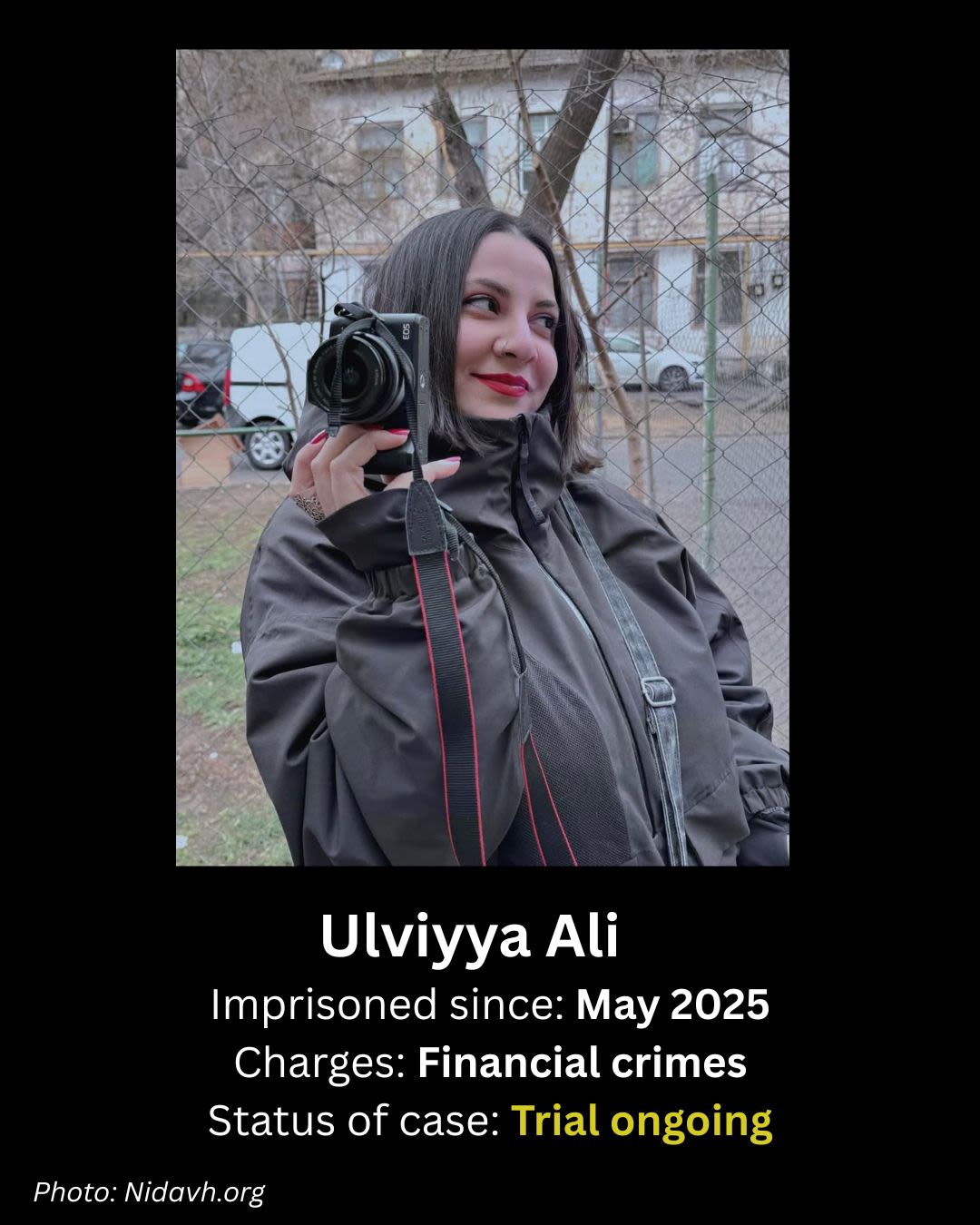
Six women journalists, Aynur Gambarova, Aysel Umudova, Aytaj Ahmadova, Khayala Aghayeva, Fatima Movlamli and Ulviyya Ali are currently on trial in connection with the government’s case against Meydan TV.
The journalists, who are being tried as a group, have been charged with a variety of financial crimes, from money laundering to tax evasion. If convicted, they face up to 12 years in prison.
Since their arrests, these journalists have endured a range of human rights abuses, including denial of access to legal counsel and proper medical care. They have also experienced direct gender-based threats and violence, which has had long-term psychological impacts. Ulviyya was beaten and repeatedly threatened with rape by police officers during her arrest, while Aysel reported experiencing sexual harassment during her arrest.
After Aytaj, Aysel and Khayala complained about their violent mistreatment in prison, authorities punished them by prohibiting in-person visits with loved ones and isolating them from other prisoners. Prison officials have also made threats against the journalists’ family members.
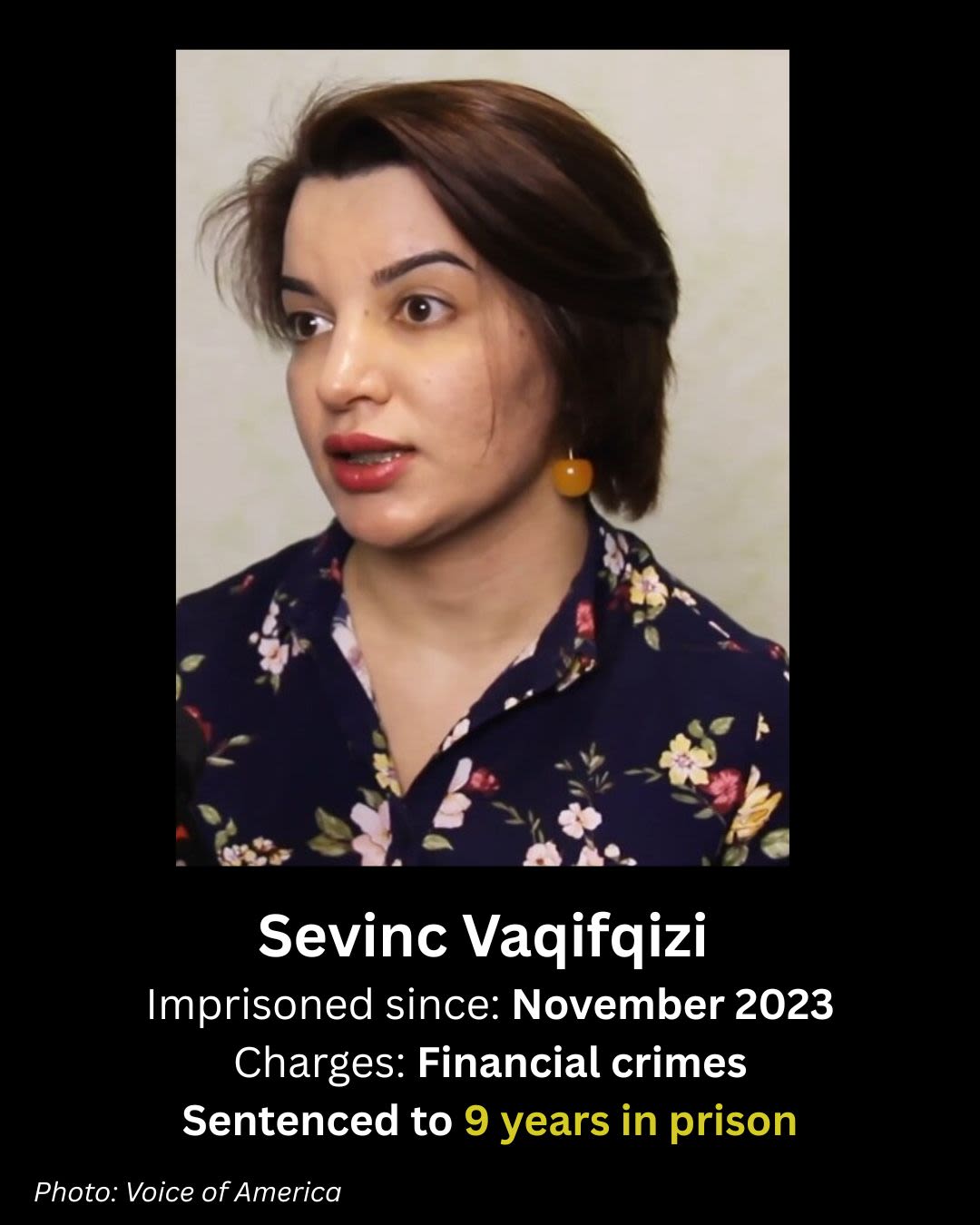
No one should face persecution for telling the truth. Everyone should feel free to reveal these truths and not face any threats, arrests, or deaths in return. I wish for such a world.
— Sevinc Vaqifqizi
PHILIPPINES
Following the election of President Ferdinand Marcos Jr. in 2022, journalists have continued to face persistent challenges and dangers, despite hopes for a more secure media environment under the new leadership.
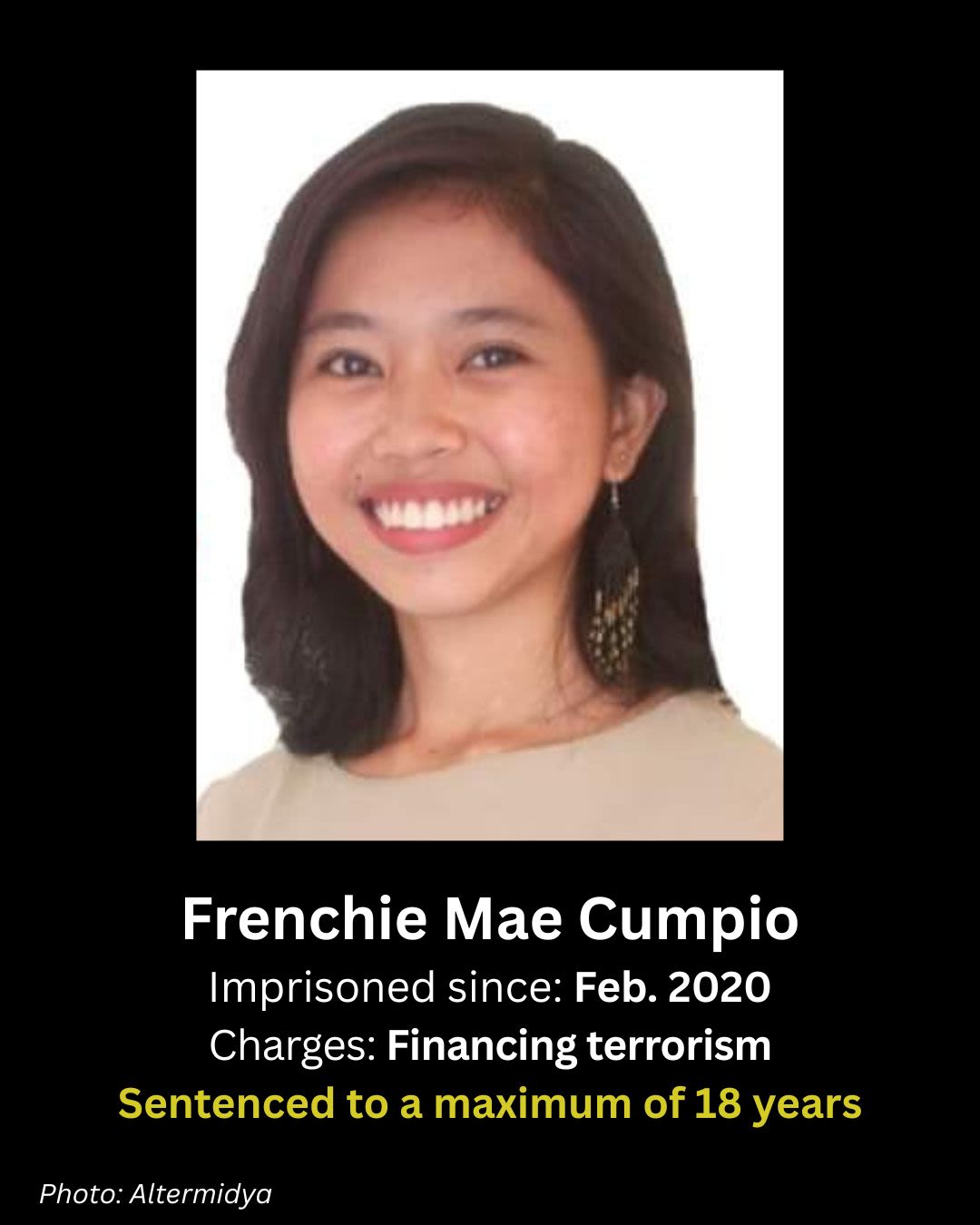
Journalist Frenchie Mae Cumpio was arrested in the middle of the night in February 2020, when she was just 21 years old, and charged with illegal arms possession, and later, terrorism financing.
In the months prior to her arrest, Frenchie was a target of “red-tagging,” the practice of labeling individuals or organisations as communist sympathizers or terrorists without substantial evidence.
Frenchie told colleagues that just before her arrest, she had received a series of threats, which she believed were in retaliation for her reporting on abuses of power carried out by police and state security.
In January 2026, after a nearly six-year-long legal process marred by due process violations and irregularities, Frenchie was sentenced to a maximum of 18 years in prison.
Her six years of pre-trial detention was denounced by press freedom and human rights groups as unjustifiably and inexplicably long. It was not until four years into her detention that Frenchie was allowed to take the witness stand in her own defense.
IRAN
Facing a dire economic situation, mass protests and upheaval, and now a wider conflict with the U.S., Israel and other states in the region, Iran has accelerated its crackdown on independent voices in recent years. Independent journalism inside the country is all but impossible due to government reprisals and repeated internet shutdowns.
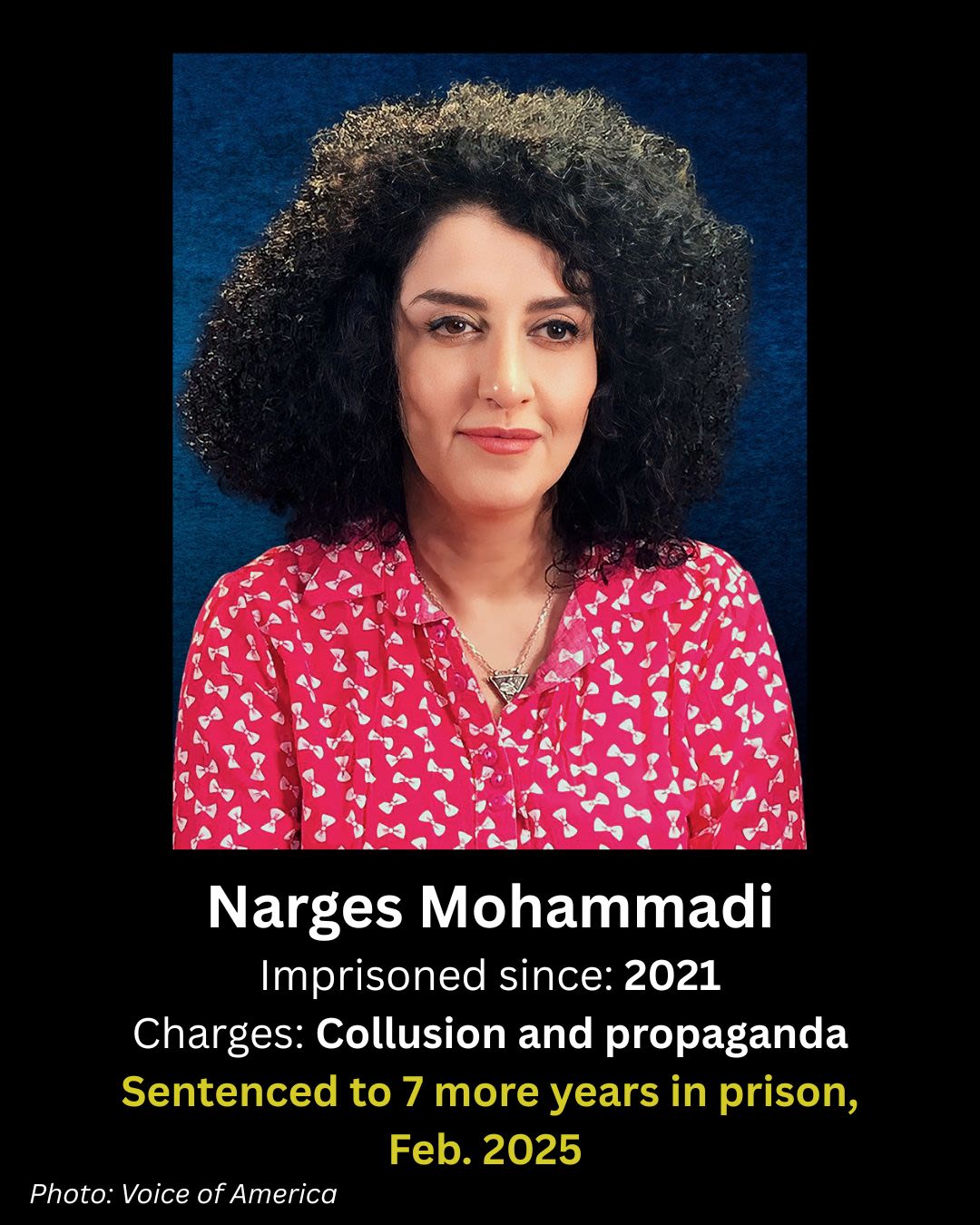
Nobel Peace Prize laureate Narges Mohammadi has been a target of judicial harassment by the Iranian regime for years, due to her unwavering commitment to free speech and free expression.
In 2022, Narges was sentenced to 13 years behind bars on “collusion and propaganda” charges. She was released on medical furlough in December 2024 after the discovery of a potentially cancerous bone lesion. She had previously suffered multiple heart attacks, and underwent emergency surgery in 2022.
A year later, while still on medical leave from prison, Narges was violently arrested alongside other journalists and activists. In February 2026, she was abruptly sentenced to seven additional years in prison on separate collusion and propaganda charges after she began a hunger strike.
Narges has been outspoken about the systematic mistreatment women prisoners receive in Iran’s prison system. She has described inhumane treatment, including months and yearslong stays in solitary confinement, unjustly lengthy sentences, and denials of medical care.
Amid an escalating military conflict and extreme political instability, Narges and all of Iran’s political prisoners are at even greater risk, as reports emerge of staff departing prisons and stalled food distributions.
I am a woman and a mother, and with all my feminine and maternal sensibilities, I seek a world free from violence and injustice, even if I have suffered injustice and violence tens of times.
— Narges Mohammadi
ETHIOPIA
Years of ongoing ethnic conflict has polarized Ethiopia’s political, social, and media landscape, creating a difficult environment for independent journalism in the country. As violent conflict in Ethiopia’s Amhara region ignited in April 2023, arrests of journalists were part of a wider government crackdown.
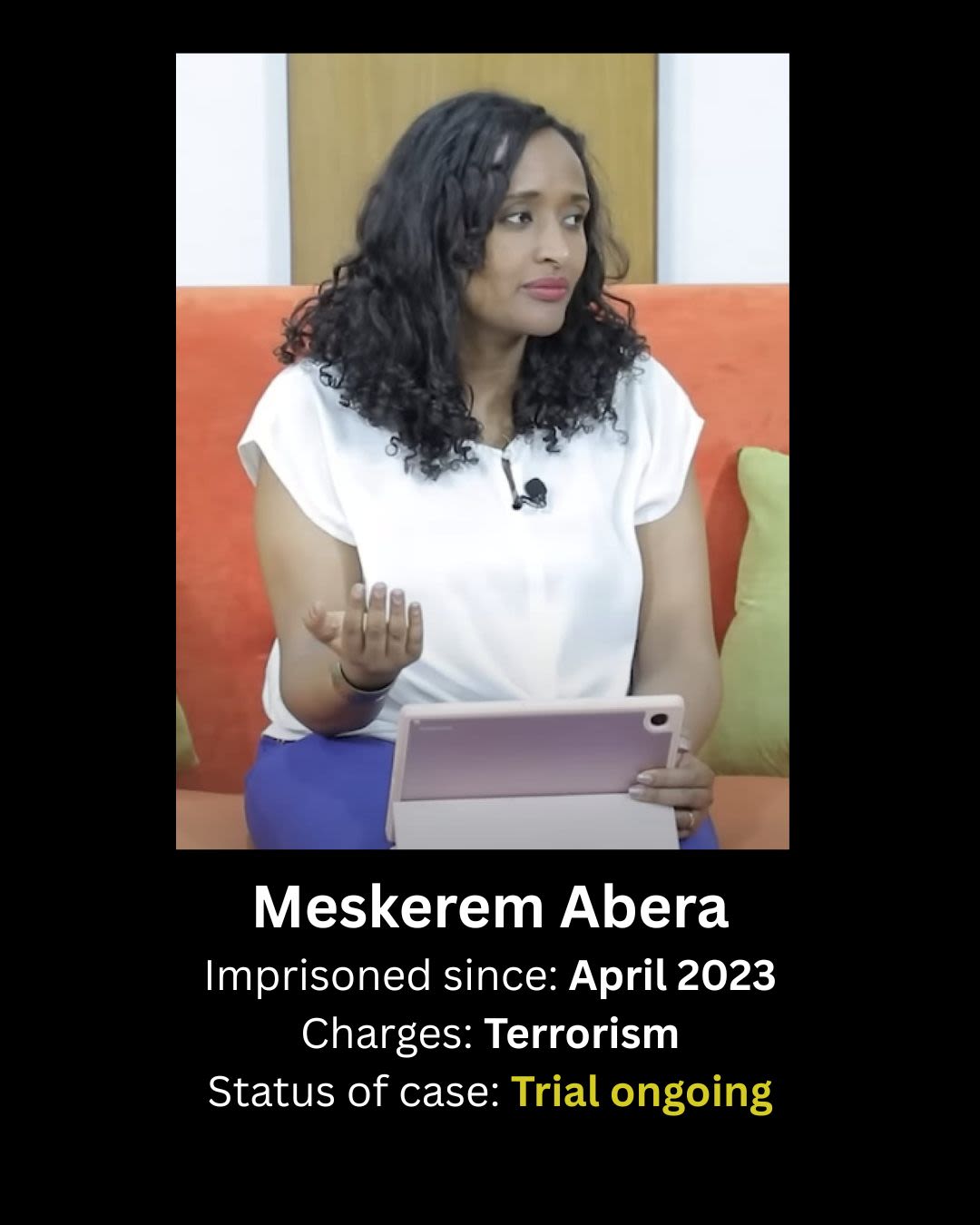
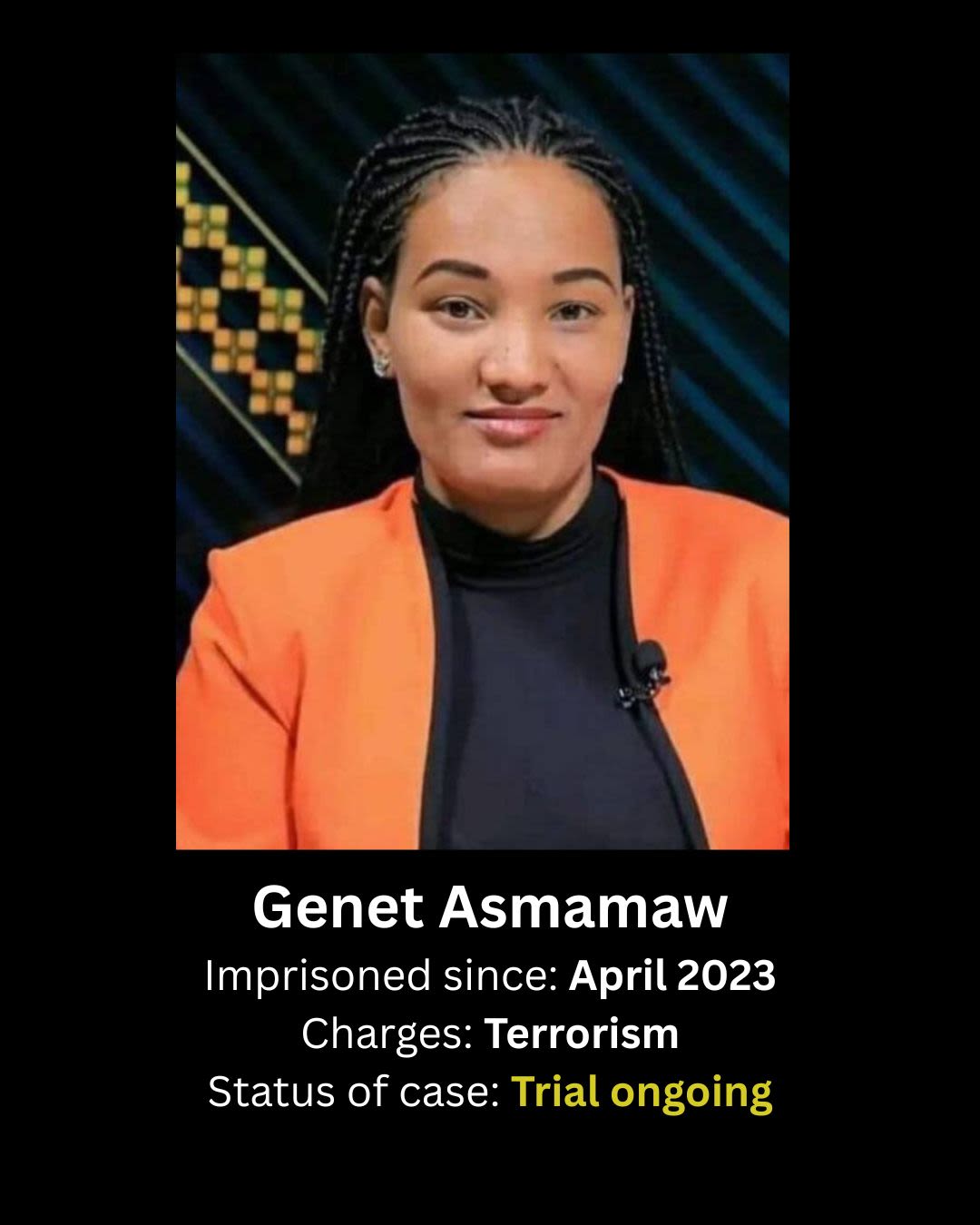
Journalists Meskerem Abera and Genet Asmamaw were arrested three days apart in April 2023, in Ethiopia's capital city, Addis Ababa. Both journalists, who work for Youtube-based media outlets, had reported on how conflict impacted the Amhara ethnic group, members of whom have been regularly targeted with gender-based violence.
The two journalists were charged under Ethiopia's anti-terrorism law, which has become a popular tool wielded by authorities to crack down on independent media. The legal case against them remains ongoing, despite legal irregularities, including numerous delays and suspensions. Genet and Meskerem are due to file their defense in court in May 2026. If convicted, both journalists and their co-defendants could face the death penalty.
During her arrest, Genet was physically beaten by a group of police officers. Meskerem was arrested just months after she gave birth, and has limited access to her two children.
UKRAINE
As of March 2026, 26 Ukrainian journalists are being held behind bars by Russia. Roughly half of these are citizen journalists from the Crimean Tatar ethnic minority, who were imprisoned on politically motivated charges mostly linked to “terrorism.” Most of the other journalists in Russian captivity were detained after 2022 and the start of Russia's full-scale invasion of Ukraine.
Four women journalists are currently imprisoned by Russian authorities.
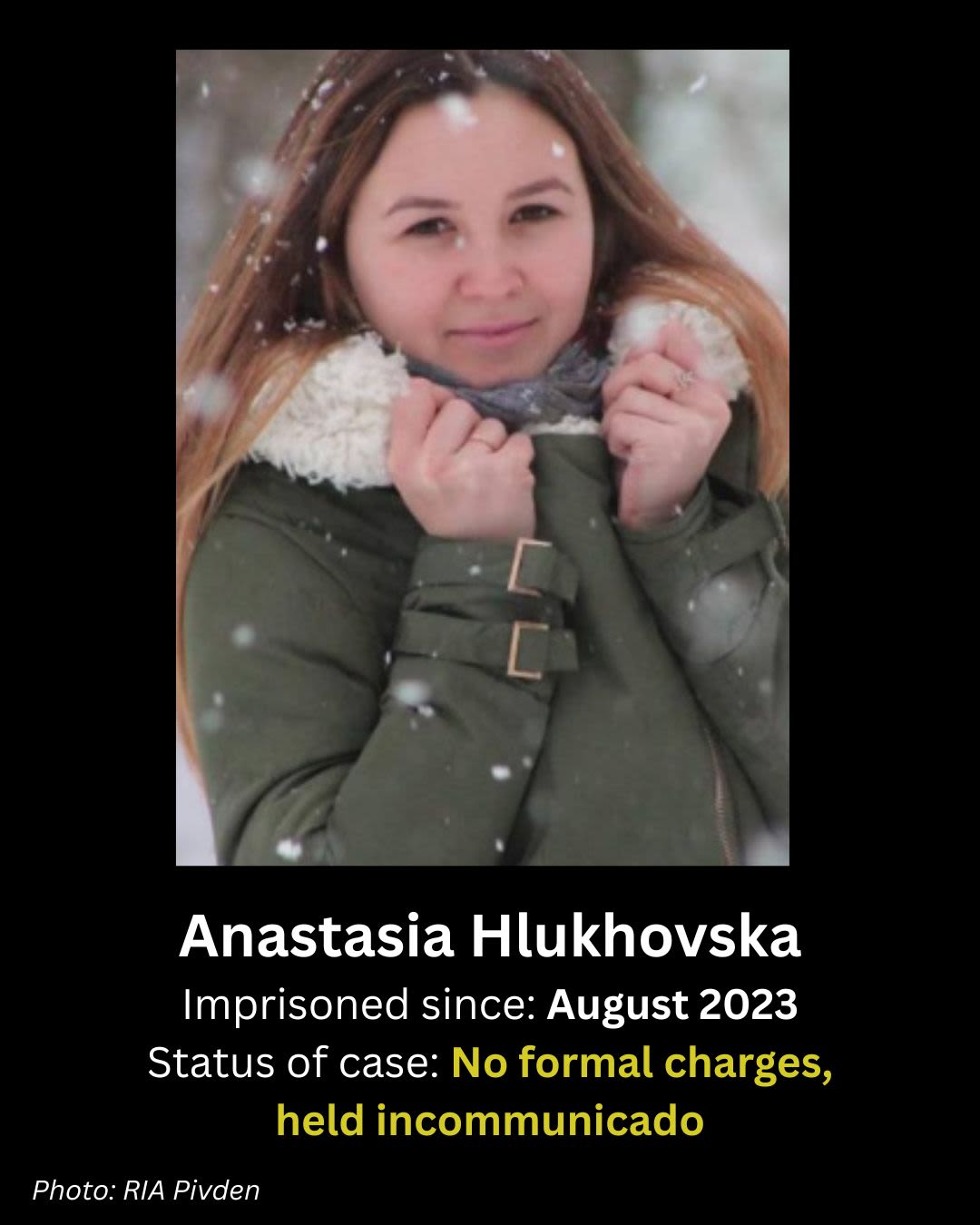
Anastasia Hlukhovska, a professional journalist from the city of Melitopol, was detained in August 2023 with six of her journalist colleagues. Anastasia and her team had been anonymously publishing independent news for Melitopol on Telegram.
Russian security forces initially held Anastasia in an informal place of detention in the city, where she was tortured using electric shocks. She was later transported to prisons in Russian territory, ultimately ending up in the same penal colony of Kizel as the one where Ukrainian journalist and IPI World Press Freedom Hero Victoria Roshchyna lost her life in 2024.
She remains there to this day, and has never been formally charged with any crime. Russian authorities have not acknowledged her imprisonment and deny that she is currently under Russian captivity.
CHINA
China has repeatedly ranked first as the world’s leading jailer of journalists, as the Chinese Communist Party (CCP) continues to curtail media freedom and censor information in the country.
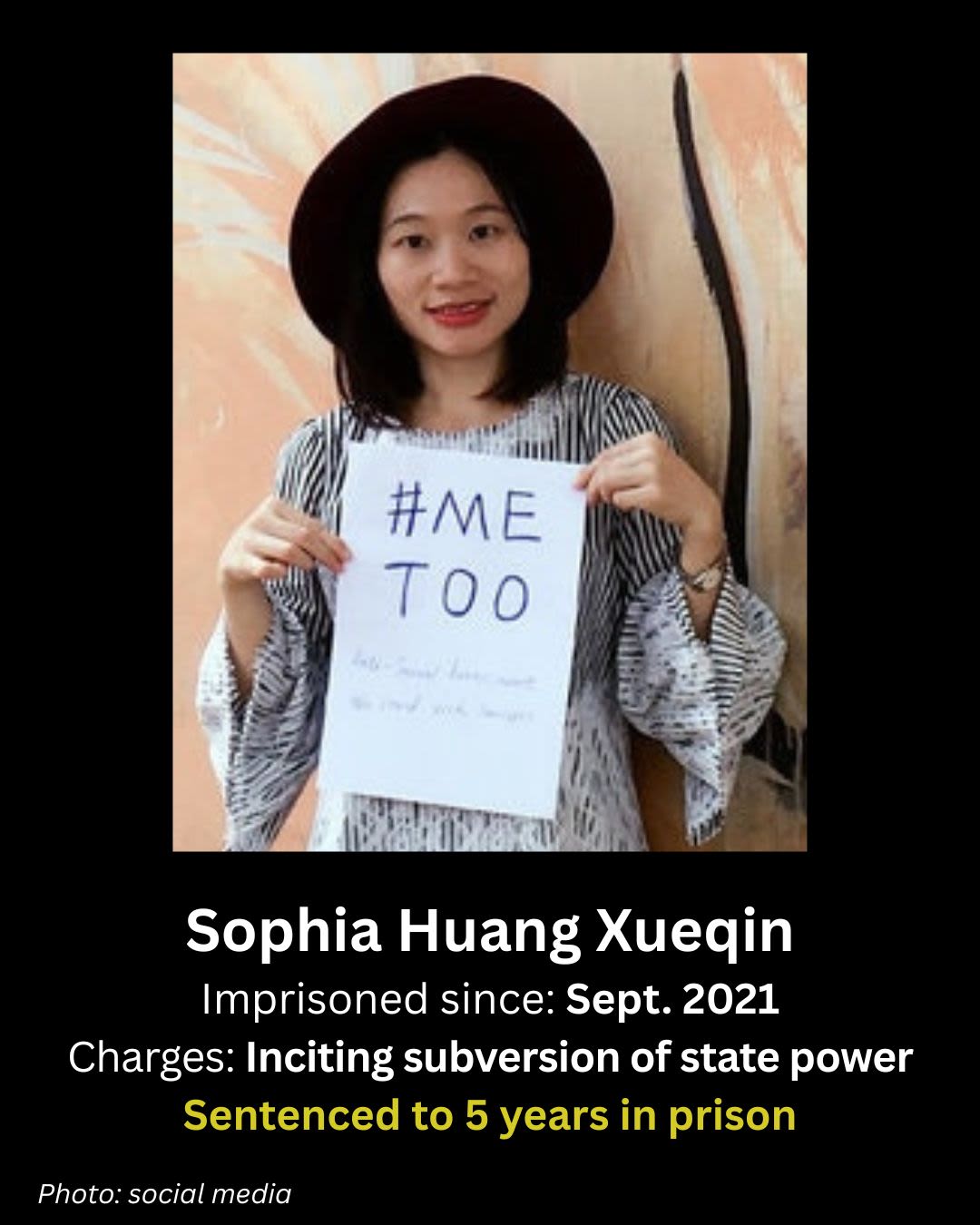
Sophia Huang Xueqin is an award-winning independent investigative journalist known for bringing the #MeToo movement to China through her reporting on sexual harassment at universities and in the workplace. She was arrested in September 2021 and charged with inciting subversion of state power. In June 2024, she was sentenced to five years in prison.
The government has released very little public information about the legal process or the details of the charges against Sophia. While imprisoned, she has reportedly been subjected to solitary confinement and lengthy interrogations – sometimes in the middle of the night – during which she was forced to sit in a “tiger chair,” a notorious torture device employed by Chinese authorities during interrogations of prisoners.
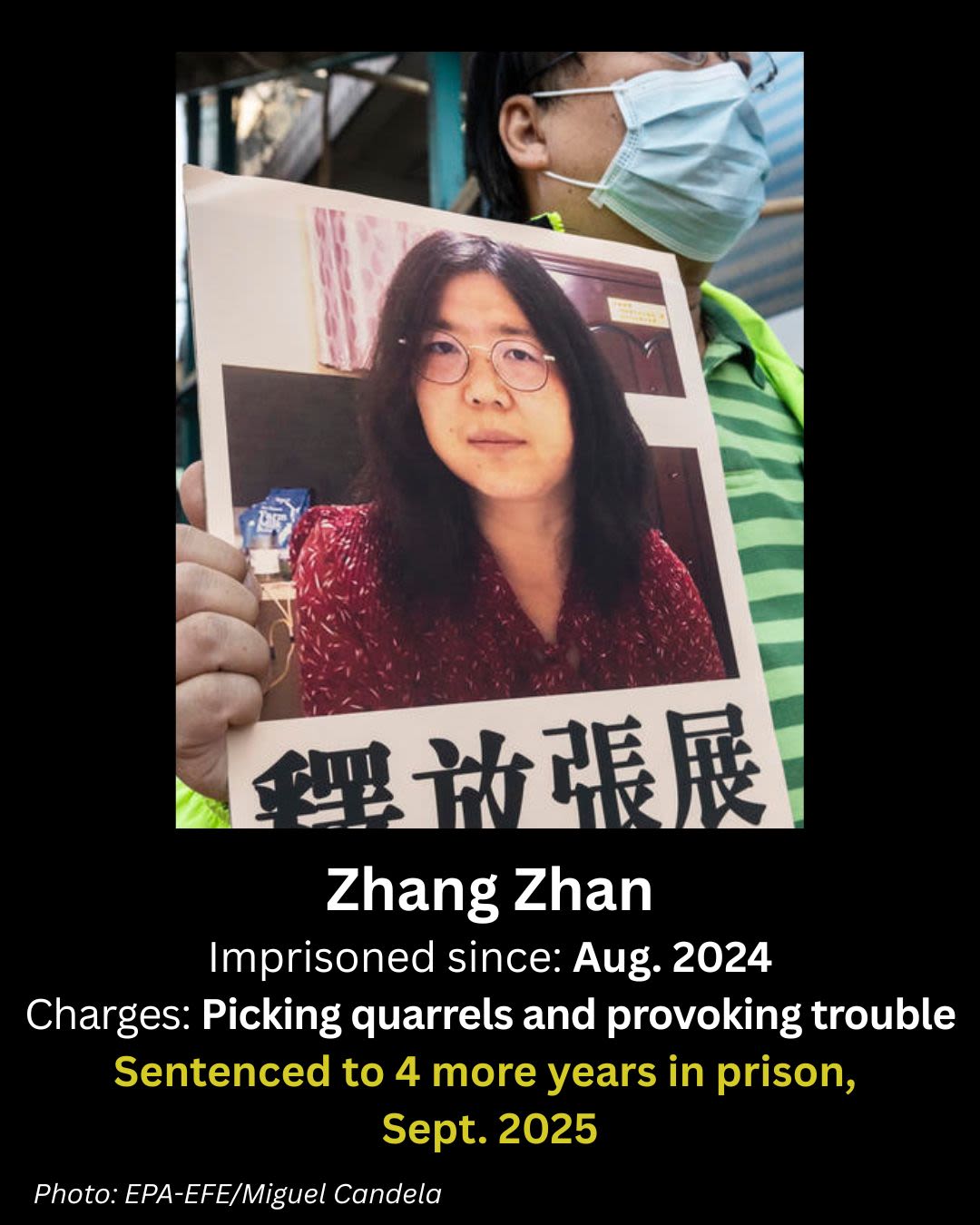
Zhang Zhan, a citizen journalist, first rose to the attention of authorities for her reporting on the Covid-19 outbreak in Wuhan. She was first arrested in May 2020 and charged with “picking quarrels and provoking trouble,” charges commonly used by the government to crack down on activists, journalists and anyone who dared to criticize the CCP. Later that year, she was sentenced to four years in prison.
Only three months after her release, she was arrested again, and was sentenced to another four years in prison for “picking quarrels and provoking trouble.” Authorities have released few specifics of the case against her and did not allow independent observers to attend her trial.
During hunger strikes in protest of her detention during her first and second imprisonments, authorities have tied Zhang Zhan’s hands and force-fed her using a gastric feeding tube.

 Built with Shorthand